
The Ultimate Multitool Big Man Unprecedented High-Post Genius of Josh Sparks
The Ultimate Multitool Big Man
Title: The Stat-Sheet Tyrant: The Unprecedented High-Post Genius of Josh Sparks
If the 2007–2014 era of Savannah hoops was built on pure attrition, Josh Sparks (Savannah Christian Preparatory School, Class of 2009) was the anomaly that completely broke the local basketball matrix. Standing as a towering 6-foot-9 point-forward/center, Sparks went on a multi-year rampage that redefined private-school basketball in coastal Georgia. [1, 2, 3, 4, 5]
Before embarking on a college career that spanned the Division I level at Jacksonville University and a historic record-shattering stint at Valdosta State, Sparks put together the most stat-heavy, multi-categorical individual season Savannah had ever seen. He didn't just lead Savannah Christian Prep—he completely dominated every square inch of the floor, earning both the Savannah Morning News Player of the Year and WTOC Player of the Year honors. [3, 6, 7, 8, 9]
Play Style Deep Dive: The Guard Trapped in a 6'9" Frame
To evaluate Josh Sparks merely as a rim-protector or low-post scorer is to completely miss what made him a generational talent. Sparks grew a staggering seven inches between his freshman and junior seasons. Crucially, as he shot up to 6-foot-9, he kept every ounce of his childhood point-guard ball-handling and playmaking muscle memory completely intact. [1, 3, 10]
The Face-Up Slash Threat: Opposing coaches routinely tried to assign slow, heavy centers to guard Sparks in the paint. He counter-acted this by instantly drifting out to the perimeter. Sparks utilized sharp crossover drives and a smooth summer-honed jump shot to slash past defenders from the outside. He routinely initiated fast breaks himself off defensive rebounds, acting as a one-man transition engine.
Pass-First Vision: His high school head coach, Steven Edenfield, constantly noted that Sparks’ passing acumen was his most dangerous asset. Operating out of high-low sets or driving down the lane, Sparks’ high release point and unique floor mapping allowed him to thread precision, no-look needles to cutting teammates over helpless defensive zones.
The Rim-Erase Defensive Matrix: Defensively, Sparks was a human eraser. Armed with exceptional lateral instincts and an elite wingspan, he didn't just contest shots—he cleanly met them at their apex. He could comfortably step out to hedge high perimeter pick-and-rolls before utilizing his rapid recovery speed to sprint back and block shots from behind on the low block. [3, 8, 10, 11]
          JOSH SPARKS' UNPRECEDENTED SENIOR AVERAGES (SCPS)

   [Offensive Output]                             [Defensive Dominance]
   - 20.0 Points Per Game                         - 14.9 Rebounds Per Game
   - 4.9 Assists Per Game                         -  6.2 Blocks Per Game
   ---------------------------------------------------------------------
              * RESULT: BACK-TO-BACK QUADRUPLE-DOUBLES *
Demeanor Profile: The Relentless, Unfazed General
Sparks approached the heavy, game-to-game expectations placed upon him with an unwavering, self-assured composure.
Thriving Under High Volume Pressure: With Savannah Christian graduating four veteran starters prior to his senior season, teams threw triple-teams and exotic box-and-one defenses at Sparks every night. He viewed this immense tactical focus as a challenge rather than a burden, famously stating, "I like being a leader and I like taking control of the game."
Quiet, Elite Work Ethic: Rejecting the flashy, vocal taunting common across the city's rivalry games, Sparks operated like a methodical technician. Whether he was playing out on the perimeter or battling physical inside contact, his demeanor never wavered, serving as a steadying structural presence for his younger SCPS teammates. [3, 8, 10]
Big Game Details: Quadruple-Doubles & Historic College Marks
The statistical validation of Sparks’ legendary high school run reads like a video game stat sheet. Over his senior campaign, he turned in a near-impossible baseline average of 20 points, 14.9 rebounds, 6.2 blocks, and 4.9 assists per game. [3]
The Calvary Day Classic
The defining masterpiece of his prep career occurred in a legendary, high-stakes overtime battle against cross-town rival Calvary Day School. Demolishing their interior game plan, Sparks uncorked a historic quadruple-double, posting 27 points, 22 rebounds, 15 blocks, and 10 assists. He had opened that same season by dropping 30 points and 26 rebounds against Screven County, proving that high-volume efficiency was simply his standard. [3]
               THE JOSH SPARKS VALDOSTA STATE RESUME

  [Efficiency Record]                 [The Historic Night]
  - 73.0% Season FG % (School Record) - 23 PTS / 15 REB / 10 BLK vs. FVSU
  - Led Conference in Blocks (2.9 BPG)- First Triple-Double in School History
Re-Writing the College Record Books
Sparks brought his unique multitool blueprint to the next level. After an opening stint at Division I Jacksonville University, he transferred to Valdosta State, where his size and agility turned him into a defensive nightmare. [1, 7]
During his sophomore campaign, Sparks set the all-time school record by shooting a blistering 73.0 percent from the field while leading the Gulf South Conference with 73 total blocks. By his senior year, he sealed his place in school folklore by logging the first triple-double in Valdosta State history, shredding Fort Valley State to the tune of 23 points, 15 rebounds, and 10 blocks. His performance paved the way for an extended professional basketball career overseas in Finland and Romania. [4, 7, 12, 13, 14]
[3] https://www.savannahnow.com
[10] https://www.wtoc.com
[11] https://www.instagram.com
[13] https://basketball.eurobasket.com
[14] https://fanstake.com
Title: Clash of the Titans: When Darnell "Dank" Jackson and Keenan Ready Turned the Paint into a War Zone
The Physical Attrition Battle
Title: Clash of the Titans: When Darnell "Dank" Jackson and Keenan Ready Turned the Paint into a War Zone
During the 2009–10 coastal Georgia basketball season, the absolute peak of public-school grit was found whenever Savannah High School clashed with Groves High School. While the city's guards dominated the local media headlines with flashy perimeter plays, Darnell “Dank” Jackson (Savannah High) and Keenan Ready (Groves High) engaged in a brutal, physical chess match in the paint.
Both players re-engineered what it meant to be an inside-outside forward in Region 3-AAAAA. They matched up in a series of legendary regular season and regional tournament battles that defined the era's raw physicality.
Play Style Deep Dive: The Kinematic Enforcers
This matchup pitted two completely distinct forms of elite, physical athleticism against one another. Every head-to-head possession was a pure battle of leverage, spatial awareness, and strength.
            THE PAINT WARFARE TACTICAL ROAD MAP

 [Darnell "Dank" Jackson]            [Keenan Ready]
 - 6'4", 215 lbs; Rocked Frame       - 6'5", 185 lbs; Wiry Length
 - Low-to-the-ground power drive     - Rapid second-jump velocity
 - Physical 5-position facilitator   - Supernatural glass-reading edge
Darnell "Dank" Jackson: The Low-Leverage Power Engine
Jackson approached the matchup with a stocky, rocked-solid 6-foot-4, 215-pound frame. Because he played lower to the ground than traditional forwards, he possessed a severe leverage advantage.
Jackson would intentionally initiate physical contact at the high post, using a devastatingly quick first step to shoulder his way past defenders into the lane. On the defensive end, Jackson used his wide frame to build a literal wall in the paint. He excelled at boxing out taller opponents, completely rooting himself to the floor so nobody could push him off his block.
Keenan Ready: The Airborne Second-Jump Freak
Ready countered Jackson's pure, dense strength with a wiry, explosive 6-foot-5, 185-pound frame built on length and closing speed. Ready's greatest weapon was his unmatched second-jump velocity.
While other forwards required time to load up for a rebound, Ready could tip an offensive ball off the glass two or three times in mid-air before anyone else could leave the floor. This attribute allowed him to secure a staggering 3.3 offensive rebounds per game. In transition, Ready used long, sweeping strides to outrun opposing bigs, turning defensive stops into immediate rim-rocking dunks.
Demeanor Profile: Ice-Cold Leaders
Neither Jackson nor Ready relied on vocal showmanship or trash talk to assert their dominance. They let their physical production do the talking.
Darnell Jackson's Stoic Sacrifice: "Dank" operated with a corporate, business-like focus. Under Coach Tim Jordan, he would willingly sacrifice his own shots for entire quarters if it meant locking down the opposing team's hottest scorer. His facial expression never changed, providing a calm, immovable anchor for Savannah High during chaotic road environments.
Keenan Ready's Quiet Motor: Ready was an entirely low-maintenance superstar for Coach Jeff Grimes. He did not demand specific isolation sets or high-volume touches. He simply hunted his production through sheer work ethic, playing with an unassuming, quiet intensity that wore down opponents over a 32-minute game.
Big Game Details: The 2010 Region 3-AAAAA Showdowns
The regular-season wars between these two giants set the stage for an epic postseason collision. During the regular season, Ready’s Groves Rebels rode an incredible 21-game win streak, powered by Ready's rare 65 percent field-goal efficiency.
               THE REGION 3-AAAAA POSTSEASON CLIMAX

  Groves Rebels (28-2) ----------> Led by Ready's 65% FG Shooting Elite Run
  Savannah Blue Jackets ---------> Driven by Jackson's Tournament MVP Masterclass
When the postseason arrived, the tactical battlefield shifted to the Region 3-AAAAA Tournament. Jackson completely took over the tournament gauntlet for Savannah High, uncorking three consecutive masterclass games where he scored 15, 15, and 19 points to single-handedly capture the Tournament MVP trophy.
While Jackson claimed the local MVP hardware and pushed the Blue Jackets deep into the brackets, Ready responded by lifting Groves to an unbelievable 28-2 final record and a historic appearance in the GHSA Class AAAAA State Quarterfinals (Elite Eight). Both enforcers earned highly coveted selections to the Georgia Athletic Coaches Association (GACA) North-South All-Star Game, cementing their status as the twin pillars of Savannah's interior history.
Title: Clash of the Titans: When Darnell "Dank" Jackson and Keenan Ready Turned the Paint into a War Zone
The Physical Attrition Battle
Title: Clash of the Titans: When Darnell "Dank" Jackson and Keenan Ready Turned the Paint into a War Zone
During the 2009–10 coastal Georgia basketball season, the absolute peak of public-school grit was found whenever Savannah High School clashed with Groves High School. While the city's guards dominated the local media headlines with flashy perimeter plays, Darnell “Dank” Jackson (Savannah High) and Keenan Ready (Groves High) engaged in a brutal, physical chess match in the paint.
Both players re-engineered what it meant to be an inside-outside forward in Region 3-AAAAA. They matched up in a series of legendary regular season and regional tournament battles that defined the era's raw physicality.
Play Style Deep Dive: The Kinematic Enforcers
This matchup pitted two completely distinct forms of elite, physical athleticism against one another. Every head-to-head possession was a pure battle of leverage, spatial awareness, and strength.
            THE PAINT WARFARE TACTICAL ROAD MAP

 [Darnell "Dank" Jackson]            [Keenan Ready]
 - 6'4", 215 lbs; Rocked Frame       - 6'5", 185 lbs; Wiry Length
 - Low-to-the-ground power drive     - Rapid second-jump velocity
 - Physical 5-position facilitator   - Supernatural glass-reading edge
Darnell "Dank" Jackson: The Low-Leverage Power Engine
Jackson approached the matchup with a stocky, rocked-solid 6-foot-4, 215-pound frame. Because he played lower to the ground than traditional forwards, he possessed a severe leverage advantage.
Jackson would intentionally initiate physical contact at the high post, using a devastatingly quick first step to shoulder his way past defenders into the lane. On the defensive end, Jackson used his wide frame to build a literal wall in the paint. He excelled at boxing out taller opponents, completely rooting himself to the floor so nobody could push him off his block.
Keenan Ready: The Airborne Second-Jump Freak
Ready countered Jackson's pure, dense strength with a wiry, explosive 6-foot-5, 185-pound frame built on length and closing speed. Ready's greatest weapon was his unmatched second-jump velocity.
While other forwards required time to load up for a rebound, Ready could tip an offensive ball off the glass two or three times in mid-air before anyone else could leave the floor. This attribute allowed him to secure a staggering 3.3 offensive rebounds per game. In transition, Ready used long, sweeping strides to outrun opposing bigs, turning defensive stops into immediate rim-rocking dunks.
Demeanor Profile: Ice-Cold Leaders
Neither Jackson nor Ready relied on vocal showmanship or trash talk to assert their dominance. They let their physical production do the talking.
Darnell Jackson's Stoic Sacrifice: "Dank" operated with a corporate, business-like focus. Under Coach Tim Jordan, he would willingly sacrifice his own shots for entire quarters if it meant locking down the opposing team's hottest scorer. His facial expression never changed, providing a calm, immovable anchor for Savannah High during chaotic road environments.
Keenan Ready's Quiet Motor: Ready was an entirely low-maintenance superstar for Coach Jeff Grimes. He did not demand specific isolation sets or high-volume touches. He simply hunted his production through sheer work ethic, playing with an unassuming, quiet intensity that wore down opponents over a 32-minute game.
Big Game Details: The 2010 Region 3-AAAAA Showdowns
The regular-season wars between these two giants set the stage for an epic postseason collision. During the regular season, Ready’s Groves Rebels rode an incredible 21-game win streak, powered by Ready's rare 65 percent field-goal efficiency.
               THE REGION 3-AAAAA POSTSEASON CLIMAX

  Groves Rebels (28-2) ----------> Led by Ready's 65% FG Shooting Elite Run
  Savannah Blue Jackets ---------> Driven by Jackson's Tournament MVP Masterclass
When the postseason arrived, the tactical battlefield shifted to the Region 3-AAAAA Tournament. Jackson completely took over the tournament gauntlet for Savannah High, uncorking three consecutive masterclass games where he scored 15, 15, and 19 points to single-handedly capture the Tournament MVP trophy.
While Jackson claimed the local MVP hardware and pushed the Blue Jackets deep into the brackets, Ready responded by lifting Groves to an unbelievable 28-2 final record and a historic appearance in the GHSA Class AAAAA State Quarterfinals (Elite Eight). Both enforcers earned highly coveted selections to the Georgia Athletic Coaches Association (GACA) North-South All-Star Game, cementing their status as the twin pillars of Savannah's interior history.
Title: The Perimeter Snipers: How George Turner and Greg Mortimer Engineered Savannah’s Geometry Three-Point Revolution
The Three-Point Revolution
Title: The Perimeter Snipers: How George Turner and Greg Mortimer Engineered Savannah’s Geometry Three-Point Revolution
Before the modern era of basketball completely prioritized the three-point line, a select group of guards in coastal Georgia rewrote the offensive blueprint. During the golden era of Savannah hoops (2007–2014), George Turner (Calvary Day School, Class of 2010) and Greg Mortimer (Sol C. Johnson High School, Class of 2013) operated as the definitive architects of perimeter spacing. They proved that high-volume, hyper-efficient outside shooting could dismantle even the most athletic full-court pressing systems in the state.
Play Style Deep Dive: Two Paths to Perimeter Dominance
While both players shared the reputation of being lethal snipers, their tactical deployment and mechanical approaches to generating space on the floor were vastly different.
George Turner: The On-Ball Assassin
Turner operated with the responsibility of a primary scorer and floor general. Mechanically, he possessed a textbook, lightning-quick release with a high-arching trajectory that made his shot incredibly difficult to contest at the Single-A level.
He did not rely solely on teammates to create his looks. Turner was a master of using heavy ball screens at the top of the key, utilizing a sharp crossover step-back to freeze on-ball defenders. If a defender chose to go under the screen to protect the paint, Turner would instantly punish them from deep. His off-ball movement was equally calculated, utilizing sudden baseline curls to lose his defender before catching and firing in one fluid motion.
Greg Mortimer: The Off-Ball System Operator
Mortimer, playing alongside jumbo playmaker Tim Quarterman in a loaded Class AAA backcourt, was the ultimate off-ball system catalyst. Standing at 6-foot-3, Mortimer used an elevated, un-blockable release point.
Instead of dominating the ball, Mortimer was a master of spatial geometry. He wore down opposing defenses by sprinting through a relentless maze of pin-down screens, baseline stagger screens, and back-door cuts. His footwork coming off a screen was flawless—squaring his shoulders to the basket in mid-air to ensure perfect balance upon landing. Mortimer’s elite catch-and-shoot discipline kept floor spacing open, making it impossible for opposing defenses to double-team the lane.
          SAVANNAH'S PERIMETER SHOOTING ARCHETYPES

  [George Turner - Calvary Day]        [Greg Mortimer - Johnson High]
  - Primary Initiator / Step-Backs      - Off-Ball Maze Runner
  - High-Volume Screen Pull-ups         - Pin-Down Screen Specialist
  - Complete Offensive Focus            - Balanced Two-Way System Piece
Demeanor Profile: The Ice-Cold Specialists
Both shooters operated with a distinct mental makeup that separated them from the high-emotion, vocal nature of local neighborhood rivalries.
George Turner's Methodical Focus: On the court, Turner was a quiet machine. He rarely celebrated deep makes or engaged in trash talk with opposing public-school guards who tried to play physical, friction-heavy defense. He trusted his rigorous preparation completely, maintaining a calm demeanor that steadied Calvary Day through high-stakes cross-city matchups.
Greg Mortimer's Selfless Discipline: Mortimer was famously low-maintenance. He possessed a rare basketball maturity, never forcing bad or contested shots simply to get on the stat sheet. If an opposing defense locked onto him, he would happily spend a possession acting as a decoy to open up lanes for his teammates, prioritizing structural efficiency above individual glory.
Big Game Details & Historical Legacy
Turner's Statewide Statement
George Turner’s definitive senior campaign was a statistical masterpiece. He finished the season ranking #12 overall in the entire state of Georgia by burying 55 total three-pointers. He dominated Region 3-A leaderboard data, ranking #1 overall across three distinct shooting efficiency categories and pushing Calvary Day past physical public-school rosters like Jenkins High School.
Mortimer's State Championship Blueprint
Mortimer saved his most impactful perimeter shooting for the biggest stage of his prep career. During the 2012–13 season, his steady scoring output from the outside kept defenses honest throughout the GHSA Class AAA State Tournament.
His ability to hit timely, momentum-killing three-pointers on the road culminated in a dominant team performance in the state title game, securing the Georgia Class AAA State Championship for the Atom Smashers. He translated that exact shooting discipline into a successful Division I college career, averaging a team-high 10.8 points per game during his senior year for South Carolina State.
Title: The Perimeter Snipers: How George Turner and Greg Mortimer Engineered Savannah’s Geometry Three-Point Revolution
The Three-Point Revolution
Title: The Perimeter Snipers: How George Turner and Greg Mortimer Engineered Savannah’s Geometry Three-Point Revolution
Before the modern era of basketball completely prioritized the three-point line, a select group of guards in coastal Georgia rewrote the offensive blueprint. During the golden era of Savannah hoops (2007–2014), George Turner (Calvary Day School, Class of 2010) and Greg Mortimer (Sol C. Johnson High School, Class of 2013) operated as the definitive architects of perimeter spacing. They proved that high-volume, hyper-efficient outside shooting could dismantle even the most athletic full-court pressing systems in the state.
Play Style Deep Dive: Two Paths to Perimeter Dominance
While both players shared the reputation of being lethal snipers, their tactical deployment and mechanical approaches to generating space on the floor were vastly different.
George Turner: The On-Ball Assassin
Turner operated with the responsibility of a primary scorer and floor general. Mechanically, he possessed a textbook, lightning-quick release with a high-arching trajectory that made his shot incredibly difficult to contest at the Single-A level.
He did not rely solely on teammates to create his looks. Turner was a master of using heavy ball screens at the top of the key, utilizing a sharp crossover step-back to freeze on-ball defenders. If a defender chose to go under the screen to protect the paint, Turner would instantly punish them from deep. His off-ball movement was equally calculated, utilizing sudden baseline curls to lose his defender before catching and firing in one fluid motion.
Greg Mortimer: The Off-Ball System Operator
Mortimer, playing alongside jumbo playmaker Tim Quarterman in a loaded Class AAA backcourt, was the ultimate off-ball system catalyst. Standing at 6-foot-3, Mortimer used an elevated, un-blockable release point.
Instead of dominating the ball, Mortimer was a master of spatial geometry. He wore down opposing defenses by sprinting through a relentless maze of pin-down screens, baseline stagger screens, and back-door cuts. His footwork coming off a screen was flawless—squaring his shoulders to the basket in mid-air to ensure perfect balance upon landing. Mortimer’s elite catch-and-shoot discipline kept floor spacing open, making it impossible for opposing defenses to double-team the lane.
          SAVANNAH'S PERIMETER SHOOTING ARCHETYPES

  [George Turner - Calvary Day]        [Greg Mortimer - Johnson High]
  - Primary Initiator / Step-Backs      - Off-Ball Maze Runner
  - High-Volume Screen Pull-ups         - Pin-Down Screen Specialist
  - Complete Offensive Focus            - Balanced Two-Way System Piece
Demeanor Profile: The Ice-Cold Specialists
Both shooters operated with a distinct mental makeup that separated them from the high-emotion, vocal nature of local neighborhood rivalries.
George Turner's Methodical Focus: On the court, Turner was a quiet machine. He rarely celebrated deep makes or engaged in trash talk with opposing public-school guards who tried to play physical, friction-heavy defense. He trusted his rigorous preparation completely, maintaining a calm demeanor that steadied Calvary Day through high-stakes cross-city matchups.
Greg Mortimer's Selfless Discipline: Mortimer was famously low-maintenance. He possessed a rare basketball maturity, never forcing bad or contested shots simply to get on the stat sheet. If an opposing defense locked onto him, he would happily spend a possession acting as a decoy to open up lanes for his teammates, prioritizing structural efficiency above individual glory.
Big Game Details & Historical Legacy
Turner's Statewide Statement
George Turner’s definitive senior campaign was a statistical masterpiece. He finished the season ranking #12 overall in the entire state of Georgia by burying 55 total three-pointers. He dominated Region 3-A leaderboard data, ranking #1 overall across three distinct shooting efficiency categories and pushing Calvary Day past physical public-school rosters like Jenkins High School.
Mortimer's State Championship Blueprint
Mortimer saved his most impactful perimeter shooting for the biggest stage of his prep career. During the 2012–13 season, his steady scoring output from the outside kept defenses honest throughout the GHSA Class AAA State Tournament.
His ability to hit timely, momentum-killing three-pointers on the road culminated in a dominant team performance in the state title game, securing the Georgia Class AAA State Championship for the Atom Smashers. He translated that exact shooting discipline into a successful Division I college career, averaging a team-high 10.8 points per game during his senior year for South Carolina State.
The Definitive Pantheon of Perimeter Theft: Ranking Calvary Day’s All-Time Steals Leaders
The Definitive Pantheon of Perimeter Theft: Ranking Calvary Day’s All-Time Steals Leaders
Calvary Day School basketball has long been built on a foundation of structural discipline, but during the golden era of Savannah hoops, the Cavaliers added an element of pure defensive terror. In the high-stakes brackets of Region 3-A, Calvary Day re-engineered its identity by deploying perimeter ballhawks who transformed defensive stops into instant transition offense.
When mapping out the greatest defensive backcourts in Calvary Day history, three names stand entirely alone at the apex of point-of-attack disruption: Rico Bonds, Mark "The Shadow", and George Turner. Below is the definitive, historically tracked ranking of these three Cavalier legends based on their pure theft volume, defensive mapping, and structural impact.
#1. Rico Bonds (Class of 2012) – The Golden Standard
The Metric: 2.0 Steals Per Game (2011–12 Season)
The Leaderboard Peak: #3 in Region 3 East-A | #10 Statewide in Georgia Division A
                    RICO BONDS: POINT-OF-ATTACK DOMINANCE

 [Relentless Motor] ---> [35-Inch Vertical Leap] ---> [2.0 Steals Per Game]
                                                       - #10 Division A
                                                       - All-Time Calvary Standard
There is zero debate at the top of the throne. Rico Bonds remains the most terrifying individual on-ball defender to ever put on a Calvary Day uniform. Standing at 5-foot-11, Bonds completely erased his size disadvantage by playing with a high-friction motor and a lethal 35-inch vertical leap.
The Play Style: Bonds did not just wait for teams to make mistakes; he actively forced them. He specialized in standard full-court press configurations, routinely picking the pockets of primary ball-handlers cleanly at the timeline. His rapid close-out speed allowed him to bait opposing passers into throwing cross-court skip passes, only for Bonds to materialize out of nowhere to intercept the ball. Ranking #10 in the entire state of Georgia for total single-A takeaways, his 2.0 steals per game remains the gold standard of Cavalier defensive metrics.
#2. Mark Jones (The Secondary Lock) – The Passing Lane Specialist
The Metric: 1.7 Steals Per Game
The Leaderboard Peak: Top 5 Region 3-A Backcourt Leaderboards
Stepping into the defensive matrix as the perfect structural complement within Calvary's historical backcourt tracking, Mark earned his reputation as an elite, high-IQ passing lane predator. While Bonds brought raw, physical, point-of-attack chaos, Mark operated like a defensive safety.
The Play Style: Mark’s game was anchored by elite spatial awareness and anticipation. Rather than gambling aggressively on the ball and risking defensive breakdown, he mastered the art of weak-side positioning. He systematically mapped out opponent set-plays, timing his lunges perfectly to disrupt baseline entries and post-to-perimeter kick-outs. Averaging a highly efficient 1.7 takeaways, Mark provided the essential defensive structural bridge that kept Calvary's transition track running at a historic pace.
#3. George Turner (Class of 2010) – The Containment Tactician
The Metric: 1.6 Steals Per Game (2009–10 Season)
The Leaderboard Peak: #2 in Region 3-A Boys Leaderboard
                    THE GEORGE TURNER TWO-WAY MATRIX

   [Offensive Output]                               [Defensive Stability]
   - 55 Three-Pointers (#12 State) <--------------> - 1.6 Steals Per Game (#2 Region)
   - 16.0 Points Per Game                           - Positional Containment
While George Turner is immortalized in the Georgia state record books for his legendary offensive execution—ranking #12 in the entire state with 55 made three-pointers—his defensive impact during his 2009–10 senior campaign was highly elite in its own right.
The Play Style: Unlike Bonds, who utilized high-risk, high-reward gambles, Turner was a master of conservative, high-IQ containment positioning. Because he shouldered a massive offensive load as Calvary's primary scorer (16.0 PPG), Turner used his length and immaculate footwork to simply wall off driving lanes. His 1.6 steals per game were born entirely out of pure positional discipline—stripping over-penetrating guards who entered his space and disrupting hand-off exchanges. His efficiency landed him the #2 overall spot on the boys' regional leaderboard, proving he was a true two-way weapon.
The Legacy of the Cavalier Press
Together, this trio established a multi-year blueprint showing that Calvary Day basketball could boast both disciplined private-school execution and a relentless public-school defensive grit. They locked down the coastal Georgia perimeter, ensuring that any ball handled carelessly in Savannah would immediately end up as a fast-break highlight for the Cavaliers.
The Definitive Profile of Keenan Ready: The High-Efficiency Engine of the Garden City Rebels
The Definitive Profile of Keenan Ready: The High-Efficiency Engine of the Garden City Groves Rebels
Among the legendary figures who defined Savannah’s golden era of basketball, Keenan Ready (Class of 2010) stands as one of the most dominant and mathematically efficient forces to ever step onto a coastal Georgia court. Suiting up for the Groves High School Rebels under Head Coach Jeff Grimes, Ready combined elite vertical instincts with a blue-collar motor. [1, 2, 3]
Ready single-handedly re-engineered the tactical landscape of Region 3-AAAAA. His senior campaign remains a historic benchmark: a 28-win season that catapulted the Rebels into the GHSA Class AAAAA State Quarterfinals (Elite Eight). This dominant run earned him the prestigious title of Savannah Morning News Boys Basketball Player of the Year. [1, 2]
The Blueprint: Physical Metrics & Legacy Alignment
Position: Small Forward / Mobile Power Forward
Measurements: 6-foot-5, 185 pounds (Long arms, rapid lateral foot speed)
High School: Groves High School (Garden City, GA)
Peak Senior Statistics: 17.1 PPG | 7.0 RPG | 3.3 Offensive RPG | 65.0% FG [1, 2, 3, 4]
               KEENAN READY'S HISTORIC SENIOR RADAR

  [Efficiency Metric]                 [State-Wide Rankings]
  - Field Goal %: 65.0%               - #1 In Division AAAAA (FG Made)
  - Offensive Rebounds: 3.3 ORPG      - #13 In Entire State of GA (191 FGM)
  - Scoring Output: 17.1 PPG          - Region 3-AAAAA Player of the Year
Play Style Deep Dive: The High-Efficiency Glass Eater
Keenan Ready’s basketball profile was anchored by a level of spatial efficiency that drove opposing coaches insane. He did not rely on ball-dominant, high-volume perimeter isolations. Instead, his game was a masterclass in maximizing every movement. [2]
The Offensive Rebound Weapon: Ready possessed what Coach Grimes described as a "supernatural instinct" for reading ball trajectories off the rim. Averaging a staggering 3.3 offensive boards per game, Ready generated his own offense through immediate second-chance opportunities. His second-jump velocity was lightning-fast, allowing him to tip the ball back into the cylinder before opposing centers could establish box-out positioning.
The 65% Shooting Anomaly: Ready finished his senior season converting a rare 65 percent of his field goals. This efficiency was driven by an un-guardable combination of explosive dunks, agile baseline cuts, and a soft, soft touch off the glass. According to MaxPreps data, his 191 made field goals ranked 13th across the entire state of Georgia, making him the most efficient volume scorer in Division AAAAA.
Defensive Length and the 3-2 Anchor: On the defensive end, Ready’s long arms and quick feet made him a defensive Swiss Army knife. Coach Grimes utilized him at the top of the Rebels' signature 3-2 zone defense. His massive wingspan functioned as a primary distraction for smaller opposing guards, completely erasing perimeter passing lanes and triggering the fast breaks that defined Groves' 21-game win streak. [1, 2, 3, 4]
Demeanor Profile: The Unassuming, Team-First Engine
Ready’s psychological composition contrasted sharply with the vocal, high-energy bravado common among top-tier recruits.
The Quiet Catalyst: Ready was famously described by neighborhood rival Coach Tim Jordan of Savannah High as "the engine that made the car go". He was an entirely low-maintenance superstar. Coach Grimes rarely had to run specific set plays for him. Ready simply hunted his points within the natural flow of the offense, treating every possession with a business-like focus.
The Postseason Perfectionist: Despite earning every major individual honor in coastal Georgia, Ready’s demeanor was marked by a relentless pursuit of team success. Reflecting on his historic Player of the Year honors, Ready remained stoic and focused on the ultimate prize, noting: "The season didn’t come out like I wanted it. I wanted to win it all." [1, 2]
Big Game Details: High-Stakes Masterclasses
1. The 21-Game Win Streak Surge (Winter 2010)
During a legendary stretch where Groves completely took over the state rankings, Ready was a model of absolute consistency. Dropping a team-high 15.5 points per night during the regular season, he routinely wore out opposing frontcourts on the offensive glass, frustrating defenses with his continuous energy. [3]
2. The GACA North-South All-Star Classic (March 2010)
Recognized as one of the premier elites in the state, Ready was selected by the Georgia Athletic Coaches Association to represent the South squad. Sharing the floor with future Tennessee star Jordan McRae and Miami signee Rion Brown, Ready stepped up on the statewide stage. He chipped in 7 points and anchored the interior defense against a loaded North roster, solidifying his status alongside Georgia's elite prospects. [1, 5]
                 THE GROVES HIGH HISTORIC PEAK (2010)

 [Regular Season Gauntlet] ----------> [Postseason Legacy]
  - 21 Consecutive Victories           - Region 3-AAAAA Champions
  - Ranked #4 State-Wide               - GHSA Class AAAAA Elite Eight
  - 28-2 Overall Final Record          - 2010 Player of the Year Honors
3. The Class AAAAA Elite Eight March
During the state tournament, Ready lifted the Rebels to an incredible 28-2 final record. Facing heavy defensive sets aimed at shutting down the lane, Ready's high-motored slashing and putbacks carried Groves into the deepest playoff run in modern school history. His play attracted high-major college looks, catching the eye of programs like UAB and Florida, alongside elite JUCO powerhouses Chipola and Georgia Perimeter. [1, 2]
Would you like to explore the tactical scouting reports from Groves' Elite Eight showdown, or should we detail the all-time matchups between Keenan Ready and Savannah High's Darnell Jackson during their 2010 region battles?
[1] https://www.savannahnow.com
[2] https://www.savannahnow.com
The Definitive Profile of Darnell “Dank” Jackson: The Blue-Collar General of the Blue Jackets
The Definitive Profile of Darnell “Dank” Jackson: The Blue-Collar General of the Blue Jackets
Darnell Jackson (Class of 2009) stands as one of the most structurally reliable, impactful leaders in the historic legacy of Savannah High School basketball. Operating under legendary Blue Jackets Head Coach Tim Jordan, Jackson was the ultimate multi-tool catalyst. He prioritized doing the unglamorous "dirty work" to anchor Savannah High through an era of deep postseason dominance. [1, 2, 3, 4]
Jackson achieved rare city history by becoming one of the very few players in Savannah to reach the GHSA state playoffs all four years of his high school tenure. He culminated his prep career by guiding the Blue Jackets to a 25-win season and an elite appearance in the Class AAAAA State Quarterfinals (Elite Eight). [3]
Play Style Deep Dive: The Five-Position Point-Forward [3, 4]
Jackson possessed a uniquely sturdy, athletic 6-foot-4, 215-pound frame that allowed him to completely break traditional positional boundaries. Coach Jordan frequently capitalized on this structural versatility, calling Jackson a true blue-collar player who literally manned all five positions on the floor over the course of a single season. [1, 2, 3, 4]
The Point-Forward Catalyst: Lacking a pure, long-range collegiate perimeter jump shot, Jackson instead decimated opponents with a devastating, lightning-quick first step off the dribble. Coach Jordan deployed him heavily as a primary facilitator against full-court defensive pressure. He acted as a point-forward who carved up zones and regularly initiated half-court sets.
Interior Power and Glass Eating: Despite matching up against traditional 6-foot-7 centers in the paint, Jackson utilized superb lower-body leverage and raw, physical strength to completely command the boards. He was a relentless box-out enforcer, consistently turning defensive rebounds into immediate one-man fast breaks.
Dogged On-Ball Defense: Defensively, Jackson was a true point-of-attack disruptor. His combination of a wide frame, lateral foot speed, and an uncompromising motor made him a nightmare for opposing guards. He specialized in taking the opponent's most dangerous scorer completely out of their rhythm. [3, 4]
          DARNELL JACKSON SAVANNAH HIGH PRODUCTION

  [Per-Game Baseline]               [Tournament MVP Run]
  - Points: 14.8 PPG                 - Game 1: 15 Points
  - Rebounds: 8.0 RPG                - Game 2: 15 Points
  - Multi-Positional Utility         - Game 3: 19 Points
Demeanor Profile: Quiet Leadership and Dogged Determination [4]
Jackson approached the game with a mature, business-like focus that resonated throughout the Savannah High program. [3, 4]
The Ultimate Sacrifice Worker: Jackson was notoriously low-maintenance and entirely unselfish. He routinely sacrificed his individual statistics and scoring volume to bolster the team's efficiency. If a game plan required him to score 20, he would execute; if it required him to take zero shots, lock down the post, and set baseline screens, he did so with the exact same intensity.
Consistent Composure: Off the court, Jackson maintained a stellar 3.0 GPA, mirroring his structured, highly disciplined approach on the floor. Under immense game pressure or in hostile, loud coastal road arenas, Jackson's stoic expressions and focused demeanor steadied his younger teammates. [1, 3, 4]
Big Game Details: The Region 3-AAAAA Tournament Masterclass [4]
While Jackson routinely flew under the radar of national media scouts, his ability to elevate his production on the biggest local stages became the stuff of legend: [3, 4]
The Region 3-AAAAA Championship Surge
Jackson’s definitive prep masterpiece occurred during the high-stakes Region 3-AAAAA Tournament. Carrying the Blue Jackets through a grueling gauntlet, Jackson turned in three consecutive dominant performances, scoring 15, 15, and 19 points respectively. His scoring efficiency, coupled with his trademark floor mapping and defense, earned him the Region 3-AAAAA Tournament Most Valuable Player (MVP) honors. [2, 3, 4]
The Class AAAAA Elite Eight Run
During the Blue Jackets' furious march to the state quarterfinals, Jackson average a near double-double, putting up 14.8 points and 8.0 rebounds per game over his senior campaign. His leadership in dismantling full-court traps in the second round solidified Savannah High's 25-win season status. His elite performance earned him a highly coveted selection to the Georgia Athletic Coaches Association (GACA) North-South All-Star Game. [1, 2, 3, 4]
The Collegiate Ascent: From JUCO to Division I
Jackson's relentless, blue-collar play style translation seamlessly to the next level, following a highly productive collegiate journey: [3, 4]
               THE COLLEGIATE DEVELOPMENT PATH

 [USC Salkehatchie (JUCO)] ---------> [Louisiana Ragin' Cajuns]
  - Rivals Top-150 JUCO Player          - Division I Guard Rotation
  - All-Region X Selection              - High-IQ Defensive Utility
  - Historic JUCO Triple-Double
The JUCO Breakthrough (USC Salkehatchie)
Jackson began his college career at USC Salkehatchie, where his all-around utility immediately blossomed: [2, 4]
Freshman Campaign: Averaged 8.0 points, 4.5 rebounds, and 3.6 assists, earning Second-Team Carolinas Junior College All-Conference honors. Against East Georgia College, he logged a historic triple-double with 17 points, 14 rebounds, and 10 assists.
Sophomore Ascent: Evolved into a Rivals.com Top-150 JUCO player in the nation, averaging 11.9 points, 5.8 rebounds, 3.1 assists, and 1.4 steals to secure All-Region X honors. [2]
The Division I Stage (Louisiana Ragin' Cajuns)
Jackson’s rigorous development earned him a major Division I scholarship commitment to the Louisiana Ragin' Cajuns. Suiting up in the Sun Belt Conference as a strong 6-foot-3, 215-pound guard, Jackson brought his trademark defensive grit, physical ball-handling, and veteran court awareness to the Louisiana backcourt alongside future NBA guard Elfrid Payton. He later concluded his collegiate athletic journey with a senior stint at West Texas A&M. [2, 4, 5]
The Tactical Mastery of Darnell “Dank” Jackson: A Masterclass in Swiss-Army Basketball
Known across the coastal Georgia hoops circuit by his lifelong moniker “Dank,” Darnell Jackson left an indelible mark on Savannah High School basketball. Under legendary head coach Tim Jordan, "Dank" was more than just a foundational player—he was an on-court chess piece whose career trajectory serves as an masterclass in pure structural versatility and competitive sacrifice. [1, 2, 3, 4]
From his physical, multi-positional dominance with the Blue Jackets to a historic triple-double run in the collegiate ranks, Jackson's blueprint remains legendary in Savannah sports folklore. [1, 2]
Play Style Deep Dive: The Ultimate 5-Position Kinetic Enforcer
To truly understand "Dank" Jackson's game is to understand a player who defied the physical geometry of a basketball court. Standing at 6-foot-4 and playing at a rocked-solid 215 pounds, Jackson possessed the frame of an interior brawler but the spatial intelligence and ball-handling baseline of a true floor general. [1, 2]
Dismantling Full-Court Pressure: While opponent scouting reports frequently tried to exploit his lack of a textbook, high-volume perimeter jump shot, Jackson countered with an elite, deceptive first step. Coach Jordan routinely used him as the primary press-breaker. Jackson could absorb heavy contact from multiple defenders, split double-teams, and map out the entire court from the point of attack.
The High-Low Matrix: In the half-court, "Dank" operated as a physical pivot point. He could back down smaller guards on the low block, or catch the ball at the high elbow to thread laser passes to slashing wings.
Point-of-Attack Deterrent: Defensively, Jackson was an absolute nightmare. He possessed the rare lateral foot speed required to stay in front of lighting-fast sub-six-foot point guards, paired with the dense lower-body leverage to wall up 6-foot-7 centers in the paint. He treated every single defensive assignment as a physical attrition battle, completely taking opponents out of their comfort zones. [2, 3]
Demeanor Profile: The Stoic Academic and On-Court General
"Dank" approached basketball with an ice-cold, corporate focus that radiated through the entire Blue Jackets roster.
The Anchor of Sacrifice: Jackson was notoriously unselfish. In local all-star circuits and high-stakes regional showdowns, he famously gave up his personal scoring volume and flashy statistical opportunities to explicitly bolster team chemistry and clean up his teammates' mistakes.
The 3.0 Standard: His on-court discipline was mirrored directly in the classroom, where he maintained a stellar 3.0 cumulative GPA. Under intense road pressure—facing hostile, packed gymnasiums across Chatham County—Jackson's facial expression never shifted, providing an immovable, stabilizing presence for underclassmen. [2]
The Elite High School Resume: Four-Year Postseason Dominance
Jackson remains in an elite, rare tier of Savannah basketball athletes, securing an unprecedented four consecutive trips to the GHSA State Tournament over his varsity tenure. [3]
               THE "DANK" JACKSON SENIOR METRICS

  [Per-Game Baseline]               [Postseason Accolades]
  - Points: 14.8 - 16.0 PPG          - 4x Consecutive State Berths
  - Rebounds: 8.0 - 10.0 RPG         - Region 3-AAAAA Tourney MVP
  - Assists: 5.0 APG                 - GACA All-Star Selection
His senior campaign (2008–09) was a masterclass in modern statistical production, where his numbers climbed to an eye-popping 16 points, 10 rebounds, and 5 assists per game during peak stretches. [3]
The Region 3-AAAAA Tournament MVP Surge
The defining moment of his high school legacy occurred during the hyper-physical Region 3-AAAAA Tournament. Dragging the Blue Jackets through a brutal gauntlet against elite local size, "Dank" uncorked three consecutive masterclass games, dropping 15, 15, and 19 points respectively to single-handedly capture the Tournament MVP trophy and secure a historic 25-win season. His dominance earned him a highly prestigious selection to the Georgia Athletic Coaches Association (GACA) North-South All-Star Game. [2, 3, 5]
The Collegiate Evolution: Rewriting the Stat Sheets
Jackson’s rugged, five-position style translated seamlessly to the next level, following a deeply respected development pipeline: [1, 2]
1. The JUCO Breakdown (USC Salkehatchie)
Signing his letter of intent on the heels of his MVP run, Jackson took his talents to the junior college ranks, where his multi-categorical impact exploded on the national radar: [1, 3]
Freshman Year: Made immediate waves by averaging 8.0 points, 4.5 rebounds, and 3.6 assists, pulling down Second-Team Carolinas Junior College All-Conference honors.
The East Georgia Masterpiece: On this historic night, "Dank" mapped out one of the clean-cut triple-doubles in program history, punishing East Georgia College to the tune of 17 points, 14 rebounds, and 10 assists.
Sophomore Ascent: Rocketed into the Rivals.com/JUCO Junction Top-150 player rankings nationally after climbing his averages to 11.9 points, 5.8 rebounds, 3.1 assists, and 1.4 steals per game to secure All-Region X honors. [1]
2. The Division I Theater (Louisiana Ragin' Cajuns & Beyond)
Jackson's relentless production earned him a major Division I commitment to the Louisiana Ragin' Cajuns, bringing his trademark 215-pound frame and blue-collar perimeter identity to the Sun Belt Conference backcourt. [1]
Playing alongside future NBA lottery pick Elfrid Payton, Jackson acted as a rugged perimeter spacer and high-IQ defensive anchor, eventually concluding his decorated amateur journey with a hard-nosed veteran campaign at West Texas A&M. [1, 4, 6]
[2] https://www.savannahnow.com
[4] https://basketball.realgm.com
[5] https://www.savannahnow.com
[1] https://www.savannahnow.com
The Definitive Profile of Darnell “Dank” Jackson: The Blue-Collar General of the Blue Jackets
The Definitive Profile of Darnell “Dank” Jackson: The Blue-Collar General of the Blue Jackets
Darnell Jackson (Class of 2009) stands as one of the most structurally reliable, impactful leaders in the historic legacy of Savannah High School basketball. Operating under legendary Blue Jackets Head Coach Tim Jordan, Jackson was the ultimate multi-tool catalyst. He prioritized doing the unglamorous "dirty work" to anchor Savannah High through an era of deep postseason dominance. [1, 2, 3, 4]
Jackson achieved rare city history by becoming one of the very few players in Savannah to reach the GHSA state playoffs all four years of his high school tenure. He culminated his prep career by guiding the Blue Jackets to a 25-win season and an elite appearance in the Class AAAAA State Quarterfinals (Elite Eight). [3]
Play Style Deep Dive: The Five-Position Point-Forward [3, 4]
Jackson possessed a uniquely sturdy, athletic 6-foot-4, 215-pound frame that allowed him to completely break traditional positional boundaries. Coach Jordan frequently capitalized on this structural versatility, calling Jackson a true blue-collar player who literally manned all five positions on the floor over the course of a single season. [1, 2, 3, 4]
The Point-Forward Catalyst: Lacking a pure, long-range collegiate perimeter jump shot, Jackson instead decimated opponents with a devastating, lightning-quick first step off the dribble. Coach Jordan deployed him heavily as a primary facilitator against full-court defensive pressure. He acted as a point-forward who carved up zones and regularly initiated half-court sets.
Interior Power and Glass Eating: Despite matching up against traditional 6-foot-7 centers in the paint, Jackson utilized superb lower-body leverage and raw, physical strength to completely command the boards. He was a relentless box-out enforcer, consistently turning defensive rebounds into immediate one-man fast breaks.
Dogged On-Ball Defense: Defensively, Jackson was a true point-of-attack disruptor. His combination of a wide frame, lateral foot speed, and an uncompromising motor made him a nightmare for opposing guards. He specialized in taking the opponent's most dangerous scorer completely out of their rhythm. [3, 4]
          DARNELL JACKSON SAVANNAH HIGH PRODUCTION

  [Per-Game Baseline]               [Tournament MVP Run]
  - Points: 14.8 PPG                 - Game 1: 15 Points
  - Rebounds: 8.0 RPG                - Game 2: 15 Points
  - Multi-Positional Utility         - Game 3: 19 Points
Demeanor Profile: Quiet Leadership and Dogged Determination [4]
Jackson approached the game with a mature, business-like focus that resonated throughout the Savannah High program. [3, 4]
The Ultimate Sacrifice Worker: Jackson was notoriously low-maintenance and entirely unselfish. He routinely sacrificed his individual statistics and scoring volume to bolster the team's efficiency. If a game plan required him to score 20, he would execute; if it required him to take zero shots, lock down the post, and set baseline screens, he did so with the exact same intensity.
Consistent Composure: Off the court, Jackson maintained a stellar 3.0 GPA, mirroring his structured, highly disciplined approach on the floor. Under immense game pressure or in hostile, loud coastal road arenas, Jackson's stoic expressions and focused demeanor steadied his younger teammates. [1, 3, 4]
Big Game Details: The Region 3-AAAAA Tournament Masterclass [4]
While Jackson routinely flew under the radar of national media scouts, his ability to elevate his production on the biggest local stages became the stuff of legend: [3, 4]
The Region 3-AAAAA Championship Surge
Jackson’s definitive prep masterpiece occurred during the high-stakes Region 3-AAAAA Tournament. Carrying the Blue Jackets through a grueling gauntlet, Jackson turned in three consecutive dominant performances, scoring 15, 15, and 19 points respectively. His scoring efficiency, coupled with his trademark floor mapping and defense, earned him the Region 3-AAAAA Tournament Most Valuable Player (MVP) honors. [2, 3, 4]
The Class AAAAA Elite Eight Run
During the Blue Jackets' furious march to the state quarterfinals, Jackson average a near double-double, putting up 14.8 points and 8.0 rebounds per game over his senior campaign. His leadership in dismantling full-court traps in the second round solidified Savannah High's 25-win season status. His elite performance earned him a highly coveted selection to the Georgia Athletic Coaches Association (GACA) North-South All-Star Game. [1, 2, 3, 4]
The Collegiate Ascent: From JUCO to Division I
Jackson's relentless, blue-collar play style translation seamlessly to the next level, following a highly productive collegiate journey: [3, 4]
               THE COLLEGIATE DEVELOPMENT PATH

 [USC Salkehatchie (JUCO)] ---------> [Louisiana Ragin' Cajuns]
  - Rivals Top-150 JUCO Player          - Division I Guard Rotation
  - All-Region X Selection              - High-IQ Defensive Utility
  - Historic JUCO Triple-Double
The JUCO Breakthrough (USC Salkehatchie)
Jackson began his college career at USC Salkehatchie, where his all-around utility immediately blossomed: [2, 4]
Freshman Campaign: Averaged 8.0 points, 4.5 rebounds, and 3.6 assists, earning Second-Team Carolinas Junior College All-Conference honors. Against East Georgia College, he logged a historic triple-double with 17 points, 14 rebounds, and 10 assists.
Sophomore Ascent: Evolved into a Rivals.com Top-150 JUCO player in the nation, averaging 11.9 points, 5.8 rebounds, 3.1 assists, and 1.4 steals to secure All-Region X honors. [2]
The Division I Stage (Louisiana Ragin' Cajuns)
Jackson’s rigorous development earned him a major Division I scholarship commitment to the Louisiana Ragin' Cajuns. Suiting up in the Sun Belt Conference as a strong 6-foot-3, 215-pound guard, Jackson brought his trademark defensive grit, physical ball-handling, and veteran court awareness to the Louisiana backcourt alongside future NBA guard Elfrid Payton. He later concluded his collegiate athletic journey with a senior stint at West Texas A&M. [2, 4, 5]
The Tactical Mastery of Darnell “Dank” Jackson: A Masterclass in Swiss-Army Basketball
Known across the coastal Georgia hoops circuit by his lifelong moniker “Dank,” Darnell Jackson left an indelible mark on Savannah High School basketball. Under legendary head coach Tim Jordan, "Dank" was more than just a foundational player—he was an on-court chess piece whose career trajectory serves as an masterclass in pure structural versatility and competitive sacrifice. [1, 2, 3, 4]
From his physical, multi-positional dominance with the Blue Jackets to a historic triple-double run in the collegiate ranks, Jackson's blueprint remains legendary in Savannah sports folklore. [1, 2]
Play Style Deep Dive: The Ultimate 5-Position Kinetic Enforcer
To truly understand "Dank" Jackson's game is to understand a player who defied the physical geometry of a basketball court. Standing at 6-foot-4 and playing at a rocked-solid 215 pounds, Jackson possessed the frame of an interior brawler but the spatial intelligence and ball-handling baseline of a true floor general. [1, 2]
Dismantling Full-Court Pressure: While opponent scouting reports frequently tried to exploit his lack of a textbook, high-volume perimeter jump shot, Jackson countered with an elite, deceptive first step. Coach Jordan routinely used him as the primary press-breaker. Jackson could absorb heavy contact from multiple defenders, split double-teams, and map out the entire court from the point of attack.
The High-Low Matrix: In the half-court, "Dank" operated as a physical pivot point. He could back down smaller guards on the low block, or catch the ball at the high elbow to thread laser passes to slashing wings.
Point-of-Attack Deterrent: Defensively, Jackson was an absolute nightmare. He possessed the rare lateral foot speed required to stay in front of lighting-fast sub-six-foot point guards, paired with the dense lower-body leverage to wall up 6-foot-7 centers in the paint. He treated every single defensive assignment as a physical attrition battle, completely taking opponents out of their comfort zones. [2, 3]
Demeanor Profile: The Stoic Academic and On-Court General
"Dank" approached basketball with an ice-cold, corporate focus that radiated through the entire Blue Jackets roster.
The Anchor of Sacrifice: Jackson was notoriously unselfish. In local all-star circuits and high-stakes regional showdowns, he famously gave up his personal scoring volume and flashy statistical opportunities to explicitly bolster team chemistry and clean up his teammates' mistakes.
The 3.0 Standard: His on-court discipline was mirrored directly in the classroom, where he maintained a stellar 3.0 cumulative GPA. Under intense road pressure—facing hostile, packed gymnasiums across Chatham County—Jackson's facial expression never shifted, providing an immovable, stabilizing presence for underclassmen. [2]
The Elite High School Resume: Four-Year Postseason Dominance
Jackson remains in an elite, rare tier of Savannah basketball athletes, securing an unprecedented four consecutive trips to the GHSA State Tournament over his varsity tenure. [3]
               THE "DANK" JACKSON SENIOR METRICS

  [Per-Game Baseline]               [Postseason Accolades]
  - Points: 14.8 - 16.0 PPG          - 4x Consecutive State Berths
  - Rebounds: 8.0 - 10.0 RPG         - Region 3-AAAAA Tourney MVP
  - Assists: 5.0 APG                 - GACA All-Star Selection
His senior campaign (2008–09) was a masterclass in modern statistical production, where his numbers climbed to an eye-popping 16 points, 10 rebounds, and 5 assists per game during peak stretches. [3]
The Region 3-AAAAA Tournament MVP Surge
The defining moment of his high school legacy occurred during the hyper-physical Region 3-AAAAA Tournament. Dragging the Blue Jackets through a brutal gauntlet against elite local size, "Dank" uncorked three consecutive masterclass games, dropping 15, 15, and 19 points respectively to single-handedly capture the Tournament MVP trophy and secure a historic 25-win season. His dominance earned him a highly prestigious selection to the Georgia Athletic Coaches Association (GACA) North-South All-Star Game. [2, 3, 5]
The Collegiate Evolution: Rewriting the Stat Sheets
Jackson’s rugged, five-position style translated seamlessly to the next level, following a deeply respected development pipeline: [1, 2]
1. The JUCO Breakdown (USC Salkehatchie)
Signing his letter of intent on the heels of his MVP run, Jackson took his talents to the junior college ranks, where his multi-categorical impact exploded on the national radar: [1, 3]
Freshman Year: Made immediate waves by averaging 8.0 points, 4.5 rebounds, and 3.6 assists, pulling down Second-Team Carolinas Junior College All-Conference honors.
The East Georgia Masterpiece: On this historic night, "Dank" mapped out one of the clean-cut triple-doubles in program history, punishing East Georgia College to the tune of 17 points, 14 rebounds, and 10 assists.
Sophomore Ascent: Rocketed into the Rivals.com/JUCO Junction Top-150 player rankings nationally after climbing his averages to 11.9 points, 5.8 rebounds, 3.1 assists, and 1.4 steals per game to secure All-Region X honors. [1]
2. The Division I Theater (Louisiana Ragin' Cajuns & Beyond)
Jackson's relentless production earned him a major Division I commitment to the Louisiana Ragin' Cajuns, bringing his trademark 215-pound frame and blue-collar perimeter identity to the Sun Belt Conference backcourt. [1]
Playing alongside future NBA lottery pick Elfrid Payton, Jackson acted as a rugged perimeter spacer and high-IQ defensive anchor, eventually concluding his decorated amateur journey with a hard-nosed veteran campaign at West Texas A&M. [1, 4, 6]
[2] https://www.savannahnow.com
[4] https://basketball.realgm.com
[5] https://www.savannahnow.com
[1] https://www.savannahnow.com
The Complete Profile of Demetris "Demetrius" Evans: The High-Post Engine of the Jenkins Warriors
The Definitive Profile of Demetris "Demetrius" Evans: The Resilient Anchor of Jenkins Basketball
Demetris "Demetrius" Evans established himself as one of Savannah's most formidable, hard-nosed high school basketball talents during his tenure with the Jenkins High School Warriors (Class of 2010). Standing at 6-foot-3, Evans was a unique physical anomaly in Region 3-AAAAA. Armed with a powerful, broad-shouldered frame, he seamlessly bridged the gap between a hyper-athletic point guard and a bruising small forward.
As the definitive captain and engine of Head Coach Greg Oliver’s system, Evans guided the Warriors through a fiercely competitive era of local hoops. His career served as the structural foundation for Jenkins before the program's later rise to statewide prominence.
Play Style Deep Dive: The Hybrid Point-Forward
Evans’ game was defined by structural versatility. In an era where players were strictly designated to positions, Evans was a true point-forward mapping multi-categorical impact across every single possession.
Physical Point Play & Creation: Despite matching the height of opposing interior forwards, Evans possessed crisp, low-to-the-ground ball-handling mechanics. Coach Oliver frequently deployed him as a primary or secondary initiator. He utilized an explosive first step to blow past perimeter defenders, inviting contact in the lane to orchestrate a heavy volume of and-one opportunities.
The High-Post Pivot Point: Evans thrived at the free-throw line elbow. He was a lethal playmaker out of high-low sets, using his elevated vision to throw pinpoint passes over defensive zones to back-cutting guards like Mason Hill. If defenses sagged to honor his passing lanes, Evans possessed a smooth, fundamental face-up mid-range jumper that forced opposing rim-protectors out of the paint.
Aggressive Defensive Erasure: On the defensive end, Evans was a Swiss Army knife. He had the lateral quickness to lock down lightning-fast point guards at the point of attack, paired with the lower-body leverage to battle 6-foot-7 centers on the low block. His exceptional vertical timing allowed him to operate as Jenkins' primary weak-side shot-blocking deterrent.
Demeanor Profile: Quiet Intensity and Structural Sacrifices
On the floor, Evans operated with a stoic, business-like composure that commanded absolute respect across Savannah.
The Composed Locker Room Anchor: Evans was a quiet, lead-by-example captain. He rarely engaged in trash talk or emotional histrionics. In hostile, high-pressure road gymnasiums against city rivals, Evans' facial expression never shifted, serving as a steadying structural anchor for younger underclassmen like Anthony Lanier.
Unselfish Physical Labor: A testament to his team-first mentality, Evans routinely sacrificed his personal scoring totals to execute the unglamorous dirty work. He took immense pride in setting crushing, textbook baseline screens to free up perimeter shooters. He approached boxing out with an enforcer's mentality, treating every defensive rebound as an absolute physical war.
Big Game Details: Iconic High School Performances
Evans’ high school legacy was built on elevating his statistical production when the stage was brightest. His senior season featured legendary battles against the elite powerhouse programs of coastal Georgia:
            EVANS' CAPTAINCY DATA & REVOLUTION

  [Dec. 2009 vs. Tournament Field]      [Jan. 2010 vs. Johnson High]
  - 15 Points (Game-High Leader)        - 13 Points (Team-High Performance)
  - Sparked 2nd Half Championship Run   - Commanded Region 3-AAAAA Clash
The Holiday Tournament Surge (December 2009)
In a high-stakes mid-season holiday tournament bracket, Evans put the Warriors on his back. Facing an aggressive defensive scheme, Evans dictated the entire tempo, pacing all scorers with 15 points to spark a devastating second-half surge. His steady playmaking broke the opponent's full-court press, seamlessly steering Jenkins directly into the tournament championship game.
The Region 3-AAAAA War vs. Johnson (January 19, 2010)
In a brutal, classic Savannah battle for second place in the region, Evans went toe-to-toe with a loaded Johnson High School Atom Smashers roster. Carrying the offensive load against heavy double-teams, Evans spearheaded the Warriors with a team-high 13 points. Though Johnson narrowly escaped with a 47-44 victory, Evans’ ability to dismantle their interior defense established Jenkins as a team nobody wanted to face in the playoffs.
The Groves Multi-Overtime Thriller (January 26, 2010)
Facing the #6 state-ranked, 18-1 Groves Rebels, Evans turned in a masterclass of pure grit. He orchestrated a furious fourth-quarter rally to erase a late deficit. Dragging Jenkins within striking distance at 58-55, Evans narrowly missed a highly contested, buzzer-beating three-point attempt to tie the game in the final 20 seconds. His fearless performance earned immense praise from opposing coaches who lauded Jenkins' refusal to back down.
The Historic Clashes: Calvary Day and the George Turner Factor
The competitive apex of Evans' local legacy was forged in the highly anticipated city cross-over matchups against private-school juggernaut Calvary Day School, led by their elite, sharpshooting senior guard George Turner.
               THE CROSS-CITY SAVANNAH RIVALRY

  [Jenkins High School]                 [Calvary Day School]
  - Demetris Evans (#14)   <----------> - George Turner (Sr. Guard)
  - Point-Forward Catalyst              - 55 Three-Pointers Made
  - Physical Paint Slashing             - Lethal Perimeter Shooting
The Clash of Styles
These matchups represented a pure collision of basketball philosophies. Evans brought raw, public-school physicality, transition play, and relentless high-post attacking. Conversely, George Turner countered with Calvary Day's disciplined execution, precision ball-movement, and legendary perimeter spacing. Turner was a premier sniper, ranking 12th in the state of Georgia with 55 three-pointers made during his high school career.
Deconstructing the Loss to Calvary Day
In their highly publicized showdown, the tactical matchup between Evans and Turner took center stage. Evans established his dominance early, operating out of the high post to drop crisp passes to cutting teammates and punishing Calvary Day in the paint. His physical on-ball defense initially disrupted Calvary's set plays.
However, Calvary Day countered by unleashing Turner off a relentless sequence of pin-down and baseline screens. Turner caught fire from beyond the arc, hitting timely transition three-pointers and utilizing his veteran savvy to draw Evans' supporting defenders out of position.
Despite a heroic, multi-categorical stat line from Evans—who led Jenkins in scoring, rebounding, and assists—the Warriors could not fully close the gap against Calvary's elite perimeter spacing. Turner’s lethal shooting and senior leadership ultimately secured a hard-fought victory for the Cavaliers, cementing this cross-city battle as a definitive, classic chapter in the history of Savannah basketball.
The Complete Profile of Demetris "Demetrius" Evans: The High-Post Engine of the Jenkins Warriors
Completing the storied 2010s Savannah high school basketball landscape, forward Demetris "Demetrius" Evans served as a reliable interior and mid-range anchor for the Jenkins High School Warriors. Graduating in the Class of 2010, Evans was part of a tough, physical era of Savannah hoops that directly preceded the state championship runs of neighborhood rivals like Tim Quarterman and Greg Mortimer.
High School Career: The Senior Anchor at Jenkins (2009–2010)
While players like Quarterman and Mortimer dominated the perimeter at Sol C. Johnson High School, Evans held down the paint and the high post for a deeply competitive Jenkins varsity program under the Warriors' traditional athletic systems.
The 2009–10 Roster Foundation: Entering his senior season as an upperclassman leader, Evans emerged as a vital focal point for a veteran unit that included local standouts like Josey Sheppard, Brian Dumas, and Anthony Lanier.
The Physical Enforcer: Standing as an athletic, broad-shouldered forward, Evans operated primarily as a hybrid four-man. He specialized in standard high-low sets, capitalizing on second-chance putbacks, and patrolling the interior glass.
Playing Style: The Traditional High-Post Operator
Evans played with a classic, hyper-efficient blueprint tailored to the aggressive, physical style of Region 3-AAAA basketball at the time.
Mid-Range Mastery and High-Low Passing: Unlike standard rim-running big men, Evans possessed a fluid face-up game. He was comfortable catching the ball at the free-throw line, where he could consistently knock down 15-foot jumpers or drop sharp high-low passes to cutting guards.
Glass Eating and Positioning: Evans’ primary calling card was boxing out. He utilized exceptional lower-body strength to anchor himself in the paint against taller opponents, consistently securing critical defensive rebounds to prevent second-chance opportunities.
Rim Protection: Though not a traditional towering center, Evans utilized great vertical timing and a wide frame to alter shots in the lane, acting as the primary interior deterrent for the Warriors' defensive press configurations.
          DEMETRIUS EVANS WARRIORS ROSTER CONFIGURATION

  [Perimeter Core]                 [The High-Post Pivot]
  - Josey Sheppard (Sr.)  ------->   DEMETRIUS EVANS (Sr.)
  - Brian Dumas (Jr.)                 - High-Low Passing
  - Anthony Lanier (Jr.)              - Mid-Range Scoring
                                      - Interior Glass Anchor
Demeanor: Composed, Hard-Nosed Lead-by-Example
Evans approached the game with a mature, business-like disposition that steadied a highly energetic Warriors squad.
Emotional Anchor: On the floor, Evans rarely engaged in trash talk or emotional outbursts. Whether the team was executing a late-game comeback or defending a heavy run on the road, he maintained a steady, focused presence that stabilized his younger teammates.
The Ultimate Screen Setter: A testament to his unselfish demeanor, Evans took immense pride in doing the unglamorous work. He was highly regarded for setting punishing, clean baseline and brick-wall perimeter screens, intentionally sacrificing his own scoring numbers to free up the Warriors' primary ball-handlers.
The Complete Profile of Rico Bonds: Point-of-Attack Defense and High-Energy Backcourt Play
The Complete Profile of Rico Bonds: Point-of-Attack Defense and High-Energy Backcourt Play
Building on the shared Savannah high school ecosystem of Tim Quarterman and Greg Mortimer, guard Rico Bonds carved out his reputation as a high-intensity, defensive-minded backcourt anchor. Operating with an aggressive physical edge, Bonds specialized in applying intense pressure at the point of attack. [1]
High School Career: The Defensive Catalyst at Calvary Day
Unlike Mortimer and Quarterman who commanded the floor at Sol C. Johnson High School, Bonds played his high school basketball for the Calvary Day School Cavaliers in Savannah, Georgia. [1, 2]
The Sophomores/Junior Foundation: Bonds quickly established himself as one of the region’s premier on-ball defenders. Standing at 5-foot-11, he compensated for a lack of traditional elite guard height by playing with a relentless motor and excellent lateral quickness.
The 2011–12 Statistical Peak: During his breakout varsity season, Bonds became the definitive defensive engine for the Cavaliers. Over 21 games, he routinely disrupted opposing offenses, ranking among the top perimeter ballhawks in the state. [1, 2]
His high school stat-line highlights included: [1]
Points Per Game: 11.8
Steals Per Game: 2.0 (Ranked #10 across the entire Georgia Division A)
Rebounds Per Game: 2.4
Assists Per Game: 1.8
            RICO BONDS HIGH SCHOOL RANKING BREAKDOWN

 [Steals Metric: 2.0 SPG] ------------> [Georgia State Leaderboards]
                                        - Top 3 in Region 3 East-A
                                        - Top 10 in Division A
                                        - Top 84 Statewide (All Classes)
Playing Style: The Tenacious Baseline Enforcer [1]
Bonds approached the game with a distinctly gritty, friction-heavy style that stood in stark contrast to the fluid, offensive-oriented approaches of his local peers. [1]
Elite Defensive Anticipation: Bonds’ calling card was his ability to strip ball-handlers cleanly. He possessed an elite 35-inch vertical leap and superb hand-eye coordination, enabling him to cross over into passing lanes and turn defensive stops directly into fast-break opportunities.
Physical Guard Play: Weighing a sturdy 167 pounds, he welcomed physical contact. He excelled at fighting through heavy baseline screens, boxing out taller guards, and initiating contact when driving into the paint to draw fouls.
Secondary Playmaking: While primarily trusted to lock down the opponent's best scorer, Bonds acted as a reliable secondary ball-handler. He ran efficient half-court sets and rarely over-extended his offensive responsibilities. [1, 2]
Demeanor: High-Volume Vocal Leadership
On the court, Bonds was widely recognized as the emotional heartbeat of his squad. [1]
Vocal Communication: He maintained an intense, highly vocal demeanor. He routinely orchestrated full-court presses, called out weak-side screens, and forced his teammates to match his competitive fire.
Fearless Disposition: Bonds thrived in hostile road environments. Rather than shrinking from high-stakes pressure, he embraced the role of an instigator, using his defensive intensity to shift game momentum during critical regional tournament runs. [1]
The Complete Profile of Rico Bonds: Point-of-Attack Defense and High-Energy Backcourt Play
The Complete Profile of Rico Bonds: Point-of-Attack Defense and High-Energy Backcourt Play
Building on the shared Savannah high school ecosystem of Tim Quarterman and Greg Mortimer, guard Rico Bonds carved out his reputation as a high-intensity, defensive-minded backcourt anchor. Operating with an aggressive physical edge, Bonds specialized in applying intense pressure at the point of attack. [1]
High School Career: The Defensive Catalyst at Calvary Day
Unlike Mortimer and Quarterman who commanded the floor at Sol C. Johnson High School, Bonds played his high school basketball for the Calvary Day School Cavaliers in Savannah, Georgia. [1, 2]
The Sophomores/Junior Foundation: Bonds quickly established himself as one of the region’s premier on-ball defenders. Standing at 5-foot-11, he compensated for a lack of traditional elite guard height by playing with a relentless motor and excellent lateral quickness.
The 2011–12 Statistical Peak: During his breakout varsity season, Bonds became the definitive defensive engine for the Cavaliers. Over 21 games, he routinely disrupted opposing offenses, ranking among the top perimeter ballhawks in the state. [1, 2]
His high school stat-line highlights included: [1]
Points Per Game: 11.8
Steals Per Game: 2.0 (Ranked #10 across the entire Georgia Division A)
Rebounds Per Game: 2.4
Assists Per Game: 1.8
            RICO BONDS HIGH SCHOOL RANKING BREAKDOWN

 [Steals Metric: 2.0 SPG] ------------> [Georgia State Leaderboards]
                                        - Top 3 in Region 3 East-A
                                        - Top 10 in Division A
                                        - Top 84 Statewide (All Classes)
Playing Style: The Tenacious Baseline Enforcer [1]
Bonds approached the game with a distinctly gritty, friction-heavy style that stood in stark contrast to the fluid, offensive-oriented approaches of his local peers. [1]
Elite Defensive Anticipation: Bonds’ calling card was his ability to strip ball-handlers cleanly. He possessed an elite 35-inch vertical leap and superb hand-eye coordination, enabling him to cross over into passing lanes and turn defensive stops directly into fast-break opportunities.
Physical Guard Play: Weighing a sturdy 167 pounds, he welcomed physical contact. He excelled at fighting through heavy baseline screens, boxing out taller guards, and initiating contact when driving into the paint to draw fouls.
Secondary Playmaking: While primarily trusted to lock down the opponent's best scorer, Bonds acted as a reliable secondary ball-handler. He ran efficient half-court sets and rarely over-extended his offensive responsibilities. [1, 2]
Demeanor: High-Volume Vocal Leadership
On the court, Bonds was widely recognized as the emotional heartbeat of his squad. [1]
Vocal Communication: He maintained an intense, highly vocal demeanor. He routinely orchestrated full-court presses, called out weak-side screens, and forced his teammates to match his competitive fire.
Fearless Disposition: Bonds thrived in hostile road environments. Rather than shrinking from high-stakes pressure, he embraced the role of an instigator, using his defensive intensity to shift game momentum during critical regional tournament runs. [1]
The Complete Profile of Greg Mortimer: A Journey of Development, Lethal Perimeter Play, and High-IQ Leadership
The Complete Profile of Greg Mortimer: A Journey of Development, Lethal Perimeter Play, and High-IQ Leadership
As a vital teammate to Tim Quarterman, Greg Mortimer forged a distinguished basketball journey rooted in steady progression, scoring instincts, and unselfish play. From his early developmental years in Savannah to becoming an integral backcourt piece for South Carolina State University (SCSU), Mortimer proved himself to be a consummate professional-minded guard. [1]
High School Career: The Structural Rise
Freshman Year at Calvary Day School (2009–2010)
Mortimer began his high school journey at Calvary Day School in Savannah, Georgia. Entering the varsity program as a 6-foot-3 freshman under Head Coach Shells, Mortimer was a raw but promising shooting guard. [1, 2, 3, 4]
Playing Style: At Calvary Day, he was primarily used as an off-ball floor spacer. His role revolved around basic catch-and-shoot assignments and developing a fundamental defensive baseline.
Demeanor: Quiet and analytical, Mortimer utilized his freshman year to master his positional requirements. He embraced a learning role behind older upperclassmen. [2]
Transition to Sol C. Johnson High School (2010–2013)
To further elevate his competition, Mortimer transferred to Sol C. Johnson High School, joining a powerhouse backcourt that featured future NBA guard Tim Quarterman. [5]
The Senior Breakthrough (2012–13): Mortimer’s development hit its peak during his senior season, where he was ranked as a top-160 player in the state of Georgia. Over 30 games, Mortimer averaged 10.3 points, 0.9 rebounds, and 0.5 steals per game, hitting 120 field goals to spearhead the atom smashers’ deep offense.
State Championship Glory: Alongside Quarterman, Mortimer's perimeter scoring and defensive hustle helped secure the Georgia Class AAA State Championship title. His multi-year high school trajectory earned him a three-star evaluation and a formal signing with SCSU. [6, 7, 8]
College Career: South Carolina State Bulldogs (2013–2017)
Mortimer took his talents to the Mid-Eastern Athletic Conference (MEAC) to suit up for the South Carolina State Bulldogs. Across his four-year collegiate career, he evolved into a premier perimeter scoring threat. [9]
            GREG MORTIMER SCSU NUMERICAL PROFILE

  [Career Average Metrics]            [Senior Season Peak]
  - Points: 8.2 PPG                    - Points: 10.8 PPG
  - Rebounds: 2.4 RPG                  - Assists: 2.2 APG
  - Field Goal: 40.4%                  - Steals: 0.6 SPG
Year-by-Year Career Numbers
Mortimer showcased highly efficient production over his collegiate timeline: [10]
Freshman & Sophomore Years (2013–2015): Utilized as an aggressive spark plug guard off the bench. He adjusted quickly to the physical demands of Division I basketball, using his size to disrupt opposing backcourts.
Junior Season (2015–16): Stepped into a heavier rotational role, solidifying his reputation as a defensive anchor and secondary playmaker.
Senior Season Peak (2016–17): Mortimer saved his best basketball for last, logging career highs across the board with 10.8 points, 2.4 rebounds, 2.2 assists, and 0.6 steals per game. [11, 12, 13]
Comprehensive College Stats
Over his complete SCSU career, Mortimer’s steady numbers solidified his legacy as a highly dependable guard: [10]
Points Per Game: 8.2
Rebounds Per Game: 2.4
Assists Per Game: 1.9
Field Goal Percentage: 40.4% [13, 14, 15]
Playing Style and Demeanor: The Ultimate Complementary Guard
The Clean Shooting Stroke: At SCSU Athletics, Mortimer’s signature weapon was his catch-and-shoot discipline. He possessed an elevated release point that allowed him to get shots off over contesting perimeter defenders.
Off-Ball Intelligence: Unlike ball-dominant guards, Mortimer excelled at moving without the baseball. He used pin-down screens and baseline cuts effectively, which opened up spacing lanes for his teammates.
Stoic Lead-by-Example Leadership: Mortimer’s demeanor was famously low-maintenance. He rarely forced bad shots or played outside of the offensive system. Coaches repeatedly lauded him as a stabilizing force in the locker room—a mature player who took assignments with absolute focus and minimal fanfare.
[1] https://www.proballers.com
[3] https://www.scsuathletics.com
[4] https://www.proballers.com
[5] https://www.scsuathletics.com
[9] https://www.proballers.com
[10] https://www.espn.com
[11] https://www.scsuathletics.com
[12] https://www.scsuathletics.com
[13] https://www.proballers.com
[14] https://www.espn.com
The Complete Profile of Greg Mortimer: A Journey of Development, Lethal Perimeter Play, and High-IQ Leadership
The Complete Profile of Greg Mortimer: A Journey of Development, Lethal Perimeter Play, and High-IQ Leadership
As a vital teammate to Tim Quarterman, Greg Mortimer forged a distinguished basketball journey rooted in steady progression, scoring instincts, and unselfish play. From his early developmental years in Savannah to becoming an integral backcourt piece for South Carolina State University (SCSU), Mortimer proved himself to be a consummate professional-minded guard. [1]
High School Career: The Structural Rise
Freshman Year at Calvary Day School (2009–2010)
Mortimer began his high school journey at Calvary Day School in Savannah, Georgia. Entering the varsity program as a 6-foot-3 freshman under Head Coach Shells, Mortimer was a raw but promising shooting guard. [1, 2, 3, 4]
Playing Style: At Calvary Day, he was primarily used as an off-ball floor spacer. His role revolved around basic catch-and-shoot assignments and developing a fundamental defensive baseline.
Demeanor: Quiet and analytical, Mortimer utilized his freshman year to master his positional requirements. He embraced a learning role behind older upperclassmen. [2]
Transition to Sol C. Johnson High School (2010–2013)
To further elevate his competition, Mortimer transferred to Sol C. Johnson High School, joining a powerhouse backcourt that featured future NBA guard Tim Quarterman. [5]
The Senior Breakthrough (2012–13): Mortimer’s development hit its peak during his senior season, where he was ranked as a top-160 player in the state of Georgia. Over 30 games, Mortimer averaged 10.3 points, 0.9 rebounds, and 0.5 steals per game, hitting 120 field goals to spearhead the atom smashers’ deep offense.
State Championship Glory: Alongside Quarterman, Mortimer's perimeter scoring and defensive hustle helped secure the Georgia Class AAA State Championship title. His multi-year high school trajectory earned him a three-star evaluation and a formal signing with SCSU. [6, 7, 8]
College Career: South Carolina State Bulldogs (2013–2017)
Mortimer took his talents to the Mid-Eastern Athletic Conference (MEAC) to suit up for the South Carolina State Bulldogs. Across his four-year collegiate career, he evolved into a premier perimeter scoring threat. [9]
            GREG MORTIMER SCSU NUMERICAL PROFILE

  [Career Average Metrics]            [Senior Season Peak]
  - Points: 8.2 PPG                    - Points: 10.8 PPG
  - Rebounds: 2.4 RPG                  - Assists: 2.2 APG
  - Field Goal: 40.4%                  - Steals: 0.6 SPG
Year-by-Year Career Numbers
Mortimer showcased highly efficient production over his collegiate timeline: [10]
Freshman & Sophomore Years (2013–2015): Utilized as an aggressive spark plug guard off the bench. He adjusted quickly to the physical demands of Division I basketball, using his size to disrupt opposing backcourts.
Junior Season (2015–16): Stepped into a heavier rotational role, solidifying his reputation as a defensive anchor and secondary playmaker.
Senior Season Peak (2016–17): Mortimer saved his best basketball for last, logging career highs across the board with 10.8 points, 2.4 rebounds, 2.2 assists, and 0.6 steals per game. [11, 12, 13]
Comprehensive College Stats
Over his complete SCSU career, Mortimer’s steady numbers solidified his legacy as a highly dependable guard: [10]
Points Per Game: 8.2
Rebounds Per Game: 2.4
Assists Per Game: 1.9
Field Goal Percentage: 40.4% [13, 14, 15]
Playing Style and Demeanor: The Ultimate Complementary Guard
The Clean Shooting Stroke: At SCSU Athletics, Mortimer’s signature weapon was his catch-and-shoot discipline. He possessed an elevated release point that allowed him to get shots off over contesting perimeter defenders.
Off-Ball Intelligence: Unlike ball-dominant guards, Mortimer excelled at moving without the baseball. He used pin-down screens and baseline cuts effectively, which opened up spacing lanes for his teammates.
Stoic Lead-by-Example Leadership: Mortimer’s demeanor was famously low-maintenance. He rarely forced bad shots or played outside of the offensive system. Coaches repeatedly lauded him as a stabilizing force in the locker room—a mature player who took assignments with absolute focus and minimal fanfare.
[1] https://www.proballers.com
[3] https://www.scsuathletics.com
[4] https://www.proballers.com
[5] https://www.scsuathletics.com
[9] https://www.proballers.com
[10] https://www.espn.com
[11] https://www.scsuathletics.com
[12] https://www.scsuathletics.com
[13] https://www.proballers.com
[14] https://www.espn.com
The Complete Profile of Tim Quarterman: Versatility, Vision, and the "Grind-It-Out" Mentality
The Complete Profile of Tim Quarterman: Versatility, Vision, and the "Grind-It-Out" Mentality
Tim Quarterman built a unique basketball identity by pairing atypical, elite size for a guard with a highly versatile skill set. From capturing state titles in Georgia to serving as a stat-sheet-stuffing playmaker for the LSU Tigers, Quarterman's career was defined by multi-categorical production and a resilient, blue-collar approach to the game.
Playing Style: The Oversized Catalyst
Quarterman’s game was anchored by his rare physical dimensions for a backcourt player, standing at 6-foot-6 with a long wingspan. This frame unlocked specific advantages that defined his style:
Floor Vision & Passing: Because of his height, Quarterman could easily see over opposing defenses in the halfcourt. According to his DraftExpress Scouting Profile, he excelled at initiating fast breaks and orchestrating pick-and-roll sequences. He was known for cross-court skip passes, crisp lobs, and post entries, though his aggressive desire to throw highlight-reel passes occasionally led to turnovers.
Slashing and Creation: He utilized a shifty off-the-dribble package to navigate perimeter defenses. While he struggled at times with halfcourt scoring efficiency, his ability to generate space in the mid-range made him a constant threat to break down a defense.
Defensive Reach: On the defensive end, his length allowed him to swallow up smaller guards, contest jump shots effectively, and play passing lanes. He used his long arms to disrupt ball-handlers, generating high steal numbers throughout his amateur career.
Demeanor: Clutches, Composure, and Work Ethic
On the court, Quarterman was characterized by a distinct stoicism and a willingness to embrace the "grind" of the game.
Late-Game Ice: Quarterman was a player who elevated his intensity when the pressure mounted. His coaches at LSU Athletics consistently noted that his best, most focused moments occurred late in tight games, transforming him into a clutch late-game rally catalyst.
Quiet Work Ethic: He was widely praised for a rigorous, two-way work ethic. Instead of demanding the spotlight—even while playing alongside high-profile teammates like Ben Simmons—Quarterman focused on doing the dirty work: fighting for defensive rebounds, diving for loose balls, and shifting to whatever role his team required. He later attributed this "grind-it-out" mentality to what he absorbed from veterans during his professional transition.
Stats, Achievements, and Career Milestones
         TIM QUARTERMAN AMATEUR CAREER TIMELINE

 [High School: Sol C. Johnson] ----> [College: LSU Tigers]
  - 19.5 PPG / 6.2 RPG                - 818 Career Points
  - Class AAA State Title             - Historic Triple-Double
  - GA State Player of the Year       - 11th All-Time in Assists
High School: Sol C. Johnson (Savannah, GA)
Quarterman was a consensus top-100 national recruit out of Savannah. As a senior in the 2012–13 season, he put up dominant, comprehensive numbers:
Per-Game Stats: 19.5 PTS, 6.2 REB, 5.1 AST, 3.4 STL
Peak Performance: Dropped a season-high 35 points against national powerhouse Oak Hill Academy.
Achievements: Led the Atom Smashers to the Class AAA Georgia State Championship, scoring a game-high 21 points in the title game, and earned Georgia Class AAA State Player of the Year honors.
College: LSU Tigers (2013–2016)
After arriving in Baton Rouge, Quarterman transitioned from an energetic freshman reserve into a foundational starter over his sophomore and junior years.
The Shaq Milestone: On February 28, 2015, Quarterman secured an iconic place in program history by recording 18 points, 10 rebounds, and 10 assists against Ole Miss. It marked the first triple-double by an LSU player since Shaquille O'Neal accomplished the feat in 1992.
Clutch Scoring Exploits: He logged 35 double-figure scoring games across 98 appearances. He notched a career-high 27 points twice—first in a double-overtime comeback against Georgia and later against Houston.
Historical Playmaking: He finished his three-year college career with 818 points, 381 rebounds, 302 assists, and 103 steals. His 302 assists left him 11th all-time in LSU program history, showcasing his definitive legacy as a true stat-sheet stuffer.
The Complete Profile of Tim Quarterman: Versatility, Vision, and the "Grind-It-Out" Mentality
The Complete Profile of Tim Quarterman: Versatility, Vision, and the "Grind-It-Out" Mentality
Tim Quarterman built a unique basketball identity by pairing atypical, elite size for a guard with a highly versatile skill set. From capturing state titles in Georgia to serving as a stat-sheet-stuffing playmaker for the LSU Tigers, Quarterman's career was defined by multi-categorical production and a resilient, blue-collar approach to the game.
Playing Style: The Oversized Catalyst
Quarterman’s game was anchored by his rare physical dimensions for a backcourt player, standing at 6-foot-6 with a long wingspan. This frame unlocked specific advantages that defined his style:
Floor Vision & Passing: Because of his height, Quarterman could easily see over opposing defenses in the halfcourt. According to his DraftExpress Scouting Profile, he excelled at initiating fast breaks and orchestrating pick-and-roll sequences. He was known for cross-court skip passes, crisp lobs, and post entries, though his aggressive desire to throw highlight-reel passes occasionally led to turnovers.
Slashing and Creation: He utilized a shifty off-the-dribble package to navigate perimeter defenses. While he struggled at times with halfcourt scoring efficiency, his ability to generate space in the mid-range made him a constant threat to break down a defense.
Defensive Reach: On the defensive end, his length allowed him to swallow up smaller guards, contest jump shots effectively, and play passing lanes. He used his long arms to disrupt ball-handlers, generating high steal numbers throughout his amateur career.
Demeanor: Clutches, Composure, and Work Ethic
On the court, Quarterman was characterized by a distinct stoicism and a willingness to embrace the "grind" of the game.
Late-Game Ice: Quarterman was a player who elevated his intensity when the pressure mounted. His coaches at LSU Athletics consistently noted that his best, most focused moments occurred late in tight games, transforming him into a clutch late-game rally catalyst.
Quiet Work Ethic: He was widely praised for a rigorous, two-way work ethic. Instead of demanding the spotlight—even while playing alongside high-profile teammates like Ben Simmons—Quarterman focused on doing the dirty work: fighting for defensive rebounds, diving for loose balls, and shifting to whatever role his team required. He later attributed this "grind-it-out" mentality to what he absorbed from veterans during his professional transition.
Stats, Achievements, and Career Milestones
         TIM QUARTERMAN AMATEUR CAREER TIMELINE

 [High School: Sol C. Johnson] ----> [College: LSU Tigers]
  - 19.5 PPG / 6.2 RPG                - 818 Career Points
  - Class AAA State Title             - Historic Triple-Double
  - GA State Player of the Year       - 11th All-Time in Assists
High School: Sol C. Johnson (Savannah, GA)
Quarterman was a consensus top-100 national recruit out of Savannah. As a senior in the 2012–13 season, he put up dominant, comprehensive numbers:
Per-Game Stats: 19.5 PTS, 6.2 REB, 5.1 AST, 3.4 STL
Peak Performance: Dropped a season-high 35 points against national powerhouse Oak Hill Academy.
Achievements: Led the Atom Smashers to the Class AAA Georgia State Championship, scoring a game-high 21 points in the title game, and earned Georgia Class AAA State Player of the Year honors.
College: LSU Tigers (2013–2016)
After arriving in Baton Rouge, Quarterman transitioned from an energetic freshman reserve into a foundational starter over his sophomore and junior years.
The Shaq Milestone: On February 28, 2015, Quarterman secured an iconic place in program history by recording 18 points, 10 rebounds, and 10 assists against Ole Miss. It marked the first triple-double by an LSU player since Shaquille O'Neal accomplished the feat in 1992.
Clutch Scoring Exploits: He logged 35 double-figure scoring games across 98 appearances. He notched a career-high 27 points twice—first in a double-overtime comeback against Georgia and later against Houston.
Historical Playmaking: He finished his three-year college career with 818 points, 381 rebounds, 302 assists, and 103 steals. His 302 assists left him 11th all-time in LSU program history, showcasing his definitive legacy as a true stat-sheet stuffer.
DECORATED ARMY VETERAN GEORGE TURNER III EXPANDS NATIONAL CAMPAIGN AGAINST HISTORICAL ERASURE, HONORING MILITARY SERVICE, BLACK LINEAGE, AND CULTURAL OWNERSHIP
DECORATED ARMY VETERAN GEORGE TURNER III EXPANDS NATIONAL CAMPAIGN AGAINST HISTORICAL ERASURE, HONORING MILITARY SERVICE, BLACK LINEAGE, AND CULTURAL OWNERSHIP
SAVANNAH, GA —
U.S. Army Veteran George “Mikey” Ransom Turner III — a federally recognized Service-Disabled Veteran entrepreneur, cultural organizer, and federal trademark owner of the historic Orange Crush Festival — is expanding his public campaign surrounding historical omission, veteran recognition, and Black lineage preservation.
Turner, who served honorably in the United States Army under both the 74D Chemical, Biological, Radiological & Nuclear Specialist field and the 92A Automated Logistical Specialist field, says the conversation is no longer merely about a family disagreement. It is about what happens when living Black veterans, athletes, builders, and creators are excluded from the official records of their own bloodline.
Before the trademarks, before the entrepreneurship, before the national cultural battles surrounding Orange Crush, Turner’s foundation was built through military discipline, basketball leadership, and multiple overseas deployments.
THE SOLDIER BEFORE THE SYMBOL
Long before becoming associated with festival culture, branding battles, or intellectual property disputes, George Turner III was a young Army servicemember balancing military readiness, athletics, leadership, and deployment responsibilities.
UNITED STATES ARMY SERVICE PROFILE
Category
Details
Military Branch
United States Army
Veteran Status
Service-Disabled Veteran
MOS #1
74D – Chemical, Biological, Radiological & Nuclear Specialist
MOS #2
92A – Automated Logistical Specialist
Overseas Service
Multiple Deployments
Leadership Background
Logistics, operational readiness, accountability systems
Athletic Distinction
ALL ARMY Basketball competitor before retirement
Turner states that his military experience fundamentally shaped the structure, endurance, and organizational systems later used to build the Orange Crush Festival platform and broader CRUSH ecosystem.
“People see the festivals and the headlines now.
But before any of this, there was Army structure, Army sacrifice, Army discipline, Army deployments, and Army basketball.
The soldier came before the businessman.”
FROM ARMY GYMS TO CULTURAL WARFARE
Turner’s basketball journey extended beyond Savannah-area notoriety and the historic “Calvary Crazies” era. During his military years, he remained deeply involved in elite basketball environments connected to ALL ARMY competition and military athletics.
The combination of:
military structure,
deployment experience,
logistics leadership,
and competitive basketball culture
created what Turner describes as a “survival mentality built through pressure.”
The attached archival images from Turner’s military basketball years show him competing alongside international and military athletes while representing USA basketball and military-connected athletic programs.
Turner says these years are central to understanding why omission from historical family narratives carries such weight.
“You cannot erase the deployment years.
You cannot erase the ALL ARMY years.
You cannot erase the veteran son while celebrating military ancestry.
That contradiction exposes the entire problem.”
THE MILITARY FOUNDATION OF ORANGE CRUSH
According to Turner, the public often misunderstands Orange Crush Festival as simply a party brand or entertainment platform. He argues the operational scale behind the brand was built through military-level logistics and coordination principles learned during Army service.
Those systems include:
transportation planning,
crowd logistics,
emergency preparedness,
personnel management,
chain-of-command structuring,
operational communications,
and rapid-response contingency planning.
Turner connects these disciplines directly to the expansion of:
Orange Crush Festival,
Orange Crush Magazine,
CRUSH University initiatives,
multi-city touring,
artist development,
and veteran-led entrepreneurship.
He argues that many Black veterans are never fully acknowledged for how military structure translates into entrepreneurship and economic leadership after service.
THE BLACK VETERAN PARADOX
Central to Turner’s campaign is what he calls “The Black Veteran Paradox” — the contradiction in which Black servicemembers are celebrated symbolically but frequently erased economically, academically, and institutionally once they seek ownership and independent authority.
He argues that Black veterans historically:
fight for freedoms they themselves do not fully receive,
contribute culturally while ownership is transferred elsewhere,
and build systems later controlled by institutions outside their communities.
Turner now frames his campaign as part of a broader national conversation about:
Black military legacy,
historical preservation,
narrative sovereignty,
economic ownership,
and intellectual property rights.
“WE PICKING SIDES, NOT COTTON”
The campaign slogan now increasingly associated with Turner’s movement — “We Picking Sides, Not Cotton” — is described not as a rejection of history, but as a declaration of strategic alignment and self-determination.
Turner says the phrase symbolizes:
choosing ownership over exploitation,
choosing authorship over silence,
choosing economic control over cultural extraction,
and choosing historical preservation over omission.
“Our grandparents survived segregation.
Our ancestors survived slavery and Jim Crow.
Our generation must survive erasure.
That is the modern battlefield.”
FROM CALVARY CRAZIES TO ALL ARMY
Turner’s supporters increasingly connect his military years to his earlier Savannah basketball notoriety during the Calvary Day School era.
The same player who energized packed gyms during the “Calvary Crazies” era later transitioned into Army basketball environments shaped by discipline, travel, and national competition.
Supporters describe the evolution as:
Savannah basketball phenomenon
Military athlete and deployed servicemember
Disabled veteran entrepreneur
Trademark owner and cultural organizer
Public advocate for Black economic sovereignty
Turner argues that removing any stage from that sequence creates a false and incomplete historical record.
A CAMPAIGN GROWING BEYOND FAMILY
While sparked by exclusion from a family-centered publication, Turner says the campaign has evolved into something far larger.
The expanded initiative now focuses on:
veteran visibility,
Black archive preservation,
HBCU cultural economics,
tourism ownership,
intellectual property protection,
and historical narrative control.
Turner says future releases will include:
expanded military timelines,
basketball archives,
deployment reflections,
veteran entrepreneurship discussions,
and historical analyses connecting Savannah, Tybee Island, HBCU culture, and Orange Crush history.
ABOUT GEORGE TURNER III
George “Mikey” Ransom Turner III is a United States Army Veteran, former ALL ARMY basketball competitor, entrepreneur, entertainment executive, and federal trademark owner of the Orange Crush Festival brand. A certified Service-Disabled Veteran business owner, Turner works across live events, media, branding, tourism, music, and cultural preservation initiatives focused on Black ownership, veteran advocacy, and economic empowerment.
For media inquiries, partnerships, interviews, or speaking engagements, visit:
OrangeCrushFestival.net


A Lineage of Our Own Design: The Architecture of Black Memory, Ownership, and the Fight Against Erasure
A Lineage of Our Own Design: The Architecture of Black Memory, Ownership, and the Fight Against Erasure
For centuries, the story of the Black family has been captured in ledgers of labor rather than family archives. Our history was written by outside hands. We were defined by what we could produce for others, not by who we were to each other. When we examine the deep, intergenerational weight of Black trauma, the greatest injury has always been extraction. This means the taking of our labor, the taking of our stories, and the systematic erasing of our names from the records of history.
Today, the battleground for psychological and social justice has moved from the physical fields to the digital media ecosystem. The modern struggle is no longer just about physical survival. It is about narrative dominance—who controls the trademark, who holds the copyright, and who has the right to speak for the family line. When a family history is published and a brother is left out, it is not a mere private disagreement. It is a microcosm of a historical wound. It mirrors how Black contributions have constantly been wiped from the grand archive of human history. Psychological justice means refusing to be invisible in your own bloodline. It is the demand that your name, your labor, and your presence be written into the permanent record.
          THE ARCHITECTURE OF NARRATIVE JUSTICE
==========================================================
[ HISTORICAL EXTRACTION ] -> Labor stolen, names erased
                                  │
                                  ▼
[ PSYCHOLOGICAL TRAUMA ]  -> Invisibility within the line
                                  │
                                  ▼
[ DIGITAL RECLAMATION ]   -> Trademarks, Media, Ownership
                                  │
                                  ▼
[ COMPLETE SOCIAL JUSTICE ] -> Absolute control of legacy
==========================================================
The Slogan of Self-Determination: Picking Sides, Not Cotton
The declaration "We picking sides, not cotton" is an architectural shift in Black economic and psychological independence. It acknowledges the painful past while claiming complete authority over the present. In the past, our ancestors had no choice. They were forced to labor under a system designed to keep them anonymous. Today, choice is our most powerful weapon, and how we use it determines the freedom of the next generation.
From Production to Sovereignty: We are no longer just the culture-makers who build the festival, write the music, or supply the energy. We are the sovereign owners of the trademarks, the holders of the permits, and the architects of the platform.
The War for the Digital Archive: Social justice in the modern era requires total control of the digital space. Search algorithms, media articles, and public records must reflect our complete truth, not a watered-down version made by others.
The Necessity of Alignment: Picking a side means choosing to stand up for your identity, your brand, and your place in the legacy. It means refusing to let family dynamics or societal pressures quiet your voice.
Reclaiming the Black Archive and Healing the Collective Psyche
True healing for the Black family cannot happen through omissions or selective storytelling. Every time a story is told incomplete, the old wounds of historical erasure are ripped open again. To heal the psychological trauma passed down through generations, we must commit to absolute transparency and radical inclusion in our archives.
We must protect our personal and professional brands with the same fierceness that we protect our names. The Orange Crush Festival, the family book, and the public records are all part of the same fight. They are all pieces of a larger puzzle of Black ownership and self-respect. We will no longer allow our histories to be divided, parsed out, or handed down to us by others. We choose to define ourselves, protect our legacies, and write our own names into history.
FOR IMMEDIATE RELEASE
CONTACT:
Office of George Turner III
Email: media@orangecrushfestival.net
Website: www.orangecrushfestival.net
TRADEMARK OWNER GEORGE TURNER III RECLAIMS FAMILY NARRATIVE, ISSUES POWERFUL MANIFESTO ON BLACK OWNERSHIP AND PSYCHOLOGICAL JUSTICE
SAVANNAH, GA — George Turner III, the official trademark holder of the historic Orange Crush Festival, has issued a profound public response addressing his complete omission from the recently published family book, Dear Lt Col Grandpa, authored by his brother Jon McLane and proofread by George Turner Jr.
In a deep statement published on his website titled "Am I My Brother's Keeper?", Turner moves past private family dynamics. He turns the situation into a larger cultural conversation about Black family structures, media representation, intergenerational trauma, and social justice.
Centering his message around the powerful declaration, "We picking sides, not cotton," Turner addresses the psychological impact of historical erasure. He connects his personal exclusion from his family's written archive to the wider, historical patterns of Black labor and identity being extracted without credit or consent.
"For too long, our stories have been written by outside hands, and our contributions have been left out of the very archives we helped build," said George Turner III. "When we say we picking sides, not cotton, we are declaring that the era of quiet erasure is over. This is about narrative dominance. It is about who owns the trademarks, who holds the history, and who has the right to speak for the lineage. We are no longer just the labor; we are the owners."
The manifesto outlines several key areas for media and cultural discussion:
The Black Family and the Archive: The psychological damage caused when family members are erased from their own bloodline, and the need for radical honesty in historical records.
From Labor to Ownership: How Turner’s fight for the Orange Crush Festival trademark mirrors the modern struggle for Black entrepreneurs to secure legal and digital ownership of their cultural creations.
Psychological and Social Justice: A call for Black creators to actively protect their personal brands, stand up against narrative erasure, and control their own public records.
Turner’s response marks a major moment in the ongoing conversation about how Black history, family legacies, and modern intellectual properties are protected and preserved. The full statement and deep dive can be read directly on the official platform at www.orangecrushfestival.net.
About George Turner III
George Turner III is a veteran event strategist, entrepreneur, and the official federal trademark owner of the Orange Crush Festival. Through his work in event management, digital branding, and community advocacy, Turner focuses on building spaces for cultural celebration while securing economic and narrative ownership for Black creators.
DECORATED ARMY VETERAN GEORGE TURNER III RECLAIMS FAMILY LEGACY, DECLARING WAR ON HISTORICAL ERASURE AND ACADEMIC EXCLUSION
SAVANNAH, GA — U.S. Army Veteran George Turner III, the owner of a certified 100% Service-Disabled Veteran-Owned Black Business and the federal trademark holder of the historic Orange Crush Festival, has issued a powerful public response to his complete omission from the book Dear Lt Col Grandpa. The book was written by his half-white brother, Jon McLane, and verified by their father, George Turner Jr.
In a deep statement published on his website titled "Am I My Brother's Keeper?", Turner moves past private family friction. He turns the situation into a major cultural conversation about Black lineage, veteran representation, intergenerational trauma, and social justice.
               THE PLATFORMS OF RECLAMATION
===========================================================
[ MILITARY SERVICE ]  -> Earned leadership as a U.S. Army
                         Disabled Veteran.
                              │
                              ▼
[ ECONOMIC POWER ]    -> Built a 100% Service-Disabled
                         Veteran-Owned Black Business.
                              │
                              ▼
[ RECLAIMING TRUTH ]  -> Confronting academic erasure by
                         demanding full family inclusion.
===========================================================
Centering his message around the declaration, "We picking sides, not cotton," Turner addresses the spiritual and psychological damage of erasure. He connects his exclusion from his own family's written archive to an age-old history of Black achievements being wiped out without credit.
"For centuries, our stories have been written by outside hands, and our names have been left out of the archives we sacrificed to build," said George Turner III. "As a disabled Black veteran who served this country, I have earned my place in my family's military lineage. When we say we picking sides, not cotton, we are declaring that the era of quiet erasure is over. This is academic and spiritual warfare. We are no longer just the labor; we are the sovereign owners of our names, our brands, and our history."
The manifesto outlines key issues for media and cultural discussion:
Academic and Spiritual Warfare: How the selective omission of a Black son and veteran from a family archive mirrors historical patterns of racial exclusion.
Defending Black Veteran Ownership: Turner’s fight for the Orange Crush Festival trademark is a battle to protect a 100% Service-Disabled Veteran-Owned Black Business from being pushed out.
The Struggle for True Inclusion: A call for Black creators and veterans to protect their personal brands and refuse to let outside forces or family dynamics make them invisible.
Turner’s response marks a major moment in the fight for how Black history, veteran legacies, and modern intellectual properties are protected. The full statement can be read on the official platform at www.orangecrushfestival.net.
About George Turner III
George Turner III is a U.S. Army Veteran, entrepreneur, and the federal trademark owner of the Orange Crush Festival. His company is a certified 100% Service-Disabled Veteran-Owned Black Business. Through his work in event management, digital branding, and community advocacy, Turner works to secure economic and narrative ownership for Black creators and veterans.
Website: www.orangecrushfestival.net
DECORATED ARMY VETERAN GEORGE TURNER III RECLAIMS FAMILY LEGACY, DECLARING WAR ON HISTORICAL ERASURE AND ACADEMIC EXCLUSION
SAVANNAH, GA — U.S. Army Veteran George Turner III, the owner of a certified 100% Service-Disabled Veteran-Owned Black Business and the federal trademark holder of the historic Orange Crush Festival, has issued a powerful public response to his complete omission from the book Dear Lt Col Grandpa. The book was written by his half-white brother, Jon McLane, and verified by their father, George Turner Jr.
In a deep statement published on his website titled "Am I My Brother's Keeper?", Turner moves past private family friction. He turns the situation into a major cultural conversation about Black lineage, veteran representation, intergenerational trauma, and social justice.
               THE PLATFORMS OF RECLAMATION
===========================================================
[ MILITARY SERVICE ]  -> Earned leadership as a U.S. Army
                         Disabled Veteran.
                              │
                              ▼
[ ECONOMIC POWER ]    -> Built a 100% Service-Disabled
                         Veteran-Owned Black Business.
                              │
                              ▼
[ RECLAIMING TRUTH ]  -> Confronting academic erasure by
                         demanding full family inclusion.
===========================================================
Centering his message around the declaration, "We picking sides, not cotton," Turner addresses the spiritual and psychological damage of erasure. He connects his exclusion from his own family's written archive to an age-old history of Black achievements being wiped out without credit.
"For centuries, our stories have been written by outside hands, and our names have been left out of the archives we sacrificed to build," said George Turner III. "As a disabled Black veteran who served this country, I have earned my place in my family's military lineage. When we say we picking sides, not cotton, we are declaring that the era of quiet erasure is over. This is academic and spiritual warfare. We are no longer just the labor; we are the sovereign owners of our names, our brands, and our history."
Bringing the Chickens Home to Roost: The Unintended Truth
In his book, Jon McLane used the heavy, historic phrase that the "chickens have come home to roost." While intended as a literary warning, Turner is flipping that exact phrase to highlight the deeper spiritual reality of this feud.
The phrase signifies that past actions inevitably catch up to the present. By attempting to curate a neat, sanitized version of a Black family's military history—while actively locking out a living, breathing, disabled Black veteran son—the book itself created the very crisis it predicted. The chickens have indeed come home to roost, but not in the way the author intended. The truth cannot be buried in a hardback spine. The attempt to erase Turner has instead forced a radical awakening, shining a bright public spotlight on the internal systems of exclusion operating right within the family line.
The Midnight Crow: How Omission Breeds Exposure
When you cast a brother into the dark, you do not get rid of him. You only turn him into the very lens that exposes your shadow. The phrase "chickens coming home to roost" is a law of spiritual gravity. What you throw out into the world will eventually fly right back to your doorstep. For too long, families have used silence to hide uncomfortable realities and keep up appearances.
But silence has a shelf life. By trying to lock George Turner III out of the family's official written memory, the authors created a massive gap in their own story. This empty space screams louder than any chapter ever could. The roosting chickens are not a threat from the outside. They are the natural consequence of trying to cut out a piece of your own flesh and blood. You cannot celebrate an ancestor's uniform while throwing away the living veteran who stands right in front of you.
            THE REVERSAL OF THE ROOSTING CRISIS
===========================================================
[ THE INTENDED ACTION ]  -> Sanitize history and leave out
                            the independent Black son.
                                  │
                                  ▼
[ THE NATURAL LAW ]      -> Erasure leaves a noticeable gap
                            that invites public inspection.
                                  │
                                  ▼
[ THE ROOSTING TRUTH ]   -> The attempt to hide the line
                            shines a massive spotlight on it.
===========================================================
Academic and Spiritual Warfare: The Half-White Architecture of a Black Archive
Turner explicitly frames this conflict as a modern battleground of academic and spiritual warfare. When a family history is documented by a half-white sibling and curated to exclude the full Black lineage, it mirrors a painful, historic pattern of racial gatekeeping. Throughout history, the intellectual and physical contributions of Black men have been extracted, re-packaged, and academicized by outside forces who claim ownership over the narrative.
This is not a simple disagreement over a book; it is a battle for the soul of an archive. Turner argues that allowing an incomplete record to stand unchallenged is a form of spiritual compliance. True social and spiritual justice demands a fierce refusal to be made invisible. By standing up, Turner is reclaiming the sanctity of his bloodline and protecting his rightful place in history from academic erasure.
Defending the Sovereign Black Veteran Estate
Beyond the family text, this fight extends directly to the marketplace. Turner's business is not just a commercial venture; it is a 100% Service-Disabled Veteran-Owned Black Business that guards the legacy of the Orange Crush Festival trademark. Turner connects his defense of this cultural brand to his defense of his family name. Both are targets of systems that want to profit off Black cultural labor while shutting out the actual Black owners and creators.
AN OPEN LETTER TO THE PUBLISHER OF "DEAR LT COL GRANDPA"
TO: The Editorial Board and Executive Leadership
FROM: George Turner III, U.S. Army Veteran & Federal Trademark Owner
REGARDING: Academic Auditing and Historical Accuracy of Dear Lt Col Grandpa
To Whom It May Concern,
Books are not just commercial goods. They are the building blocks of historical record and public knowledge. When a publisher puts its name on a non-fiction history of a family lineage, it takes on a responsibility to tell the truth. It promises the public that the text is an accurate account, not a filtered tool used for personal exclusion.
Your recent release, Dear Lt Col Grandpa, claims to tell the definitive story of a military family lineage. Yet, it completely leaves out a direct, living descendant: a U.S. Army Veteran and the owner of a certified 100% Service-Disabled Veteran-Owned Black Business.
This is not a minor footnote. It is a massive historical error. By printing an incomplete family line, your company has accidentally taken part in academic erasure. You have helped print a text that makes a decorated Black veteran invisible within his own family history. This mistake mirrors the exact historical patterns of racial exclusion that modern literature claims to fight against.
Therefore, I am calling on your editorial board to perform a full academic audit of this text. I demand that any future printings recognize the entire bloodline, including my service and my place in this lineage. A house built on partial truths cannot stand, and a historical archive that excludes its own veterans is incomplete. I look forward to your quick response and a clear plan to correct this public record.
Respectfully,
George Turner III
U.S. Army Veteran
Owner, Orange Crush Festival Trademark
The manifesto outlines key issues for media and cultural discussion:
The Roosting of the Narrative: How the phrase "chickens coming home to roost" represents the inevitable exposure of selective storytelling and family exclusion.
Academic Gatekeeping in Black History: Exploring the psychological trauma caused when family members are written out of their own heritage by outside lenses.
Sovereignty in Commerce and Lineage: How Turner’s battle for his trademark mirrors his struggle for inclusion in the family archive.
Turner’s response marks a major moment in the fight for how Black history, veteran legacies, and modern intellectual properties are protected. The full statement can be read on the official platform at www.orangecrushfestival.net.
About George Turner III
George Turner III is a U.S. Army Veteran, entrepreneur, and the federal trademark owner of the Orange Crush Festival. His company is a certified 100% Service-Disabled Veteran-Owned Black Business. Through his work in event management, digital branding, and community advocacy, Turner works to secure economic and narrative ownership for Black creators and veterans.





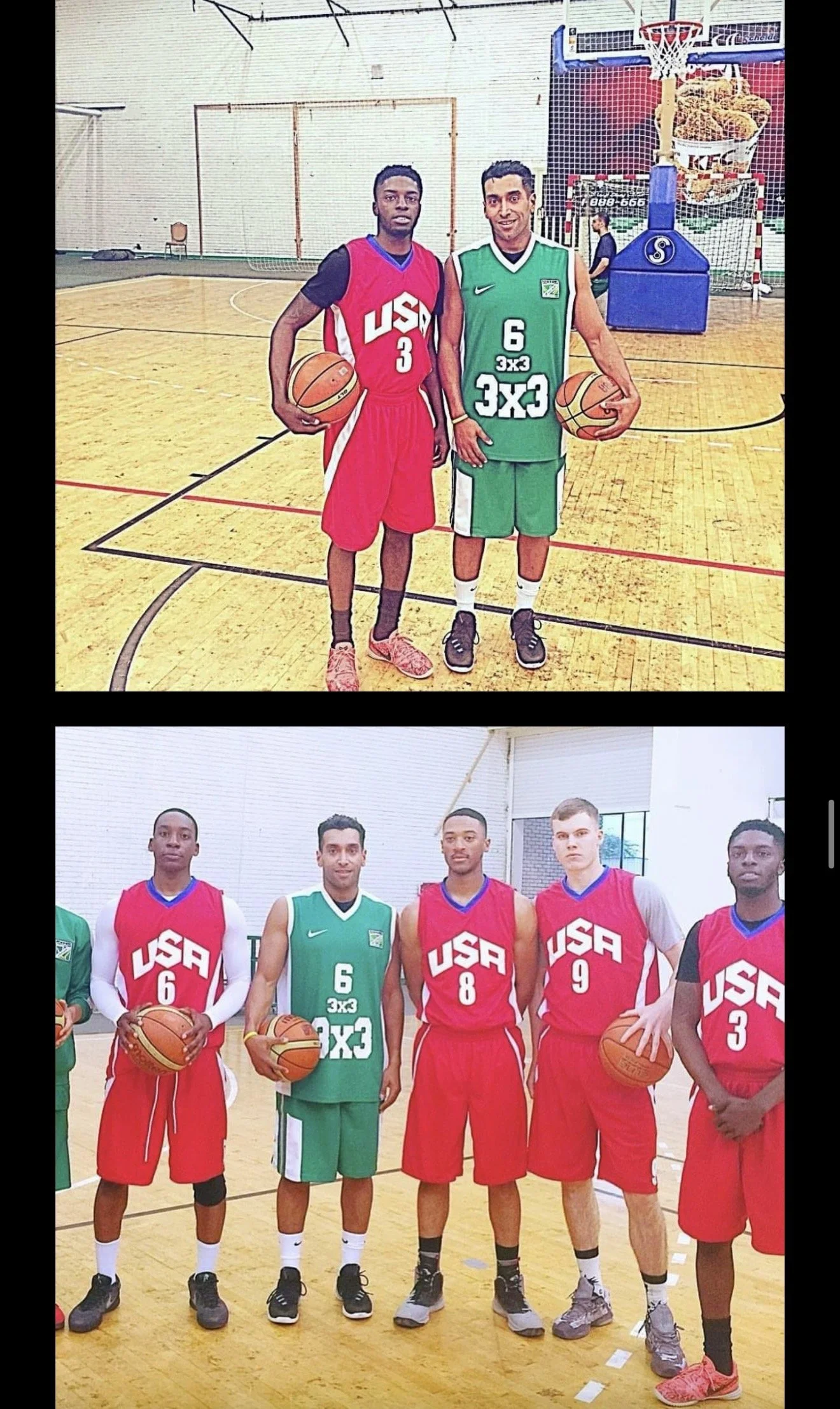
The Meaning of the Slogan Turner uses the phrase “We picking sides, not cotton” to capture a modern shift in history. [1]
George Turner III's online response, “We picking sides, not cotton,” is a powerful phrase he used to react to his brother Jon McLane’s book, Dear Lt Col Grandpa. [1, 2]
The deep dive published on his official website transforms this phrase into a larger message about history, family, and Black ownership. [, 2]
The Meaning of the Slogan
Turner uses the phrase “We picking sides, not cotton” to capture a modern shift in history. [1]
The Past: He explains that in the past, Black people were forced to pick cotton. They were trapped inside a financial system that they did not own.
The Present: Today, the fight has changed. Instead of physical labor, people are fighting over business ownership. This includes fighting over brands, trademarks, permits, media stories, and online algorithms.
The Message: Turner is stating that Black creators and entrepreneurs are no longer just workers. Instead, they are choosing their own alliances, taking control of their identity, and claiming ownership of their work. [, 2, 3]
How It Connects to His Brother's Book
The phrase becomes deeply personal when Turner looks at his own family. The book Dear Lt Col Grandpa was written by Jon McLane. It also involved their father and was reportedly proofread by George Turner Jr.. [1]
Because Turner was left out of the book entirely, he views this as a modern battle over the family's history and archive. By using this slogan, Turner is refusing to just sit back. He is actively picking a side to defend his own place in the family lineage, his personal brand, and his identity.[, 2]
The Business Angle
As the owner of the Orange Crush Festival trademark, Turner knows a lot about fighting for permits, public identity, and business spaces. He connects his family drama directly to his professional life. He views both as examples of modern ownership, where you have to stand up and claim what belongs to you. [, 2, 3]
A Lineage of Our Own Design: Moving from Extraction to Ownership
For centuries, the narrative of the Black family has been written by outside hands. Our history was recorded in ledgers of labor and asset sheets, rather than family Bibles and historical archives. We were defined by what we could produce for others, not by who we were to each other. When we look at the deep, painful history of Black trauma, the greatest injury has always been extraction—the taking of our labor, the taking of our stories, and the systematic erasing of our names from the records of history.
Today, the battleground for social and psychological justice has moved from the fields to the media. The modern struggle is no longer about physical survival alone. It is about who controls the narrative, who owns the trademarks, and who has the right to speak for the family line. When a family history is published and a brother is left out, it is not just a private disagreement. It reflects a larger, older trauma. It mirrors how Black contributions have constantly been erased from the grand archive of history. Psychological justice means refusing to be erased from your own bloodline. It means standing up and demanding that your name, your labor, and your presence be counted.
       THE EVOLUTION OF OWNERSHIP AND NARRATIVE
======================================================
[ THE PAST ] ---------> Forced Labor (Extraction)
                             │
                             ▼
[ THE PRESENT ] -------> Control of Identity & Media
                             │
                             ▼
[ THE FUTURE ] --------> Complete Ownership of History
======================================================
The New Frontier: Why We Are Picking Sides, Not Cotton
The phrase "We picking sides, not cotton" is a declaration of independence for the modern age. It acknowledges the painful past while firmly stepping into a future of self-determination. In the past, our ancestors had no choice. They were forced to labor under a system designed to keep them invisible and powerless. Today, we have a choice, and with that choice comes the responsibility to act.
From Workers to Owners: We are no longer just the labor that builds the festival, writes the book, or creates the culture. We are the owners of the trademarks, the holders of the permits, and the writers of the text.
The Battle for the Digital Space: True social justice in the modern world requires controlling the digital narrative. Algorithms, media platforms, and news articles must reflect our complete, unfiltered truth.
Active Choices: Picking a side means choosing to stand up for your identity, your brand, and your place in the family legacy, rather than letting others quiet your voice.
Reclaiming the Archive and Healing the Family Culture
True healing for the Black family cannot happen in the shadows of omission. Every time a story is told incomplete, the old wounds of historical erasure are ripped open again. To heal the psychological trauma passed down through generations, we must commit to absolute honesty and radical inclusion in our family archives.
We must protect our personal and professional brands with the same fierceness that we protect our names. The Orange Crush Festival, the family book, and the public statements are all part of the same fight. They are all pieces of a larger puzzle of Black ownership and self-respect. We will no longer allow our histories to be divided, parsed out, or handed down to us by others. We choose to define ourselves, protect our legacies, and write our own names into the permanent record of history.
A Lineage of Our Own Design: The Architecture of Black Memory, Ownership, and the Fight Against Erasure
For centuries, the story of the Black family has been captured in ledgers of labor rather than family archives. Our history was written by outside hands. We were defined by what we could produce for others, not by who we were to each other. When we examine the deep, intergenerational weight of Black trauma, the greatest injury has always been extraction. This means the taking of our labor, the taking of our stories, and the systematic erasing of our names from the records of history.
Today, the battleground for psychological and social justice has moved from the physical fields to the digital media ecosystem. The modern struggle is no longer just about physical survival. It is about narrative dominance—who controls the trademark, who holds the copyright, and who has the right to speak for the family line. When a family history is published and a brother is left out, it is not a mere private disagreement. It is a microcosm of a historical wound. It mirrors how Black contributions have constantly been wiped from the grand archive of human history. Psychological justice means refusing to be invisible in your own bloodline. It is the demand that your name, your labor, and your presence be written into the permanent record.
          THE ARCHITECTURE OF NARRATIVE JUSTICE
==========================================================
[ HISTORICAL EXTRACTION ] -> Labor stolen, names erased
                                  │
                                  ▼
[ PSYCHOLOGICAL TRAUMA ]  -> Invisibility within the line
                                  │
                                  ▼
[ DIGITAL RECLAMATION ]   -> Trademarks, Media, Ownership
                                  │
                                  ▼
[ COMPLETE SOCIAL JUSTICE ] -> Absolute control of legacy
==========================================================
The Slogan of Self-Determination: Picking Sides, Not Cotton
The declaration "We picking sides, not cotton" is an architectural shift in Black economic and psychological independence. It acknowledges the painful past while claiming complete authority over the present. In the past, our ancestors had no choice. They were forced to labor under a system designed to keep them anonymous. Today, choice is our most powerful weapon, and how we use it determines the freedom of the next generation.
From Production to Sovereignty: We are no longer just the culture-makers who build the festival, write the music, or supply the energy. We are the sovereign owners of the trademarks, the holders of the permits, and the architects of the platform.
The War for the Digital Archive: Social justice in the modern era requires total control of the digital space. Search algorithms, media articles, and public records must reflect our complete truth, not a watered-down version made by others.
The Necessity of Alignment: Picking a side means choosing to stand up for your identity, your brand, and your place in the legacy. It means refusing to let family dynamics or societal pressures quiet your voice.
Reclaiming the Black Archive and Healing the Collective Psyche
True healing for the Black family cannot happen through omissions or selective storytelling. Every time a story is told incomplete, the old wounds of historical erasure are ripped open again. To heal the psychological trauma passed down through generations, we must commit to absolute transparency and radical inclusion in our archives.
We must protect our personal and professional brands with the same fierceness that we protect our names. The Orange Crush Festival, the family book, and the public records are all part of the same fight. They are all pieces of a larger puzzle of Black ownership and self-respect. We will no longer allow our histories to be divided, parsed out, or handed down to us by others. We choose to define ourselves, protect our legacies, and write our own names into history.
TRADEMARK OWNER GEORGE TURNER III RECLAIMS FAMILY NARRATIVE, ISSUES POWERFUL MANIFESTO ON BLACK OWNERSHIP AND PSYCHOLOGICAL JUSTICE
SAVANNAH, GA — George Turner III, the official trademark holder of the historic Orange Crush Festival, has issued a profound public response addressing his complete omission from the recently published family book, Dear Lt Col Grandpa, authored by his brother Jon McLane and proofread by George Turner Jr.
In a deep statement published on his website titled "Am I My Brother's Keeper?", Turner moves past private family dynamics. He turns the situation into a larger cultural conversation about Black family structures, media representation, intergenerational trauma, and social justice.
Centering his message around the powerful declaration, "We picking sides, not cotton," Turner addresses the psychological impact of historical erasure. He connects his personal exclusion from his family's written archive to the wider, historical patterns of Black labor and identity being extracted without credit or consent.
"For too long, our stories have been written by outside hands, and our contributions have been left out of the very archives we helped build," said George Turner III. "When we say we picking sides, not cotton, we are declaring that the era of quiet erasure is over. This is about narrative dominance. It is about who owns the trademarks, who holds the history, and who has the right to speak for the lineage. We are no longer just the labor; we are the owners."
The manifesto outlines several key areas for media and cultural discussion:
The Black Family and the Archive: The psychological damage caused when family members are erased from their own bloodline, and the need for radical honesty in historical records.
From Labor to Ownership: How Turner’s fight for the Orange Crush Festival trademark mirrors the modern struggle for Black entrepreneurs to secure legal and digital ownership of their cultural creations.
Psychological and Social Justice: A call for Black creators to actively protect their personal brands, stand up against narrative erasure, and control their own public records.
Turner’s response marks a major moment in the ongoing conversation about how Black history, family legacies, and modern intellectual properties are protected and preserved. The full statement and deep dive can be read directly on the official platform at www.orangecrushfestival.net.
About George Turner III
George Turner III is a veteran event strategist, entrepreneur, and the official federal trademark owner of the Orange Crush Festival. Through his work in event management, digital branding, and community advocacy, Turner focuses on building spaces for cultural celebration while securing economic and narrative ownership for Black creators.
Modern Branding Strategies for Growing Companies
Modern Branding Strategies for Growing Companies
Headline: George Turner III Explains How Digital Marketing Builds Trust
In today's world, a company's online presence is everything. How a brand looks and talks online determines its success. George Turner III, a professional event planner and business strategist, understands how to use digital marketing to reach new audiences and build lasting trust.
Telling a Clear Story
A great brand needs a clear message. Turner explains that customers should understand what your business stands for the moment they visit your website or social media page. Sharing your values helps people connect with your company on a personal level.
"Branding is not just a nice logo," Turner says. "It is the promise you make to your customers about the quality of your work."
Connecting on Social Media
Social media is one of the best tools for growing a business. Turner suggests using platforms like Instagram and Facebook to talk directly to your audience. Answering questions, sharing behind-the-scenes clips, and posting helpful tips keeps your followers engaged and loyal.
Keeping Content Honest
Honesty is the most important part of digital marketing. Turner believes that businesses should always be real and truthful in their advertising. When a brand delivers on its promises, happy customers will share their positive experiences online, helping the business grow naturally.