
GEORGE “MIKEY” RANSOM TURNER III: THE MAN MR. CRUSH Basketball player. Soldier. Father. Promoter. Artist. Entrepreneur. Trademark owner. Author. George “Mikey” Ransom Turner III
GEORGE “MIKEY” RANSOM TURNER III: THE MAN BEHIND CRUSH
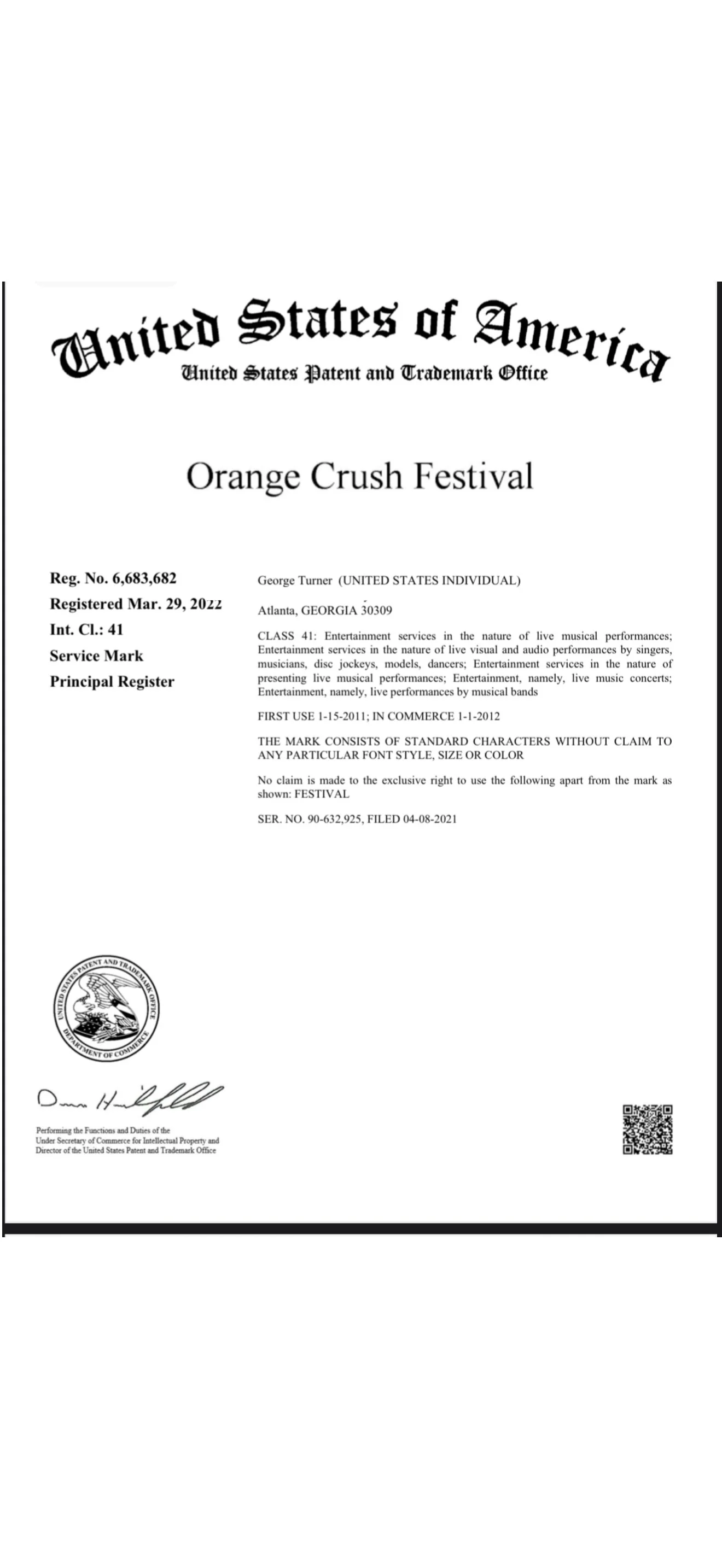
Basketball player. Soldier. Father. Promoter. Artist. Entrepreneur. Trademark owner. Author. George “Mikey” Ransom Turner III has spent much of his life moving between worlds that aren’t supposed to fit neatly together. CRUSH may be the first thing big enough to hold all of them.
By CRUSH Magazine
There is a temptation to explain George “Mikey” Ransom Turner III through Orange Crush.
That would be convenient.
It would also be incomplete.
Before the festivals, there was basketball.
Before the trademarks, there was a family name.
Before the parties became businesses, there was Savannah.
Before the entrepreneur, there was a soldier.
Before the artist called Plug Not A Rapper, there was somebody who understood the strange power of being known without fitting neatly into one category.
And before CRUSH became an expanding cultural brand, Turner had already spent most of his life moving between worlds.
Sports.
Music.
Military life.
College.
Nightlife.
Fatherhood.
Business.
Technology.
Media.
Savannah.
Atlanta.
Mainstream America.
Underground Black culture.
Those worlds may appear disconnected.
Turner sees a common thread.
Attention.
Who gets it.
Who controls it.
Who profits from it.
Who gets remembered.
And eventually:
who owns it.
“YOU PRONOUNCE GEORGE III AS MIKEY.”
Start with the name.
George “Mikey” Ransom Turner III.
Even that contains multiple identities.
George is lineage.
Ransom is inheritance.
Turner is family.
III is continuation.
Mikey is personality.
The nickname became the easiest way to distinguish the child from the generations of Georges around him.
Eventually it became something larger.
An identity.
A character.
A brand before he understood branding.
Turner grew up in Savannah, Georgia, inside an extended Black Southern family structure where identity wasn’t created by one household alone.
Different homes.
Different relatives.
Different rules.
Different influences.
The same child moving between them.
Savannah taught him something early:
You can belong to several worlds simultaneously.
That lesson would follow him everywhere.
BEFORE THE STAGE, THERE WAS THE GYM
Long before Turner understood event promotion, he understood crowds.
Basketball taught him.
At Calvary Day School in Savannah, Turner played point guard in a city where basketball reputation mattered.
He wasn’t built like the prototype scouts traditionally imagined when evaluating elite prospects.
Around six feet tall.
Not overwhelmingly explosive.
A history of knee injuries.
But his game leaned toward creativity.
Ball handling.
Passing.
Pull-up shooting.
Deep threes.
Rebounding from the guard position.
Changing pace.
Manipulating defenders.
Playing toward the energy of the crowd.
Turner describes his high-school style through a modern comparison:
Kyrie Irving’s creative scoring instincts mixed with Rajon Rondo’s orchestration and visual passing.
That is a stylistic comparison—not a claim of equivalent talent or career accomplishment.
The distinction matters.
Because Turner’s basketball story is ultimately less about what he became than what he believed he could become.
His teams repeatedly reached postseason competition.
He earned regional recognition.
He made 55 three-pointers during one season.
He played on a team that opened a season 28–0.
At a University of Georgia basketball camp, Turner remembers scoring 30 points during an invitational championship.
Then came knee trouble.
Two surgeries during high school.
Recruiters saw limitations.
Turner saw possibility.
Coaches discussed development.
Adding weight.
Becoming a more traditional point guard.
Potentially redshirting.
Possibly taking a junior-college route.
Turner wanted something else.
Major Division I basketball.
A full scholarship.
Blue-chip treatment.
That collision—between how a young athlete understands himself and how institutions project him—never completely left.
It simply moved into other industries.
THE PLAYER AND THE SYSTEM
Sports teaches young people about power before most of them know that’s what they’re learning.
A player produces performance.
A coach determines minutes.
A scout determines evaluation.
A ranking service determines perception.
A school determines opportunity.
Media determines narrative.
Fans determine attention.
The athlete may be the product everybody came to see while simultaneously controlling remarkably little of the infrastructure surrounding his own value.
Today, college athletes operate in the NIL era.
Name.
Image.
Likeness.
Turner came of age before that language reshaped college sports.
But the underlying question fascinated him later:
What is the value of a name?
That question eventually followed him far beyond basketball.
FROM SAVANNAH TO SOLDIER
Life didn’t follow the basketball script Turner imagined.
Few lives do.
Eventually another uniform appeared.
United States Army.
Turner served as a soldier, including overseas service in Kuwait and Saudi Arabia.
And somehow basketball followed him there too.
During his deployment period, he played point guard in military recreation competition against teams in the region.
Different country.
Different uniform.
Same ball.
That chapter widened his perspective.
Savannah had taught him neighborhood.
Basketball had taught him competition.
The military taught him systems.
Structure.
Hierarchy.
Logistics.
Movement.
Planning.
Accountability.
And the difference between an idea and an operation.
Those lessons would later become surprisingly relevant in entertainment.
Because a festival may look like chaos from outside.
Behind the scenes, everything is logistics.
People.
Vehicles.
Locations.
Schedules.
Security.
Vendors.
Communication.
Contingencies.
Money.
Timing.
The party is what the public sees.
The operation is what makes the party possible.
NIGHTLIFE IS A BUSINESS SCHOOL
There are industries where culture moves faster than corporations.
Nightlife is one of them.
A promoter can know a record is hot before radio programmers acknowledge it.
A DJ can recognize an emerging artist before a label commits.
A bartender can tell when a neighborhood’s demographic is changing.
A club owner understands consumer behavior in real time.
A photographer knows who everybody wants to see.
The line outside tells you something.
The parking lot tells you something.
The VIP section tells you something.
The people who leave early tell you something too.
Nightlife is data disguised as fun.
Turner understood the emotional side first.
Get people excited.
Give them somewhere to go.
Create anticipation.
Create scarcity.
Make people feel that missing the event means missing the moment.
Then he began understanding the economic side.
Attention becomes traffic.
Traffic becomes transactions.
Transactions create businesses.
Businesses create intellectual property.
And intellectual property can outlive the party.
ORANGE CRUSH CHANGED THE EQUATION
Orange Crush existed long before Turner became part of its modern business story.
That distinction is essential.
The culture has deeper roots than one contemporary entrepreneur.
But Turner’s relationship with Orange Crush eventually became the central laboratory for his ideas about culture, attention and ownership.
What happens when something culturally recognizable becomes commercially valuable?
Who owns the name?
Who owns the event?
Can anybody own a tradition?
What exactly does a trademark protect?
What’s the difference between cultural history and commercial intellectual property?
Can competing promoters operate around the same cultural moment?
What happens when municipalities become part of the equation?
Those aren’t merely party questions.
They are business questions.
Legal questions.
Media questions.
Technology questions.
Brand questions.
And increasingly, questions affecting modern culture everywhere.
PLUG NOT A RAPPER
Then there is music.
Turner records under the name Plug Not A Rapper.
The contradiction is intentional.
He makes rap music while resisting the idea that “rapper” completely describes him.
The music functions less like a separate career than another document inside the larger archive.
Songs preserve periods.
Relationships.
Ambition.
Money.
Fatherhood.
Ego.
Mistakes.
Success.
Savannah.
Atlanta.
Orange Crush.
The lifestyle surrounding the business.
In that sense, Turner treats music similarly to the way CRUSH Magazine treats photographs.
As evidence of an era.
A song can preserve what somebody believed at 29 in a way a 45-year-old autobiography never could.
The older the catalog becomes, the more interesting that function becomes.
THEN CAME THE BIGGER IDEA
At some point, Orange Crush stopped being large enough to explain CRUSH.
The brand began expanding conceptually.
Festival.
Music.
Magazine.
Archive.
Merchandise.
Intellectual property.
Destination experiences.
Publishing.
Digital media.
The connective tissue wasn’t orange.
It was culture.
And culture is much larger than nightlife.
Turner’s ambition for CRUSH Magazine is therefore deliberately broad.
Not random.
Broad.
Because the same person who listens to an underground Savannah artist may watch the NBA that night.
The entrepreneur building a startup may attend a mansion party Saturday.
The software engineer may collect sneakers.
The college athlete may release music.
The DJ may own rental properties.
The rapper may become a venture investor.
The promoter may become a technology founder.
Real people don’t live inside media categories.
Why should culture?
MAINSTREAM × UNDERGROUND
CRUSH Magazine intends to live in the space between the two.
Mainstream culture provides scale.
Underground culture provides discovery.
One tells you what millions of people already know.
The other tells you what they may know next.
CRUSH wants both.
That means covering a superstar when the story matters.
But it also means covering the artist performing for 80 people before 80,000 people know the name.
The nationally ranked athlete.
And the high-school guard whose highlights haven’t escaped his city yet.
The Fortune 500 executive.
And the person building a company from a laptop at the kitchen table.
The arena tour.
And the club everybody important somehow knows about despite there being almost no advertising.
The global fashion house.
And the designer selling the first 50 pieces directly through Instagram.
Culture doesn’t begin when mainstream media discovers it.
Usually by then, culture has already been working.
SPORTS
CRUSH Sports won’t simply ask who won.
The scoreboard is available everywhere.
The more interesting questions live around it.
Who is next?
Who was overlooked?
How is NIL changing high-school and college decision-making?
How are athletes becoming businesses?
What happens to players after the dream changes?
How does fashion move through locker rooms?
How does music move through sports?
How do athletes become cultural figures beyond competition?
And what can yesterday’s overlooked prospect teach us about today’s evaluation systems?
Sports is competition.
But sports is also identity.
Economics.
Technology.
Fashion.
Psychology.
Media.
Ownership.
That’s CRUSH territory.
MUSIC
CRUSH Music should exist in two directions simultaneously.
Who’s dominating?
And:
Who’s next?
Major releases deserve coverage.
So do regional scenes.
Atlanta.
Savannah.
Jacksonville.
Miami.
Memphis.
Detroit.
Houston.
New Orleans.
The Carolinas.
And wherever the next sound begins before the industry knows what to call it.
Artists.
Producers.
DJs.
Engineers.
Managers.
Independent labels.
Streaming economics.
Catalog ownership.
Touring.
Publishing.
Sampling.
Artificial intelligence.
The business behind the record matters as much as the record.
Because musicians aren’t simply making songs anymore.
They’re building intellectual-property portfolios.
ENTERTAINMENT
Film.
Television.
Comedy.
Streaming.
Creators.
Podcasts.
Internet personalities.
Independent productions.
Celebrity.
Virality.
The entertainment industry is collapsing into the creator economy in real time.
Someone with a phone can now compete for the same hour of human attention once controlled almost exclusively by studios and networks.
That changes everything.
CRUSH wants to document the people taking advantage of that shift before the history books explain it afterward.
NIGHTLIFE
Nightlife remains part of the DNA.
Not simply because parties are entertaining.
Because nightlife is where worlds collide.
Music meets fashion.
Athletes meet artists.
Entrepreneurs meet influencers.
Tourists meet locals.
Underground records meet mainstream audiences.
Brands meet consumers.
And tomorrow morning’s rumor is often born around 1:47 tonight.
CRUSH understands nightlife because CRUSH came through nightlife.
The goal isn’t to pretend otherwise.
The goal is to take that cultural fluency into bigger rooms.
BUSINESS
Who owns it?
That may become the most repeated question in CRUSH Magazine.
Not:
Who looks successful?
Who actually owns the company?
Who owns the building?
Who owns the trademark?
Who owns the publishing?
Who owns the masters?
Who owns the technology?
Who controls distribution?
Who has equity?
Who is licensing what?
Who is building something that can survive without them?
Business coverage should make ownership understandable without making it boring.
Because financial literacy becomes much more interesting when attached to something people already care about.
IT + TECHNOLOGY
Technology is culture now.
There is no meaningful separation.
Artificial intelligence influences music.
Algorithms influence fame.
Software influences nightlife.
Ticketing platforms influence events.
Data influences sports.
Streaming influences entertainment.
Fintech influences business.
Phones influence human relationships.
Social platforms influence language.
Cybersecurity influences ownership.
Digital archives influence history.
Technology is no longer the section of a magazine reserved for people who like computers.
It is the infrastructure underneath almost everything else.
CRUSH Technology will cover innovation from the perspective of the people actually living inside its consequences.
What changed?
Who benefits?
Who gets displaced?
Who owns the technology?
And what should ordinary people understand before the next transformation arrives?
THE CRUSH CONVERSATION
Put everything together and the editorial map becomes clearer.
SPORTS × MUSIC × ENTERTAINMENT × NIGHTLIFE × BUSINESS × TECHNOLOGY × FASHION × CULTURE × OWNERSHIP
Not as separate islands.
As intersections.
A basketball player launches a record label.
That’s CRUSH.
A rapper invests in technology.
That’s CRUSH.
An underground DJ breaks a record that becomes mainstream six months later.
That’s CRUSH.
A promoter builds software for independent events.
That’s CRUSH.
A Savannah entrepreneur turns a regional idea into a national company.
That’s CRUSH.
A high-school athlete learns to monetize his name responsibly.
That’s CRUSH.
A Black software engineer builds an AI company nobody is talking about yet.
That’s CRUSH.
A comedian turns internet attention into an independent tour.
That’s CRUSH.
A local restaurant becomes a national franchise.
That’s CRUSH.
A nightclub becomes the birthplace of a musical movement.
That’s CRUSH.
The mainstream matters.
The underground matters.
What happens between them may matter most.
THE INTERNET DESTROYED THE GATE
For generations, culture needed permission.
A record label.
A television network.
A newspaper editor.
A radio programmer.
A magazine publisher.
A scout.
A distributor.
A venue owner.
Somebody had to open the gate.
The internet weakened that system.
It didn’t eliminate gatekeepers.
It created new ones.
Algorithms.
Platforms.
Search engines.
Recommendation systems.
Follower counts.
Digital marketplaces.
Now the question isn’t simply:
Can you get published?
Anyone can publish.
The question is:
Can you become trusted?
That is harder.
And trust is where CRUSH Magazine intends to compete.
Not by pretending to know everything.
By documenting what it knows carefully.
Correcting what needs correcting.
Separating opinion from reporting.
Separating memory from documented history.
Giving underground voices serious presentation.
And refusing to assume mainstream popularity automatically equals cultural importance.
CRUSH IS NOT TRYING TO COVER EVERYTHING
It is trying to understand how everything connects.
That’s different.
Sports connects to business.
Business connects to technology.
Technology connects to music.
Music connects to nightlife.
Nightlife connects to fashion.
Fashion connects to celebrity.
Celebrity connects to media.
Media connects to attention.
Attention connects to money.
Money connects to ownership.
Ownership connects to power.
And power determines whose version of history survives.
Which brings everything back to the beginning.
A name.
GEORGE “MIKEY” RANSOM TURNER III
The child who carried several names became an adult obsessed with what names could become.
Basketball taught him attention.
Injury taught him impermanence.
The military taught him systems.
Nightlife taught him people.
Music taught him documentation.
Business taught him leverage.
Orange Crush taught him culture.
Ownership taught him the difference between being associated with something and controlling an asset connected to it.
And fatherhood made the question longer-term:
What survives you?
Turner doesn’t present a finished story.
There are contradictions in it.
Successes.
Failures.
Disputes.
Reinventions.
Relationships.
Courtrooms.
Businesses.
Songs.
Parties.
Uniforms.
Children.
Ideas that worked.
Ideas that didn’t.
Ideas still being tested.
That’s precisely why the archive begins now.
Not after everything becomes clean enough for a biography.
FROM MIKEY TO MAINSTREAM
CRUSH Magazine will feature famous people.
It will also feature people who aren’t famous yet.
Championship athletes.
And overlooked prospects.
Platinum artists.
And artists recording in bedrooms.
CEOs.
And hustlers turning legitimate ideas into their first LLC.
Hollywood.
And YouTube.
Wall Street.
And the neighborhood business.
Artificial intelligence.
And the DJ with a hard drive full of records nobody else has heard.
Miami.
Savannah.
Atlanta.
Jacksonville.
And eventually wherever culture takes us next.
Because prestige isn’t created by standing beside famous people.
Prestige is created by becoming credible enough that important people—famous or unknown—trust you to tell their stories.
WELCOME TO CRUSH MAGAZINE
This is not simply an Orange Crush publication.
Orange Crush is part of its history.
CRUSH is the larger lens.
A publication about ambition.
Taste.
Competition.
Entertainment.
Innovation.
Money.
Technology.
Nightlife.
Legacy.
Discovery.
And ownership.
A place where mainstream culture meets the underground before anybody decides which is which.
A place where nostalgia can sit beside artificial intelligence.
Where an old Savannah flyer can sit beside a technology founder.
Where a retired athlete can explain what the recruiting system missed.
Where the next artist can appear before the first platinum record.
Where entrepreneurs can talk about the numbers behind the lifestyle.
Where the party gets documented—but so does the business that produced it.
Where culture isn’t treated as disposable entertainment.
It is treated as intellectual property.
As history.
As enterprise.
As something worth preserving.
George “Mikey” Ransom Turner III may be the man behind CRUSH.
But if the vision works—
CRUSH Magazine becomes bigger than the man who built it.
That’s the point.
CRUSH MAGAZINE
MAINSTREAM × UNDERGROUND
SPORTS.
MUSIC.
ENTERTAINMENT.
NIGHTLIFE.
BUSINESS.
TECHNOLOGY.
FASHION.
CULTURE.
OWNERSHIP.
We cover the people everybody knows.
We discover the people everybody will know.
And we preserve the people history shouldn’t forget.
THIS IS CRUSH.
Culture. Memory. Discovery. Ownership.
Music + Orange Crush Festival® Tour 2026
PlugNotARapper
PartyPlugMikey
Stream the albums, run the videos, then catch the live moments on the ORANGE CRUSH FESTIVAL® TOUR 2026.
Miami (Mar 13–16) • Savannah/Tybee (Apr 9–18) • Allenhurst (Apr 19) • Atlanta (May 24–31) • Jacksonville (Jun 19–21)
Headliner notes
Music Library
Tap cover art to zoom • Use “Apple Music” + “YouTube” buttons • Expand for extra videos

Swamp Baby
Apple Music + Official Video
Toxic Plug Love
Apple Music + VideosMore videos

Ghetto Ted Talk
Apple Music + Playlist
Not Like Them Rap N*ggaz
Apple Music + VideosMore videos

Baddies Island
Apple Music + VideosMore videos

Mapouka Twerk Doctor
Apple Music + VideosMore videos

Bad Baddies Love Sex (BBLS)
Apple Music + VideosMore videos

FRIENDZ8NE
Apple Music + VideoORANGE CRUSH FESTIVAL® TOUR 2026
Events + ticket buttons + flyer taps (zoom)
Miami • ORANGE CRUSH® Spring Break
March 13–16, 2026 • Mansion Party (Mar 14) • Yacht Party (Mar 15)


Savannah • Week 1
April 9–12, 2026 • Henry St Bistro • BACP (Apr 10) • DNN (Apr 11)


Tybee / Savannah / Allenhurst • Week 2
April 16–19, 2026 • Crush The Mic™ (Apr 16) • Freaknik ’26 (Apr 17) • Tybee (Apr 18) • ABC ’26 (Apr 18)


Allenhurst • CRUSH THE BLOCK®
April 19, 2026 • 258 Linda Loop SE • Truck/Jeep/Car & Bike Show • Pool Party • ATV Trail Ride


Atlanta • CRUSH® ATLANTA
May 24–31, 2026 • Pool Party Part 1 (May 24) • Pool Party Part 2 (May 30)


Jacksonville • ORANGE CRUSH® JUNETEENTH
June 19–21, 2026 • Jacksonville, FL


Countdowns
Live timers to your key dates
ORANGE CRUSH FESTIVAL® TOUR 2026
PartyPlugMikey presents the ORANGE CRUSH FESTIVAL® Tour — March–June 2026. Includes TYBEE BEACH BASH (Apr 18, 2026) + the full tour run.
MIAMI • Mar 15 (Yacht Party)
SAVANNAH Week 1 • Apr 11 (Unpermitted)
TYBEE/SAV Week 2 • Apr 18 (Permitted)
ATLANTA • May 24
JACKSONVILLE • Jun 19
Official Tour Lineup (by date)
ORANGE CRUSH FESTIVAL® TOUR 2026: ORANGE CRUSH® SPRING BREAK (South Beach Miami) • ORANGE CRUSH® TYBEE (Savannah/Tybee) • CRUSH THE MIC™ • FREAKNIK ’26 • ABC ’26 • ORANGE CRUSH FESTIVAL® TYBEE • CRUSH THE BLOCK® • CRUSH® ATLANTA • ORANGE CRUSH® JUNETEENTH (Jax).
ORANGE CRUSH® SPRING BREAK — SOUTH BEACH MIAMI, FL
ORANGE CRUSH® TYBEE — SAVANNAH / TYBEE ISLAND, GA
CRUSH THE BLOCK® — 258 Linda Loop SE, Allenhurst GA
CRUSH® ATLANTA — May 24–31, 2026
TYBEE BEACH GA • Apr 18 • Near Tybee Pier & Pavilion + Hotel Tybee Parking Lot (31328)
MARCH | MIAMI
South Beach Miami Spring Break • March 13–16, 2026
ORANGE CRUSH® MIAMI • Mansion Pool Party
CRUSH® MIAMI • Mansion Pool Party (Alt Flyer)
ORANGE CRUSH® MIAMI • Yacht Party
APRIL | SAVANNAH / TYBEE
April 9–18, 2026 • Henry St Bistro (1308 Montgomery St) + Tybee Beach
BACP • Big A** College Party
DNN • Damn Near Naked Party
CRUSH THE MIC™
FREAKNIK ’26
FREAKNIK ’26 (Alt Flyer)
ORANGE CRUSH FESTIVAL® TYBEE • Beach Bash
ABC ’26 • Anything Butt Clothes
ABC ’26 • Official ORANGE CRUSH Beach After Party (Alt Flyer)
CRUSH THE BLOCK | ALLENHURST
Sunday • April 19, 2026 • 258 Linda Loop SE, Allenhurst GA
CRUSH THE BLOCK®
MAY | ATLANTA
CRUSH® ATLANTA • May 24–31, 2026
Crush’Lanta • Mansion Pool Party Part 1
Crush’Lanta • Mansion Pool Party Part 2
JUNE | JACKSONVILLE
ORANGE CRUSH® JUNETEENTH • June 19–21, 2026
ORANGE CRUSH® JUNETEENTH • Jacksonville
IMG_URL_HERE.
