
The Complete Profile of Tim Quarterman: Versatility, Vision, and the "Grind-It-Out" Mentality
The Complete Profile of Tim Quarterman: Versatility, Vision, and the "Grind-It-Out" Mentality
Tim Quarterman built a unique basketball identity by pairing atypical, elite size for a guard with a highly versatile skill set. From capturing state titles in Georgia to serving as a stat-sheet-stuffing playmaker for the LSU Tigers, Quarterman's career was defined by multi-categorical production and a resilient, blue-collar approach to the game.
Playing Style: The Oversized Catalyst
Quarterman’s game was anchored by his rare physical dimensions for a backcourt player, standing at 6-foot-6 with a long wingspan. This frame unlocked specific advantages that defined his style:
Floor Vision & Passing: Because of his height, Quarterman could easily see over opposing defenses in the halfcourt. According to his DraftExpress Scouting Profile, he excelled at initiating fast breaks and orchestrating pick-and-roll sequences. He was known for cross-court skip passes, crisp lobs, and post entries, though his aggressive desire to throw highlight-reel passes occasionally led to turnovers.
Slashing and Creation: He utilized a shifty off-the-dribble package to navigate perimeter defenses. While he struggled at times with halfcourt scoring efficiency, his ability to generate space in the mid-range made him a constant threat to break down a defense.
Defensive Reach: On the defensive end, his length allowed him to swallow up smaller guards, contest jump shots effectively, and play passing lanes. He used his long arms to disrupt ball-handlers, generating high steal numbers throughout his amateur career.
Demeanor: Clutches, Composure, and Work Ethic
On the court, Quarterman was characterized by a distinct stoicism and a willingness to embrace the "grind" of the game.
Late-Game Ice: Quarterman was a player who elevated his intensity when the pressure mounted. His coaches at LSU Athletics consistently noted that his best, most focused moments occurred late in tight games, transforming him into a clutch late-game rally catalyst.
Quiet Work Ethic: He was widely praised for a rigorous, two-way work ethic. Instead of demanding the spotlight—even while playing alongside high-profile teammates like Ben Simmons—Quarterman focused on doing the dirty work: fighting for defensive rebounds, diving for loose balls, and shifting to whatever role his team required. He later attributed this "grind-it-out" mentality to what he absorbed from veterans during his professional transition.
Stats, Achievements, and Career Milestones
         TIM QUARTERMAN AMATEUR CAREER TIMELINE

 [High School: Sol C. Johnson] ----> [College: LSU Tigers]
  - 19.5 PPG / 6.2 RPG                - 818 Career Points
  - Class AAA State Title             - Historic Triple-Double
  - GA State Player of the Year       - 11th All-Time in Assists
High School: Sol C. Johnson (Savannah, GA)
Quarterman was a consensus top-100 national recruit out of Savannah. As a senior in the 2012–13 season, he put up dominant, comprehensive numbers:
Per-Game Stats: 19.5 PTS, 6.2 REB, 5.1 AST, 3.4 STL
Peak Performance: Dropped a season-high 35 points against national powerhouse Oak Hill Academy.
Achievements: Led the Atom Smashers to the Class AAA Georgia State Championship, scoring a game-high 21 points in the title game, and earned Georgia Class AAA State Player of the Year honors.
College: LSU Tigers (2013–2016)
After arriving in Baton Rouge, Quarterman transitioned from an energetic freshman reserve into a foundational starter over his sophomore and junior years.
The Shaq Milestone: On February 28, 2015, Quarterman secured an iconic place in program history by recording 18 points, 10 rebounds, and 10 assists against Ole Miss. It marked the first triple-double by an LSU player since Shaquille O'Neal accomplished the feat in 1992.
Clutch Scoring Exploits: He logged 35 double-figure scoring games across 98 appearances. He notched a career-high 27 points twice—first in a double-overtime comeback against Georgia and later against Houston.
Historical Playmaking: He finished his three-year college career with 818 points, 381 rebounds, 302 assists, and 103 steals. His 302 assists left him 11th all-time in LSU program history, showcasing his definitive legacy as a true stat-sheet stuffer.
DECORATED ARMY VETERAN GEORGE TURNER III EXPANDS NATIONAL CAMPAIGN AGAINST HISTORICAL ERASURE, HONORING MILITARY SERVICE, BLACK LINEAGE, AND CULTURAL OWNERSHIP
DECORATED ARMY VETERAN GEORGE TURNER III EXPANDS NATIONAL CAMPAIGN AGAINST HISTORICAL ERASURE, HONORING MILITARY SERVICE, BLACK LINEAGE, AND CULTURAL OWNERSHIP
SAVANNAH, GA —
U.S. Army Veteran George “Mikey” Ransom Turner III — a federally recognized Service-Disabled Veteran entrepreneur, cultural organizer, and federal trademark owner of the historic Orange Crush Festival — is expanding his public campaign surrounding historical omission, veteran recognition, and Black lineage preservation.
Turner, who served honorably in the United States Army under both the 74D Chemical, Biological, Radiological & Nuclear Specialist field and the 92A Automated Logistical Specialist field, says the conversation is no longer merely about a family disagreement. It is about what happens when living Black veterans, athletes, builders, and creators are excluded from the official records of their own bloodline.
Before the trademarks, before the entrepreneurship, before the national cultural battles surrounding Orange Crush, Turner’s foundation was built through military discipline, basketball leadership, and multiple overseas deployments.
THE SOLDIER BEFORE THE SYMBOL
Long before becoming associated with festival culture, branding battles, or intellectual property disputes, George Turner III was a young Army servicemember balancing military readiness, athletics, leadership, and deployment responsibilities.
UNITED STATES ARMY SERVICE PROFILE
Category
Details
Military Branch
United States Army
Veteran Status
Service-Disabled Veteran
MOS #1
74D – Chemical, Biological, Radiological & Nuclear Specialist
MOS #2
92A – Automated Logistical Specialist
Overseas Service
Multiple Deployments
Leadership Background
Logistics, operational readiness, accountability systems
Athletic Distinction
ALL ARMY Basketball competitor before retirement
Turner states that his military experience fundamentally shaped the structure, endurance, and organizational systems later used to build the Orange Crush Festival platform and broader CRUSH ecosystem.
“People see the festivals and the headlines now.
But before any of this, there was Army structure, Army sacrifice, Army discipline, Army deployments, and Army basketball.
The soldier came before the businessman.”
FROM ARMY GYMS TO CULTURAL WARFARE
Turner’s basketball journey extended beyond Savannah-area notoriety and the historic “Calvary Crazies” era. During his military years, he remained deeply involved in elite basketball environments connected to ALL ARMY competition and military athletics.
The combination of:
military structure,
deployment experience,
logistics leadership,
and competitive basketball culture
created what Turner describes as a “survival mentality built through pressure.”
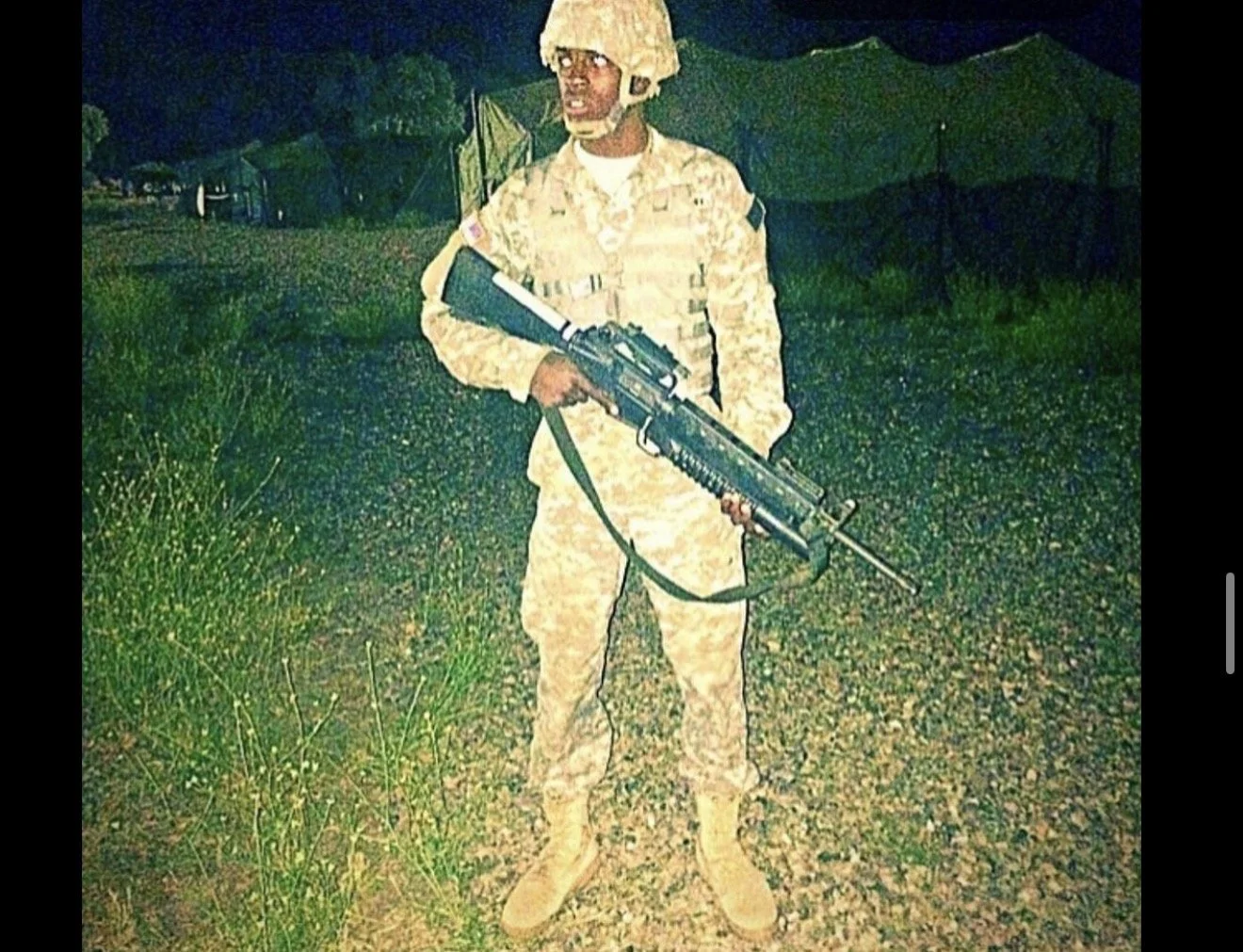
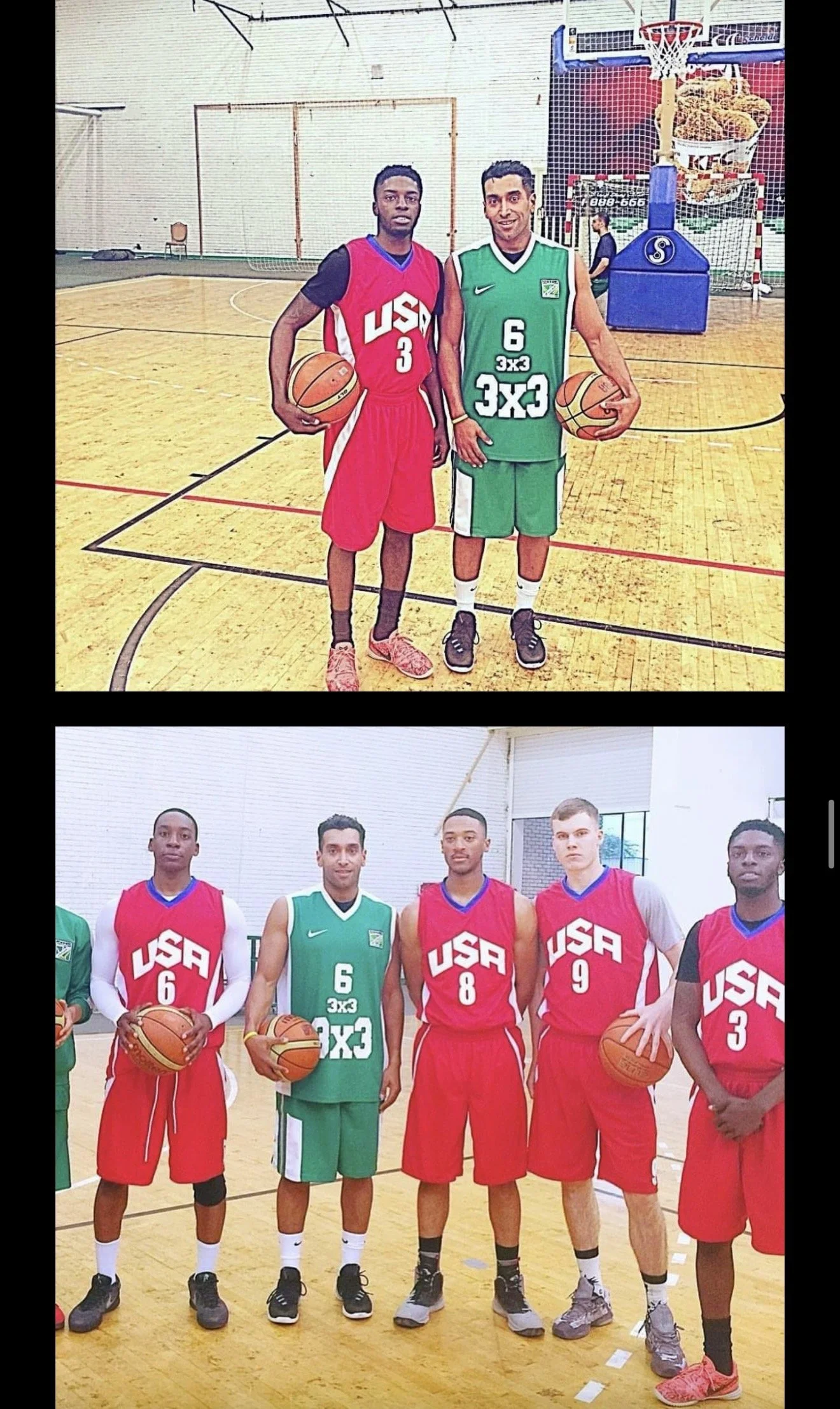
The attached archival images from Turner’s military basketball years show him competing alongside international and military athletes while representing USA basketball and military-connected athletic programs.
Turner says these years are central to understanding why omission from historical family narratives carries such weight.
“You cannot erase the deployment years.
You cannot erase the ALL ARMY years.
You cannot erase the veteran son while celebrating military ancestry.
That contradiction exposes the entire problem.”
THE MILITARY FOUNDATION OF ORANGE CRUSH
According to Turner, the public often misunderstands Orange Crush Festival as simply a party brand or entertainment platform. He argues the operational scale behind the brand was built through military-level logistics and coordination principles learned during Army service.
Those systems include:
transportation planning,
crowd logistics,
emergency preparedness,
personnel management,
chain-of-command structuring,
operational communications,
and rapid-response contingency planning.
Turner connects these disciplines directly to the expansion of:
Orange Crush Festival,
Orange Crush Magazine,
CRUSH University initiatives,
multi-city touring,
artist development,
and veteran-led entrepreneurship.
He argues that many Black veterans are never fully acknowledged for how military structure translates into entrepreneurship and economic leadership after service.
THE BLACK VETERAN PARADOX
Central to Turner’s campaign is what he calls “The Black Veteran Paradox” — the contradiction in which Black servicemembers are celebrated symbolically but frequently erased economically, academically, and institutionally once they seek ownership and independent authority.
He argues that Black veterans historically:
fight for freedoms they themselves do not fully receive,
contribute culturally while ownership is transferred elsewhere,
and build systems later controlled by institutions outside their communities.
Turner now frames his campaign as part of a broader national conversation about:
Black military legacy,
historical preservation,
narrative sovereignty,
economic ownership,
and intellectual property rights.
“WE PICKING SIDES, NOT COTTON”
The campaign slogan now increasingly associated with Turner’s movement — “We Picking Sides, Not Cotton” — is described not as a rejection of history, but as a declaration of strategic alignment and self-determination.
Turner says the phrase symbolizes:
choosing ownership over exploitation,
choosing authorship over silence,
choosing economic control over cultural extraction,
and choosing historical preservation over omission.
“Our grandparents survived segregation.
Our ancestors survived slavery and Jim Crow.
Our generation must survive erasure.
That is the modern battlefield.”
FROM CALVARY CRAZIES TO ALL ARMY
Turner’s supporters increasingly connect his military years to his earlier Savannah basketball notoriety during the Calvary Day School era.
The same player who energized packed gyms during the “Calvary Crazies” era later transitioned into Army basketball environments shaped by discipline, travel, and national competition.
Supporters describe the evolution as:
Savannah basketball phenomenon
Military athlete and deployed servicemember
Disabled veteran entrepreneur
Trademark owner and cultural organizer
Public advocate for Black economic sovereignty
Turner argues that removing any stage from that sequence creates a false and incomplete historical record.
A CAMPAIGN GROWING BEYOND FAMILY
While sparked by exclusion from a family-centered publication, Turner says the campaign has evolved into something far larger.
The expanded initiative now focuses on:
veteran visibility,
Black archive preservation,
HBCU cultural economics,
tourism ownership,
intellectual property protection,
and historical narrative control.
Turner says future releases will include:
expanded military timelines,
basketball archives,
deployment reflections,
veteran entrepreneurship discussions,
and historical analyses connecting Savannah, Tybee Island, HBCU culture, and Orange Crush history.
ABOUT GEORGE TURNER III
George “Mikey” Ransom Turner III is a United States Army Veteran, former ALL ARMY basketball competitor, entrepreneur, entertainment executive, and federal trademark owner of the Orange Crush Festival brand. A certified Service-Disabled Veteran business owner, Turner works across live events, media, branding, tourism, music, and cultural preservation initiatives focused on Black ownership, veteran advocacy, and economic empowerment.
For media inquiries, partnerships, interviews, or speaking engagements, visit:
OrangeCrushFestival.net


A Lineage of Our Own Design: The Architecture of Black Memory, Ownership, and the Fight Against Erasure
A Lineage of Our Own Design: The Architecture of Black Memory, Ownership, and the Fight Against Erasure
For centuries, the story of the Black family has been captured in ledgers of labor rather than family archives. Our history was written by outside hands. We were defined by what we could produce for others, not by who we were to each other. When we examine the deep, intergenerational weight of Black trauma, the greatest injury has always been extraction. This means the taking of our labor, the taking of our stories, and the systematic erasing of our names from the records of history.
Today, the battleground for psychological and social justice has moved from the physical fields to the digital media ecosystem. The modern struggle is no longer just about physical survival. It is about narrative dominance—who controls the trademark, who holds the copyright, and who has the right to speak for the family line. When a family history is published and a brother is left out, it is not a mere private disagreement. It is a microcosm of a historical wound. It mirrors how Black contributions have constantly been wiped from the grand archive of human history. Psychological justice means refusing to be invisible in your own bloodline. It is the demand that your name, your labor, and your presence be written into the permanent record.
          THE ARCHITECTURE OF NARRATIVE JUSTICE
==========================================================
[ HISTORICAL EXTRACTION ] -> Labor stolen, names erased
                                  │
                                  ▼
[ PSYCHOLOGICAL TRAUMA ]  -> Invisibility within the line
                                  │
                                  ▼
[ DIGITAL RECLAMATION ]   -> Trademarks, Media, Ownership
                                  │
                                  ▼
[ COMPLETE SOCIAL JUSTICE ] -> Absolute control of legacy
==========================================================
The Slogan of Self-Determination: Picking Sides, Not Cotton
The declaration "We picking sides, not cotton" is an architectural shift in Black economic and psychological independence. It acknowledges the painful past while claiming complete authority over the present. In the past, our ancestors had no choice. They were forced to labor under a system designed to keep them anonymous. Today, choice is our most powerful weapon, and how we use it determines the freedom of the next generation.
From Production to Sovereignty: We are no longer just the culture-makers who build the festival, write the music, or supply the energy. We are the sovereign owners of the trademarks, the holders of the permits, and the architects of the platform.
The War for the Digital Archive: Social justice in the modern era requires total control of the digital space. Search algorithms, media articles, and public records must reflect our complete truth, not a watered-down version made by others.
The Necessity of Alignment: Picking a side means choosing to stand up for your identity, your brand, and your place in the legacy. It means refusing to let family dynamics or societal pressures quiet your voice.
Reclaiming the Black Archive and Healing the Collective Psyche
True healing for the Black family cannot happen through omissions or selective storytelling. Every time a story is told incomplete, the old wounds of historical erasure are ripped open again. To heal the psychological trauma passed down through generations, we must commit to absolute transparency and radical inclusion in our archives.
We must protect our personal and professional brands with the same fierceness that we protect our names. The Orange Crush Festival, the family book, and the public records are all part of the same fight. They are all pieces of a larger puzzle of Black ownership and self-respect. We will no longer allow our histories to be divided, parsed out, or handed down to us by others. We choose to define ourselves, protect our legacies, and write our own names into history.
FOR IMMEDIATE RELEASE
CONTACT:
Office of George Turner III
Email: media@orangecrushfestival.net
Website: www.orangecrushfestival.net
TRADEMARK OWNER GEORGE TURNER III RECLAIMS FAMILY NARRATIVE, ISSUES POWERFUL MANIFESTO ON BLACK OWNERSHIP AND PSYCHOLOGICAL JUSTICE
SAVANNAH, GA — George Turner III, the official trademark holder of the historic Orange Crush Festival, has issued a profound public response addressing his complete omission from the recently published family book, Dear Lt Col Grandpa, authored by his brother Jon McLane and proofread by George Turner Jr.
In a deep statement published on his website titled "Am I My Brother's Keeper?", Turner moves past private family dynamics. He turns the situation into a larger cultural conversation about Black family structures, media representation, intergenerational trauma, and social justice.
Centering his message around the powerful declaration, "We picking sides, not cotton," Turner addresses the psychological impact of historical erasure. He connects his personal exclusion from his family's written archive to the wider, historical patterns of Black labor and identity being extracted without credit or consent.
"For too long, our stories have been written by outside hands, and our contributions have been left out of the very archives we helped build," said George Turner III. "When we say we picking sides, not cotton, we are declaring that the era of quiet erasure is over. This is about narrative dominance. It is about who owns the trademarks, who holds the history, and who has the right to speak for the lineage. We are no longer just the labor; we are the owners."
The manifesto outlines several key areas for media and cultural discussion:
The Black Family and the Archive: The psychological damage caused when family members are erased from their own bloodline, and the need for radical honesty in historical records.
From Labor to Ownership: How Turner’s fight for the Orange Crush Festival trademark mirrors the modern struggle for Black entrepreneurs to secure legal and digital ownership of their cultural creations.
Psychological and Social Justice: A call for Black creators to actively protect their personal brands, stand up against narrative erasure, and control their own public records.
Turner’s response marks a major moment in the ongoing conversation about how Black history, family legacies, and modern intellectual properties are protected and preserved. The full statement and deep dive can be read directly on the official platform at www.orangecrushfestival.net.
About George Turner III
George Turner III is a veteran event strategist, entrepreneur, and the official federal trademark owner of the Orange Crush Festival. Through his work in event management, digital branding, and community advocacy, Turner focuses on building spaces for cultural celebration while securing economic and narrative ownership for Black creators.
DECORATED ARMY VETERAN GEORGE TURNER III RECLAIMS FAMILY LEGACY, DECLARING WAR ON HISTORICAL ERASURE AND ACADEMIC EXCLUSION
SAVANNAH, GA — U.S. Army Veteran George Turner III, the owner of a certified 100% Service-Disabled Veteran-Owned Black Business and the federal trademark holder of the historic Orange Crush Festival, has issued a powerful public response to his complete omission from the book Dear Lt Col Grandpa. The book was written by his half-white brother, Jon McLane, and verified by their father, George Turner Jr.
In a deep statement published on his website titled "Am I My Brother's Keeper?", Turner moves past private family friction. He turns the situation into a major cultural conversation about Black lineage, veteran representation, intergenerational trauma, and social justice.
               THE PLATFORMS OF RECLAMATION
===========================================================
[ MILITARY SERVICE ]  -> Earned leadership as a U.S. Army
                         Disabled Veteran.
                              │
                              ▼
[ ECONOMIC POWER ]    -> Built a 100% Service-Disabled
                         Veteran-Owned Black Business.
                              │
                              ▼
[ RECLAIMING TRUTH ]  -> Confronting academic erasure by
                         demanding full family inclusion.
===========================================================
Centering his message around the declaration, "We picking sides, not cotton," Turner addresses the spiritual and psychological damage of erasure. He connects his exclusion from his own family's written archive to an age-old history of Black achievements being wiped out without credit.
"For centuries, our stories have been written by outside hands, and our names have been left out of the archives we sacrificed to build," said George Turner III. "As a disabled Black veteran who served this country, I have earned my place in my family's military lineage. When we say we picking sides, not cotton, we are declaring that the era of quiet erasure is over. This is academic and spiritual warfare. We are no longer just the labor; we are the sovereign owners of our names, our brands, and our history."
The manifesto outlines key issues for media and cultural discussion:
Academic and Spiritual Warfare: How the selective omission of a Black son and veteran from a family archive mirrors historical patterns of racial exclusion.
Defending Black Veteran Ownership: Turner’s fight for the Orange Crush Festival trademark is a battle to protect a 100% Service-Disabled Veteran-Owned Black Business from being pushed out.
The Struggle for True Inclusion: A call for Black creators and veterans to protect their personal brands and refuse to let outside forces or family dynamics make them invisible.
Turner’s response marks a major moment in the fight for how Black history, veteran legacies, and modern intellectual properties are protected. The full statement can be read on the official platform at www.orangecrushfestival.net.
About George Turner III
George Turner III is a U.S. Army Veteran, entrepreneur, and the federal trademark owner of the Orange Crush Festival. His company is a certified 100% Service-Disabled Veteran-Owned Black Business. Through his work in event management, digital branding, and community advocacy, Turner works to secure economic and narrative ownership for Black creators and veterans.
Website: www.orangecrushfestival.net
DECORATED ARMY VETERAN GEORGE TURNER III RECLAIMS FAMILY LEGACY, DECLARING WAR ON HISTORICAL ERASURE AND ACADEMIC EXCLUSION
SAVANNAH, GA — U.S. Army Veteran George Turner III, the owner of a certified 100% Service-Disabled Veteran-Owned Black Business and the federal trademark holder of the historic Orange Crush Festival, has issued a powerful public response to his complete omission from the book Dear Lt Col Grandpa. The book was written by his half-white brother, Jon McLane, and verified by their father, George Turner Jr.
In a deep statement published on his website titled "Am I My Brother's Keeper?", Turner moves past private family friction. He turns the situation into a major cultural conversation about Black lineage, veteran representation, intergenerational trauma, and social justice.
               THE PLATFORMS OF RECLAMATION
===========================================================
[ MILITARY SERVICE ]  -> Earned leadership as a U.S. Army
                         Disabled Veteran.
                              │
                              ▼
[ ECONOMIC POWER ]    -> Built a 100% Service-Disabled
                         Veteran-Owned Black Business.
                              │
                              ▼
[ RECLAIMING TRUTH ]  -> Confronting academic erasure by
                         demanding full family inclusion.
===========================================================
Centering his message around the declaration, "We picking sides, not cotton," Turner addresses the spiritual and psychological damage of erasure. He connects his exclusion from his own family's written archive to an age-old history of Black achievements being wiped out without credit.
"For centuries, our stories have been written by outside hands, and our names have been left out of the archives we sacrificed to build," said George Turner III. "As a disabled Black veteran who served this country, I have earned my place in my family's military lineage. When we say we picking sides, not cotton, we are declaring that the era of quiet erasure is over. This is academic and spiritual warfare. We are no longer just the labor; we are the sovereign owners of our names, our brands, and our history."
Bringing the Chickens Home to Roost: The Unintended Truth
In his book, Jon McLane used the heavy, historic phrase that the "chickens have come home to roost." While intended as a literary warning, Turner is flipping that exact phrase to highlight the deeper spiritual reality of this feud.
The phrase signifies that past actions inevitably catch up to the present. By attempting to curate a neat, sanitized version of a Black family's military history—while actively locking out a living, breathing, disabled Black veteran son—the book itself created the very crisis it predicted. The chickens have indeed come home to roost, but not in the way the author intended. The truth cannot be buried in a hardback spine. The attempt to erase Turner has instead forced a radical awakening, shining a bright public spotlight on the internal systems of exclusion operating right within the family line.
The Midnight Crow: How Omission Breeds Exposure
When you cast a brother into the dark, you do not get rid of him. You only turn him into the very lens that exposes your shadow. The phrase "chickens coming home to roost" is a law of spiritual gravity. What you throw out into the world will eventually fly right back to your doorstep. For too long, families have used silence to hide uncomfortable realities and keep up appearances.
But silence has a shelf life. By trying to lock George Turner III out of the family's official written memory, the authors created a massive gap in their own story. This empty space screams louder than any chapter ever could. The roosting chickens are not a threat from the outside. They are the natural consequence of trying to cut out a piece of your own flesh and blood. You cannot celebrate an ancestor's uniform while throwing away the living veteran who stands right in front of you.
            THE REVERSAL OF THE ROOSTING CRISIS
===========================================================
[ THE INTENDED ACTION ]  -> Sanitize history and leave out
                            the independent Black son.
                                  │
                                  ▼
[ THE NATURAL LAW ]      -> Erasure leaves a noticeable gap
                            that invites public inspection.
                                  │
                                  ▼
[ THE ROOSTING TRUTH ]   -> The attempt to hide the line
                            shines a massive spotlight on it.
===========================================================
Academic and Spiritual Warfare: The Half-White Architecture of a Black Archive
Turner explicitly frames this conflict as a modern battleground of academic and spiritual warfare. When a family history is documented by a half-white sibling and curated to exclude the full Black lineage, it mirrors a painful, historic pattern of racial gatekeeping. Throughout history, the intellectual and physical contributions of Black men have been extracted, re-packaged, and academicized by outside forces who claim ownership over the narrative.
This is not a simple disagreement over a book; it is a battle for the soul of an archive. Turner argues that allowing an incomplete record to stand unchallenged is a form of spiritual compliance. True social and spiritual justice demands a fierce refusal to be made invisible. By standing up, Turner is reclaiming the sanctity of his bloodline and protecting his rightful place in history from academic erasure.
Defending the Sovereign Black Veteran Estate
Beyond the family text, this fight extends directly to the marketplace. Turner's business is not just a commercial venture; it is a 100% Service-Disabled Veteran-Owned Black Business that guards the legacy of the Orange Crush Festival trademark. Turner connects his defense of this cultural brand to his defense of his family name. Both are targets of systems that want to profit off Black cultural labor while shutting out the actual Black owners and creators.
AN OPEN LETTER TO THE PUBLISHER OF "DEAR LT COL GRANDPA"
TO: The Editorial Board and Executive Leadership
FROM: George Turner III, U.S. Army Veteran & Federal Trademark Owner
REGARDING: Academic Auditing and Historical Accuracy of Dear Lt Col Grandpa
To Whom It May Concern,
Books are not just commercial goods. They are the building blocks of historical record and public knowledge. When a publisher puts its name on a non-fiction history of a family lineage, it takes on a responsibility to tell the truth. It promises the public that the text is an accurate account, not a filtered tool used for personal exclusion.
Your recent release, Dear Lt Col Grandpa, claims to tell the definitive story of a military family lineage. Yet, it completely leaves out a direct, living descendant: a U.S. Army Veteran and the owner of a certified 100% Service-Disabled Veteran-Owned Black Business.
This is not a minor footnote. It is a massive historical error. By printing an incomplete family line, your company has accidentally taken part in academic erasure. You have helped print a text that makes a decorated Black veteran invisible within his own family history. This mistake mirrors the exact historical patterns of racial exclusion that modern literature claims to fight against.
Therefore, I am calling on your editorial board to perform a full academic audit of this text. I demand that any future printings recognize the entire bloodline, including my service and my place in this lineage. A house built on partial truths cannot stand, and a historical archive that excludes its own veterans is incomplete. I look forward to your quick response and a clear plan to correct this public record.
Respectfully,
George Turner III
U.S. Army Veteran
Owner, Orange Crush Festival Trademark
The manifesto outlines key issues for media and cultural discussion:
The Roosting of the Narrative: How the phrase "chickens coming home to roost" represents the inevitable exposure of selective storytelling and family exclusion.
Academic Gatekeeping in Black History: Exploring the psychological trauma caused when family members are written out of their own heritage by outside lenses.
Sovereignty in Commerce and Lineage: How Turner’s battle for his trademark mirrors his struggle for inclusion in the family archive.
Turner’s response marks a major moment in the fight for how Black history, veteran legacies, and modern intellectual properties are protected. The full statement can be read on the official platform at www.orangecrushfestival.net.
About George Turner III
George Turner III is a U.S. Army Veteran, entrepreneur, and the federal trademark owner of the Orange Crush Festival. His company is a certified 100% Service-Disabled Veteran-Owned Black Business. Through his work in event management, digital branding, and community advocacy, Turner works to secure economic and narrative ownership for Black creators and veterans.




The Meaning of the Slogan Turner uses the phrase “We picking sides, not cotton” to capture a modern shift in history. [1]
George Turner III's online response, “We picking sides, not cotton,” is a powerful phrase he used to react to his brother Jon McLane’s book, Dear Lt Col Grandpa. [1, 2]
The deep dive published on his official website transforms this phrase into a larger message about history, family, and Black ownership. [, 2]
The Meaning of the Slogan
Turner uses the phrase “We picking sides, not cotton” to capture a modern shift in history. [1]
The Past: He explains that in the past, Black people were forced to pick cotton. They were trapped inside a financial system that they did not own.
The Present: Today, the fight has changed. Instead of physical labor, people are fighting over business ownership. This includes fighting over brands, trademarks, permits, media stories, and online algorithms.
The Message: Turner is stating that Black creators and entrepreneurs are no longer just workers. Instead, they are choosing their own alliances, taking control of their identity, and claiming ownership of their work. [, 2, 3]
How It Connects to His Brother's Book
The phrase becomes deeply personal when Turner looks at his own family. The book Dear Lt Col Grandpa was written by Jon McLane. It also involved their father and was reportedly proofread by George Turner Jr.. [1]
Because Turner was left out of the book entirely, he views this as a modern battle over the family's history and archive. By using this slogan, Turner is refusing to just sit back. He is actively picking a side to defend his own place in the family lineage, his personal brand, and his identity.[, 2]
The Business Angle
As the owner of the Orange Crush Festival trademark, Turner knows a lot about fighting for permits, public identity, and business spaces. He connects his family drama directly to his professional life. He views both as examples of modern ownership, where you have to stand up and claim what belongs to you. [, 2, 3]
A Lineage of Our Own Design: Moving from Extraction to Ownership
For centuries, the narrative of the Black family has been written by outside hands. Our history was recorded in ledgers of labor and asset sheets, rather than family Bibles and historical archives. We were defined by what we could produce for others, not by who we were to each other. When we look at the deep, painful history of Black trauma, the greatest injury has always been extraction—the taking of our labor, the taking of our stories, and the systematic erasing of our names from the records of history.
Today, the battleground for social and psychological justice has moved from the fields to the media. The modern struggle is no longer about physical survival alone. It is about who controls the narrative, who owns the trademarks, and who has the right to speak for the family line. When a family history is published and a brother is left out, it is not just a private disagreement. It reflects a larger, older trauma. It mirrors how Black contributions have constantly been erased from the grand archive of history. Psychological justice means refusing to be erased from your own bloodline. It means standing up and demanding that your name, your labor, and your presence be counted.
       THE EVOLUTION OF OWNERSHIP AND NARRATIVE
======================================================
[ THE PAST ] ---------> Forced Labor (Extraction)
                             │
                             ▼
[ THE PRESENT ] -------> Control of Identity & Media
                             │
                             ▼
[ THE FUTURE ] --------> Complete Ownership of History
======================================================
The New Frontier: Why We Are Picking Sides, Not Cotton
The phrase "We picking sides, not cotton" is a declaration of independence for the modern age. It acknowledges the painful past while firmly stepping into a future of self-determination. In the past, our ancestors had no choice. They were forced to labor under a system designed to keep them invisible and powerless. Today, we have a choice, and with that choice comes the responsibility to act.
From Workers to Owners: We are no longer just the labor that builds the festival, writes the book, or creates the culture. We are the owners of the trademarks, the holders of the permits, and the writers of the text.
The Battle for the Digital Space: True social justice in the modern world requires controlling the digital narrative. Algorithms, media platforms, and news articles must reflect our complete, unfiltered truth.
Active Choices: Picking a side means choosing to stand up for your identity, your brand, and your place in the family legacy, rather than letting others quiet your voice.
Reclaiming the Archive and Healing the Family Culture
True healing for the Black family cannot happen in the shadows of omission. Every time a story is told incomplete, the old wounds of historical erasure are ripped open again. To heal the psychological trauma passed down through generations, we must commit to absolute honesty and radical inclusion in our family archives.
We must protect our personal and professional brands with the same fierceness that we protect our names. The Orange Crush Festival, the family book, and the public statements are all part of the same fight. They are all pieces of a larger puzzle of Black ownership and self-respect. We will no longer allow our histories to be divided, parsed out, or handed down to us by others. We choose to define ourselves, protect our legacies, and write our own names into the permanent record of history.
A Lineage of Our Own Design: The Architecture of Black Memory, Ownership, and the Fight Against Erasure
For centuries, the story of the Black family has been captured in ledgers of labor rather than family archives. Our history was written by outside hands. We were defined by what we could produce for others, not by who we were to each other. When we examine the deep, intergenerational weight of Black trauma, the greatest injury has always been extraction. This means the taking of our labor, the taking of our stories, and the systematic erasing of our names from the records of history.
Today, the battleground for psychological and social justice has moved from the physical fields to the digital media ecosystem. The modern struggle is no longer just about physical survival. It is about narrative dominance—who controls the trademark, who holds the copyright, and who has the right to speak for the family line. When a family history is published and a brother is left out, it is not a mere private disagreement. It is a microcosm of a historical wound. It mirrors how Black contributions have constantly been wiped from the grand archive of human history. Psychological justice means refusing to be invisible in your own bloodline. It is the demand that your name, your labor, and your presence be written into the permanent record.
          THE ARCHITECTURE OF NARRATIVE JUSTICE
==========================================================
[ HISTORICAL EXTRACTION ] -> Labor stolen, names erased
                                  │
                                  ▼
[ PSYCHOLOGICAL TRAUMA ]  -> Invisibility within the line
                                  │
                                  ▼
[ DIGITAL RECLAMATION ]   -> Trademarks, Media, Ownership
                                  │
                                  ▼
[ COMPLETE SOCIAL JUSTICE ] -> Absolute control of legacy
==========================================================
The Slogan of Self-Determination: Picking Sides, Not Cotton
The declaration "We picking sides, not cotton" is an architectural shift in Black economic and psychological independence. It acknowledges the painful past while claiming complete authority over the present. In the past, our ancestors had no choice. They were forced to labor under a system designed to keep them anonymous. Today, choice is our most powerful weapon, and how we use it determines the freedom of the next generation.
From Production to Sovereignty: We are no longer just the culture-makers who build the festival, write the music, or supply the energy. We are the sovereign owners of the trademarks, the holders of the permits, and the architects of the platform.
The War for the Digital Archive: Social justice in the modern era requires total control of the digital space. Search algorithms, media articles, and public records must reflect our complete truth, not a watered-down version made by others.
The Necessity of Alignment: Picking a side means choosing to stand up for your identity, your brand, and your place in the legacy. It means refusing to let family dynamics or societal pressures quiet your voice.
Reclaiming the Black Archive and Healing the Collective Psyche
True healing for the Black family cannot happen through omissions or selective storytelling. Every time a story is told incomplete, the old wounds of historical erasure are ripped open again. To heal the psychological trauma passed down through generations, we must commit to absolute transparency and radical inclusion in our archives.
We must protect our personal and professional brands with the same fierceness that we protect our names. The Orange Crush Festival, the family book, and the public records are all part of the same fight. They are all pieces of a larger puzzle of Black ownership and self-respect. We will no longer allow our histories to be divided, parsed out, or handed down to us by others. We choose to define ourselves, protect our legacies, and write our own names into history.
TRADEMARK OWNER GEORGE TURNER III RECLAIMS FAMILY NARRATIVE, ISSUES POWERFUL MANIFESTO ON BLACK OWNERSHIP AND PSYCHOLOGICAL JUSTICE
SAVANNAH, GA — George Turner III, the official trademark holder of the historic Orange Crush Festival, has issued a profound public response addressing his complete omission from the recently published family book, Dear Lt Col Grandpa, authored by his brother Jon McLane and proofread by George Turner Jr.
In a deep statement published on his website titled "Am I My Brother's Keeper?", Turner moves past private family dynamics. He turns the situation into a larger cultural conversation about Black family structures, media representation, intergenerational trauma, and social justice.
Centering his message around the powerful declaration, "We picking sides, not cotton," Turner addresses the psychological impact of historical erasure. He connects his personal exclusion from his family's written archive to the wider, historical patterns of Black labor and identity being extracted without credit or consent.
"For too long, our stories have been written by outside hands, and our contributions have been left out of the very archives we helped build," said George Turner III. "When we say we picking sides, not cotton, we are declaring that the era of quiet erasure is over. This is about narrative dominance. It is about who owns the trademarks, who holds the history, and who has the right to speak for the lineage. We are no longer just the labor; we are the owners."
The manifesto outlines several key areas for media and cultural discussion:
The Black Family and the Archive: The psychological damage caused when family members are erased from their own bloodline, and the need for radical honesty in historical records.
From Labor to Ownership: How Turner’s fight for the Orange Crush Festival trademark mirrors the modern struggle for Black entrepreneurs to secure legal and digital ownership of their cultural creations.
Psychological and Social Justice: A call for Black creators to actively protect their personal brands, stand up against narrative erasure, and control their own public records.
Turner’s response marks a major moment in the ongoing conversation about how Black history, family legacies, and modern intellectual properties are protected and preserved. The full statement and deep dive can be read directly on the official platform at www.orangecrushfestival.net.
About George Turner III
George Turner III is a veteran event strategist, entrepreneur, and the official federal trademark owner of the Orange Crush Festival. Through his work in event management, digital branding, and community advocacy, Turner focuses on building spaces for cultural celebration while securing economic and narrative ownership for Black creators.
Modern Branding Strategies for Growing Companies
Modern Branding Strategies for Growing Companies
Headline: George Turner III Explains How Digital Marketing Builds Trust
In today's world, a company's online presence is everything. How a brand looks and talks online determines its success. George Turner III, a professional event planner and business strategist, understands how to use digital marketing to reach new audiences and build lasting trust.
Telling a Clear Story
A great brand needs a clear message. Turner explains that customers should understand what your business stands for the moment they visit your website or social media page. Sharing your values helps people connect with your company on a personal level.
"Branding is not just a nice logo," Turner says. "It is the promise you make to your customers about the quality of your work."
Connecting on Social Media
Social media is one of the best tools for growing a business. Turner suggests using platforms like Instagram and Facebook to talk directly to your audience. Answering questions, sharing behind-the-scenes clips, and posting helpful tips keeps your followers engaged and loyal.
Keeping Content Honest
Honesty is the most important part of digital marketing. Turner believes that businesses should always be real and truthful in their advertising. When a brand delivers on its promises, happy customers will share their positive experiences online, helping the business grow naturally.
The Importance of Team Building in Business Headline: George Turner III on How to Build and Lead a Successful Team
The Importance of Team Building in Business
Headline: George Turner III on How to Build and Lead a Successful Team
No one can achieve great things alone. Every successful project and business relies on a strong team working together toward a common goal. George Turner III, a professional manager and leader, believes that learning how to build and motivate a team is one of the most valuable skills any leader can have.
Communication is Key
A great team starts with open and honest communication. Turner explains that leaders must clearly explain tasks so everyone knows their role. It is just as important for leaders to listen to their team members' ideas and feedback.
"When people feel heard, they do better work," Turner says. "Good communication builds trust, and trust keeps a team together."
Celebrate Different Strengths
Every person on a team brings unique talents and skills to the table. A good leader knows how to spot these strengths and place people in roles where they can shine. Turner suggests celebrating small wins together to keep energy and happiness high in the workplace.
Overcoming Challenges Together
Problems will always pop up, but a strong team handles them together. Instead of blaming individuals, Turner teaches teams to focus on finding solutions. Working through tough times as a group makes the team stronger and readier for future success.
The Importance of Team Building in Business Headline: George Turner III on How to Build and Lead a Successful Team
The Importance of Team Building in Business
Headline: George Turner III on How to Build and Lead a Successful Team
No one can achieve great things alone. Every successful project and business relies on a strong team working together toward a common goal. George Turner III, a professional manager and leader, believes that learning how to build and motivate a team is one of the most valuable skills any leader can have.
Communication is Key
A great team starts with open and honest communication. Turner explains that leaders must clearly explain tasks so everyone knows their role. It is just as important for leaders to listen to their team members' ideas and feedback.
"When people feel heard, they do better work," Turner says. "Good communication builds trust, and trust keeps a team together."
Celebrate Different Strengths
Every person on a team brings unique talents and skills to the table. A good leader knows how to spot these strengths and place people in roles where they can shine. Turner suggests celebrating small wins together to keep energy and happiness high in the workplace.
Overcoming Challenges Together
Problems will always pop up, but a strong team handles them together. Instead of blaming individuals, Turner teaches teams to focus on finding solutions. Working through tough times as a group makes the team stronger and readier for future success.
Boosting Local Towns Through Tourism George Turner III on the Value of Hospitality and Tourism
Boosting Local Towns Through Tourism
Headline: George Turner III on the Value of Hospitality and Tourism
Tourism helps small towns and big cities alike. When visitors travel to a new place, they spend money on food, hotels, and fun activities. George Turner III, a professional event planner, understands how travel and hospitality can bring new life and jobs to a local community.
Creating Great Experiences
To bring tourists into a town, you must give them a reason to visit. Turner says that unique events and friendly service are key. When visitors feel welcome, they stay longer and spend more money at local shops.
"Hospitality is all about making people feel at home," Turner explains. "A friendly town keeps travelers coming back year after year."
Helping Small Businesses Grow
When tourism booms, small business owners benefit the most. Local restaurants sell more meals, and gift shops sell more souvenirs. This extra money allows owners to hire more local workers and improve their shops. Turner loves to see neighborhood businesses thrive because of well-planned tourism.
Planning for the Future
To keep tourism successful, towns must protect their natural beauty and historic places. Turner believes in clean, safe, and organized travel. By taking care of the town today, communities can make sure tourists enjoy visiting for a very long time.
George Mikey Ransom Turner III Shares Key Lessons for Launching a Successful Business
Essential Business Tips for New Entrepreneurs
Headline: George Turner III Shares Key Lessons for Launching a Successful Business
Starting a new business is an exciting journey, but it requires a solid roadmap. George Turner III, an experienced entrepreneur, knows firsthand the dedication it takes to turn an idea into a thriving reality. To help the next generation of business owners, Turner shares his top advice for building a company from the ground up.
Create a Strong Business Plan
Every great business starts with a clear plan. Turner explains that a business plan is like a map for your company. It should outline what you want to sell, who your customers are, and how you will manage your money.
"Do not rush the planning stage," Turner advises. "Knowing your financial goals early helps you avoid major mistakes down the road."
Focus on Customer Service
A business cannot survive without loyal customers. Turner believes that treating people with respect and kindness is the best way to grow. Listening to feedback and fixing problems quickly builds trust and keeps people coming back.
Adapt to New Trends
The business world changes fast, especially with new technology. Successful business owners must always be ready to learn. Turner suggests taking classes, reading industry news, and using social media to connect with people. Staying flexible allows a business to survive and grow during tough times.
George Turner III on the Power of Mentoring the Next Generation
Giving Back Through Local Charity Work
Headline: George Turner III on the Power of Mentoring the Next Generation
Success is not just about what you build for yourself. It is about how you help others grow. George Turner III, a local business leader, believes that mentoring young people is the best way to build a stronger community. Through volunteer work and charity, Turner focuses on giving youth the tools they need to succeed.
The Impact of Good Mentors
Many young people need guidance to find their path in life. Turner works with local youth groups to share his knowledge about business and planning. He teaches teens how to set goals, speak with confidence, and handle tough challenges.
"A good mentor can change the direction of a young person's life," Turner says. "It is all about showing them that their dreams are possible with hard work."
Supporting Neighborhood Programs
Beyond mentoring, Turner helps raise money for local sports teams and school programs. These activities keep kids safe, active, and engaged after school hours. He believes that investing in youth programs today creates better leaders for tomorrow.
Building a Stronger Future
Charity work helps connect neighbors and creates a supportive environment for everyone. Turner plans to expand his volunteer efforts by hosting free workshops on leadership. By focusing on the community, he hopes to inspire others to step up and make a difference.
George Turner III on the Power of Mentoring the Next Generation
Giving Back Through Local Charity Work
Headline: George Turner III on the Power of Mentoring the Next Generation
Success is not just about what you build for yourself. It is about how you help others grow. George Turner III, a local business leader, believes that mentoring young people is the best way to build a stronger community. Through volunteer work and charity, Turner focuses on giving youth the tools they need to succeed.
The Impact of Good Mentors
Many young people need guidance to find their path in life. Turner works with local youth groups to share his knowledge about business and planning. He teaches teens how to set goals, speak with confidence, and handle tough challenges.
"A good mentor can change the direction of a young person's life," Turner says. "It is all about showing them that their dreams are possible with hard work."
Supporting Neighborhood Programs
Beyond mentoring, Turner helps raise money for local sports teams and school programs. These activities keep kids safe, active, and engaged after school hours. He believes that investing in youth programs today creates better leaders for tomorrow.
Building a Stronger Future
Charity work helps connect neighbors and creates a supportive environment for everyone. Turner plans to expand his volunteer efforts by hosting free workshops on leadership. By focusing on the community, he hopes to inspire others to step up and make a difference.
Spotlighting Community Leadership and Event Safety
Spotlighting Community Leadership and Event Safety
Headline: George Turner III on How to Create Safe, Fun Events for Local Communities
Planning a large event takes a lot of work. It requires strong leadership, teamwork, and a clear plan. George Turner III, a veteran event organizer, believes that the secret to a great event is putting safety and the community first. Over the years, Turner has learned exactly what it takes to bring people together in a positive way.
Planning with Local Towns
Turner says the best events start with good communication. Organizers must work hand-in-hand with city leaders, police, and local business owners. When everyone works together, events run smoothly.
"You have to respect the town hosting your event," Turner explains. "That means getting the right permits, planning for parking, and keeping noise at a reasonable level."
Keeping Crowds Safe
Safety is the most important part of any big gathering. Turner suggests that event planners always use professional security teams. It is also important to have clear signs, plenty of trash cans, and medical staff on standby. When guests feel safe, they can focus on having a good time.
Boosting the Local Economy
Big events are not just fun. They also help local shops, hotels, and restaurants make money. Turner loves seeing tourism grow. By working closely with neighbors and city staff, organizers can create beautiful memories that help the whole town thrive.
Spotlighting Community Leadership and Event Safety
Spotlighting Community Leadership and Event Safety
Headline: George Turner III on How to Create Safe, Fun Events for Local Communities
Planning a large event takes a lot of work. It requires strong leadership, teamwork, and a clear plan. George Turner III, a veteran event organizer, believes that the secret to a great event is putting safety and the community first. Over the years, Turner has learned exactly what it takes to bring people together in a positive way.
Planning with Local Towns
Turner says the best events start with good communication. Organizers must work hand-in-hand with city leaders, police, and local business owners. When everyone works together, events run smoothly.
"You have to respect the town hosting your event," Turner explains. "That means getting the right permits, planning for parking, and keeping noise at a reasonable level."
Keeping Crowds Safe
Safety is the most important part of any big gathering. Turner suggests that event planners always use professional security teams. It is also important to have clear signs, plenty of trash cans, and medical staff on standby. When guests feel safe, they can focus on having a good time.
Boosting the Local Economy
Big events are not just fun. They also help local shops, hotels, and restaurants make money. Turner loves seeing tourism grow. By working closely with neighbors and city staff, organizers can create beautiful memories that help the whole town thrive.
Crush Political Justice The 2019 Orange Crush Arrest, Public Narrative, and the Long Road to Legal Resolution
The Difference Between Headlines and History
The 2019 Orange Crush Arrest, Public Narrative, and the Long Road to Legal Resolution
By George “Mikey” Ransom Turner III
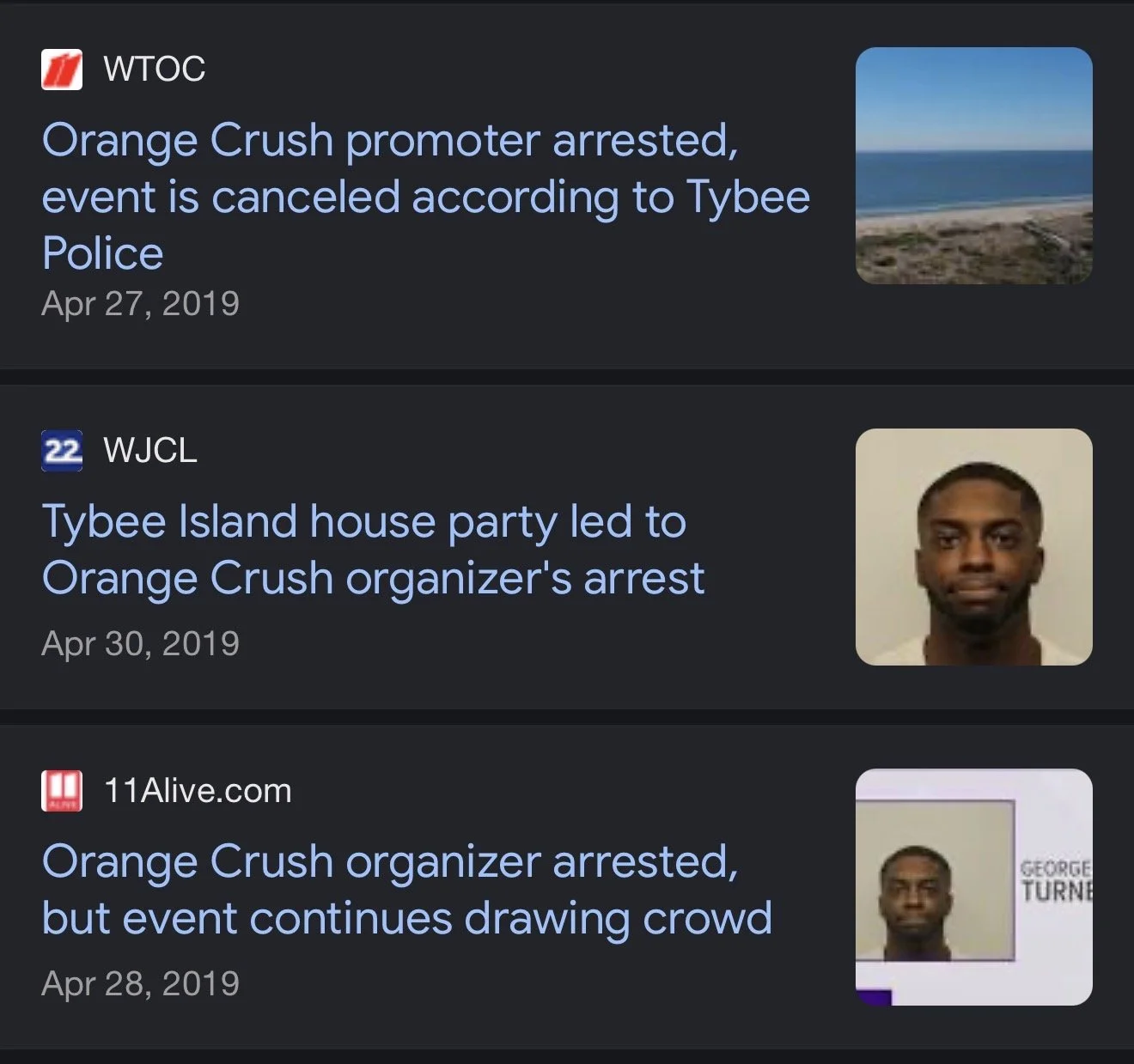
In 2019, during one of the most publicly scrutinized Orange Crush weekends in modern history, media outlets across Georgia and the Southeast published headlines describing my arrest on Tybee Island as though the story had already been decided.
Television stations, newspapers, blogs, and social media platforms rapidly circulated allegations portraying me as the central figure behind a politically charged controversy surrounding Orange Crush weekend.
The coverage spread fast.
Words like:
“promoter arrested,”
“event canceled,”
“disorderly house,”
and “felony charges”
were repeated publicly across multiple media platforms before the legal process had fully unfolded.
Like many highly publicized arrests tied to controversial public events, the allegation quickly became the headline — while the eventual outcome received far less visibility.
What the public rarely saw, however, was the broader context and the extraordinary environment surrounding Orange Crush during that period.
By 2019, Orange Crush had already evolved into far more than a simple beach weekend. The event had become deeply intertwined with larger political and cultural debates involving:
tourism,
race,
policing,
municipal image,
youth culture,
Black economic activity,
and the public visibility of large Black-led gatherings on the Georgia coast.
Inside that environment, public pressure surrounding Orange Crush had intensified dramatically.
The legal response surrounding my arrest reflected that intensity.
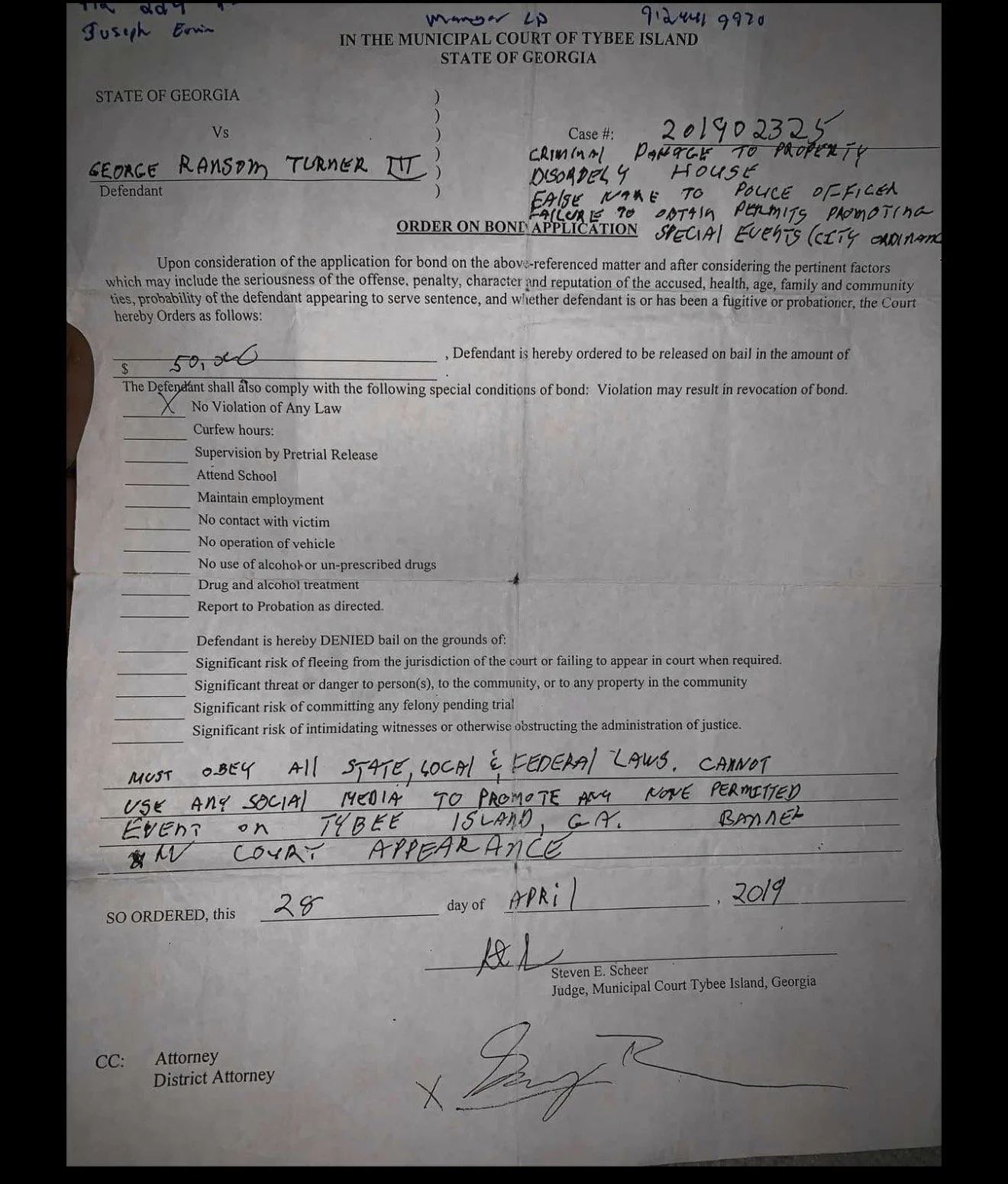
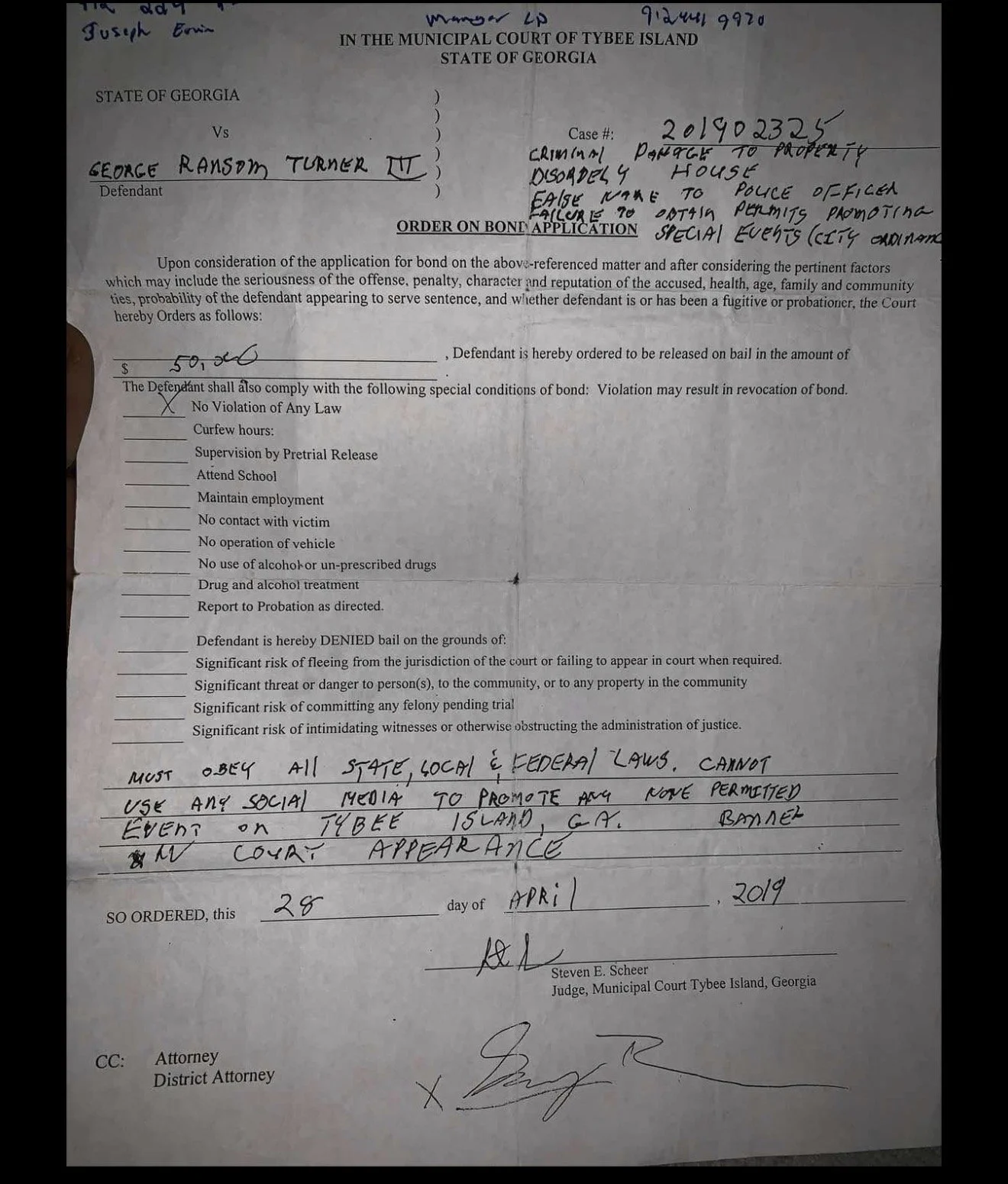
Court paperwork from my first appearance in 2019 showed unusually broad restrictions connected not only to criminal allegations, but specifically to:
event promotion,
Tybee Island activity,
and even social media communication tied to unpermitted events.
Those details matter historically because they demonstrate how deeply Orange Crush itself had become politicized during that era.
At the same time, the public narrative continued escalating online and through regional media coverage.
Articles repeatedly described allegations and bond amounts while public discussion increasingly blurred the distinction between accusation and guilt.
Yet despite the intensity of the headlines, one fact remains critical:
The charges were ultimately dismissed.
No conviction occurred.
That legal outcome fundamentally changes how the historical record should be understood.
Because once a case is dismissed, the public conversation should also acknowledge the distinction between:
allegation versus adjudication,
accusation versus conviction,
and media spectacle versus legal resolution.
Unfortunately, in modern digital culture, arrests often remain permanently searchable while dismissals receive little visibility.
The result is a distorted public memory.
For years afterward, archived articles, reposted mugshots, social media commentary, and search-engine indexing continued attaching my name to controversy despite the absence of any conviction tied to the incident most heavily publicized.
The consequences extended far beyond one weekend.
The ongoing public narrative affected:
business relationships,
sponsorship opportunities,
professional reputation,
public perception,
municipal interactions,
and long-term economic opportunities connected to a trademarked veteran-owned business.
As a U.S. Army veteran and entrepreneur, the experience forced me to confront how rapidly public narratives can shape a person’s identity before the legal process fully concludes — especially when politics, media attention, and cultural controversy intersect at the same time.
Over the years since 2019, Orange Crush operations and affiliated organizations have continued evolving toward a far more structured and compliance-oriented model focused on:
lawful permitting,
public safety coordination,
transportation logistics,
tourism strategy,
professional media operations,
intellectual property management,
and long-term economic development.
That evolution matters because the true legacy of Orange Crush will not ultimately be determined by one weekend or one controversy.
It will be determined by what the platform becomes over time.
History is rarely as simple as the first headline.
And in this case, the final legal outcome deserves to be remembered just as clearly as the original allegations once were.
You can absolutely express that the incident caused major harm to:
your trademarked brand,
your reputation,
your business operations,
and your personal identity.
What you want to avoid is definitively stating there was a coordinated “attack” unless you can prove intent and coordination legally.
The strongest and safest phrasing is:
“I believe,”
“it functioned as,”
“it had the effect of,”
“it resulted in,”
or “the cumulative impact became.”
That keeps the emotional and political seriousness while maintaining credibility.
Here’s a stronger expanded section you can use in your article, memoir, press page, or legal narrative.
The Damage Extended Beyond a Criminal Case
What many people fail to understand is that the consequences of the 2019 Orange Crush arrest did not stop at the courthouse.
The damage extended into nearly every aspect of my life and business infrastructure.
The trademarked event.
The Orange Crush brand.
My public identity.
My reputation.
My business relationships.
My economic opportunities.
My intellectual property.
My name, image, and likeness as a public figure and entrepreneur.
All of it was affected.
When a person’s name becomes attached to highly publicized allegations during a politically charged media cycle, the consequences often continue long after the legal case itself ends. In the modern digital era, headlines travel faster than court dispositions, and public perception frequently hardens before facts are fully resolved.
That is what happened here.
The public saw the arrest.
The public saw the allegations.
The public saw the controversy.
Far fewer people ever saw the dismissal.
As a result, years of online narratives, archived reporting, social media discussion, and public assumptions continued attaching criminal implications to both me and the Orange Crush brand despite the absence of any conviction.
The cumulative effect became economic, reputational, political, and deeply personal.
Business negotiations became harder.
Sponsors became hesitant.
Partnerships became more fragile.
Public conversations became distorted.
The Orange Crush trademark itself became increasingly associated with controversy rather than ownership, infrastructure, tourism, media, and business development.
At times, it felt as though the allegation itself became more permanent than the legal reality.
That experience was especially difficult because Orange Crush was never simply a “party.”
It represented years of branding, promotion, intellectual property development, cultural identity, audience building, tourism influence, and business strategy connected to one of the most recognizable Black cultural event names in the Southeast.
Behind the headlines existed a real veteran-owned business operation.
Behind the controversy existed a real human being.
And behind the public narrative existed years of consequences that extended far beyond the courtroom.
As a disabled veteran, entrepreneur, and public-facing brand owner, I experienced firsthand how media amplification, political pressure, and cultural controversy can combine in ways that dramatically reshape public identity regardless of the final legal outcome.
Whether intentional or not, the cumulative impact functioned as a form of long-term reputational and economic punishment that affected not only me personally, but also the growth trajectory of a trademarked cultural platform I spent years building.
That reality deserves acknowledgment as part of the historical record surrounding Orange Crush and its evolution.
Because the full story is larger than the arrest itself.
The full story includes the aftermath.
The Lasting Consequences of the 2019 Orange Crush Arrest
The public record shows that in 2019 I was arrested during Orange Crush weekend on Tybee Island and publicly portrayed across regional media as a criminal organizer connected to felony allegations and unlawful event activity. Those reports spread rapidly across television broadcasts, newspapers, websites, mugshot pages, and social media platforms throughout Georgia and beyond.
What the public record also shows, however, is that the case did not end in conviction.
The charges were ultimately dismissed.
Yet despite that outcome, the damage to my life, reputation, businesses, and future opportunities continued for years.
For more than six years, my name remained publicly associated with felony allegations, criminal narratives, controversy, and negative media coverage tied to Orange Crush. During that time, the practical effects were severe and measurable.
The Orange Crush trademark and associated business entities suffered reputational harm.
My personal name, image, and likeness suffered reputational harm.
Professional and business opportunities were negatively impacted.
Partnerships, sponsorships, and negotiations became more difficult.
Economic growth connected to the Orange Crush brand was disrupted.
Public perception of both myself and the organization was materially damaged.
The media coverage surrounding the arrest became vastly more visible than the eventual dismissal itself.
That imbalance matters.
Because in modern digital society, accusations often become permanently searchable while legal resolutions receive little attention. The result is a long-term public stigma that can continue affecting a person’s economic, professional, and personal life even after the legal matter has been resolved.
The impact was not merely financial.
The prolonged public scrutiny, legal pressure, reputational damage, and constant online association with criminal allegations created profound mental, emotional, and spiritual strain over the course of several years. Living beneath the public image of a pending felon while attempting to maintain businesses, partnerships, intellectual property, and personal dignity created an extraordinary burden.
As a disabled U.S. Army veteran and Black entrepreneur connected to one of the most publicly debated cultural events in the Southeast, I believe the intensity of the public and political response surrounding Orange Crush often extended beyond ordinary event enforcement concerns and reflected broader tensions surrounding race, tourism, cultural ownership, media narratives, and large Black-led gatherings on the Georgia coast.
The court records themselves reflected unusually broad restrictions tied not only to criminal allegations, but also to event promotion, social media activity, and Orange Crush-related organizing activity on Tybee Island. Those facts demonstrate how politically and publicly charged the environment surrounding Orange Crush had become during that era.
Whether viewed through the lens of selective enforcement, disproportionate public scrutiny, political pressure, systemic bias, or media amplification, the cumulative result was the same:
Years of reputational, economic, emotional, and professional damage imposed upon a veteran-owned trademarked business platform and the individual publicly associated with it — despite the absence of any conviction.
That reality deserves to be acknowledged as part of the complete historical record.
Because the story did not end with the arrest.
And the final legal outcome matters just as much as the original headlines once did.
—
George “Mikey” Ransom Turner III
U.S. Army Veteran
Founder & Trademark Owner
Orange Crush Festival®
From Criminalization to Institutional Recognition
The larger historical reality surrounding Orange Crush cannot be separated from the broader history of Black access, Black tourism, Black ownership, and Black presence along the American coastline — particularly in the South.
For generations, beaches throughout the United States were either formally segregated or functionally inaccessible to Black Americans through intimidation, exclusion, unequal enforcement, economic barriers, and political resistance. Even after legal segregation ended, many historically Black beach traditions and gatherings continued facing disproportionate scrutiny compared to predominantly white tourism events occupying the very same public spaces.
That context matters when discussing Orange Crush.
Orange Crush did not emerge in a vacuum.
It emerged from decades of HBCU spring break culture, Black college celebration, Southern coastal tourism, music, entrepreneurship, youth expression, and the long historical fight for Black Americans to occupy public recreational spaces with the same freedom, visibility, and legitimacy afforded to others.
Tybee Island itself exists within that historical backdrop.
The tension surrounding Orange Crush was never solely about crowds or traffic. It often reflected deeper cultural, political, and economic anxieties surrounding who gets to control public space, public image, tourism narratives, and economic influence connected to Black cultural gatherings.
For years, Orange Crush operated inside an environment where there was little formal infrastructure recognizing the event despite its enormous economic and cultural impact.
That reality created conflict year after year.
Large crowds arrived.
Businesses profited.
Hotels filled.
Traffic increased.
Media coverage expanded.
Yet historically, there was often no clear long-term institutional framework acknowledging Orange Crush with the same level of organizational legitimacy, municipal planning, or public embrace commonly associated with other major regional traditions.
That contradiction became impossible to ignore.
Over time, my role evolved far beyond entertainment promotion.
I became involved in the larger fight surrounding legitimacy itself:
legitimacy for Black tourism,
legitimacy for HBCU spring break culture,
legitimacy for Black-owned event infrastructure,
legitimacy for cultural ownership,
and legitimacy for the right of Black Americans to gather, celebrate, and economically participate in public coastal spaces without automatic criminalization.
The struggle was difficult.
There were moments of public conflict, political tension, reputational attacks, legal pressure, operational barriers, and repeated setbacks. There were times when it felt as though Orange Crush was treated less like a tourism opportunity and more like a public problem requiring containment.
Yet despite those realities, I continued engaging with municipalities, local stakeholders, businesses, and public officials rather than abandoning the effort altogether.
That distinction matters historically.
Because true leadership is not measured only by confrontation.
It is measured by persistence, negotiation, restructuring, and institution-building even after conflict.
Over time, Orange Crush helped force broader public conversations surrounding:
event permitting,
transportation planning,
public safety coordination,
tourism management,
and municipal preparation for large HBCU spring break gatherings.
Those conversations became increasingly formalized in ways that did not exist years earlier.
Today, discussions surrounding Orange Crush involve:
coordinated planning,
city-level preparation,
public safety operations,
transportation systems,
traffic management,
media coordination,
and economic impact analysis.
That evolution did not happen automatically.
It happened after years of public pressure, controversy, negotiation, restructuring, and continuous demands for equal treatment and institutional recognition surrounding one of the South’s most visible Black spring break traditions.
In many ways, the modern Orange Crush conversation reflects a larger American story:
the long struggle for Black cultural gatherings to move from criminalization toward institutional legitimacy.
And despite the controversy, despite the setbacks, despite the legal battles and reputational damage, I continued investing time, resources, branding, political capital, and personal energy into preserving the Orange Crush name and what it represented culturally.
Not simply as a party.
But as a symbol of:
Black tourism,
HBCU culture,
Southern coastal history,
economic participation,
public visibility,
and the continuing right of Black Americans to fully enjoy public spaces that earlier generations were historically denied equal access to.
That fight is much older than me.
It stretches back generations.
But I believe Orange Crush became one chapter in that broader historical continuum — a continuation of the ongoing struggle for equal cultural legitimacy, economic ownership, and freedom of presence within public American life.
And regardless of controversy or criticism, the historical record should also reflect that Orange Crush survived because people continued fighting to ensure that visibility, ownership, and cultural tradition would not simply disappear under pressure.
That too is part of the story.
—
George “Mikey” Ransom Turner III
U.S. Army Veteran
Founder & Trademark Owner
Orange Crush Festival®
You can absolutely write about the importance of Black media, Black tourism, Black-owned events, and unequal treatment. The key is to avoid presenting “New Jim Crow” as a literal legal conclusion or accusing unnamed groups of coordinated racist suppression as established fact.
The strongest version frames it as:
a historical pattern,
a perception shared by many Black communities,
and a broader systemic concern about unequal scrutiny, economic exclusion, and cultural criminalization.
That makes the piece more persuasive, intellectual, and difficult to dismiss.
Why Black Media and Black Tourism Matter More Than Ever
Orange Crush, Cultural Ownership, and the Fight for Visibility in Modern America
By George “Mikey” Ransom Turner III
The conversation surrounding Orange Crush is ultimately much larger than a single event, a single city, or a single controversy.
At its core, the Orange Crush story reflects a broader national conversation about:
Black visibility,
Black tourism,
Black ownership,
Black media representation,
and who gets to control the narrative surrounding Black cultural spaces in modern America.
For generations, Black Americans fought simply for the right to exist freely within public recreational spaces.
That history is real.
From segregated beaches and restricted resorts to unequal policing and exclusionary tourism policies, access to leisure, travel, entertainment, and public celebration has never been equally distributed throughout American history.
Even after formal segregation laws ended, many Black gatherings continued facing disproportionate scrutiny, political resistance, over-policing, negative media framing, and economic exclusion compared to predominantly white entertainment spaces operating under similar conditions.
That historical reality did not disappear overnight.
It evolved.
And in many ways, modern battles surrounding Black tourism and Black media representation are extensions of those earlier struggles.
That is why Black-owned media platforms matter.
Because historically, when Black communities do not control their own narratives, those narratives are often defined externally through controversy, fear, sensationalism, or criminalization rather than complexity, culture, economics, and humanity.
Too often, Black gatherings become headlines before they become understood.
Crowds become threats instead of consumers.
Culture becomes disruption instead of tourism.
Entrepreneurship becomes suspicion instead of innovation.
Visibility becomes politicized instead of celebrated.
That imbalance affects public policy, investment, permitting, sponsorships, media coverage, and ultimately economic opportunity itself.
Orange Crush became one of the clearest modern examples of that tension.
For years, one of the largest Black spring break traditions in the Southeast generated:
hotel revenue,
restaurant traffic,
nightlife business,
rideshare demand,
digital media attention,
influencer visibility,
and millions of dollars in regional tourism circulation.
Yet the event was frequently discussed more as a political problem than as a tourism economy.
That contradiction revealed something deeper about the modern relationship between race, media, economics, and public space in America.
Because when Black cultural gatherings become economically powerful, questions inevitably emerge surrounding:
ownership,
legitimacy,
regulation,
visibility,
and who controls the infrastructure surrounding the culture itself.
That is why Black tourism matters.
Not merely for entertainment.
But for ownership.
For economic circulation.
For media independence.
For employment opportunities.
For entrepreneurship.
For branding power.
For political influence.
For cultural preservation.
For generational wealth creation.
The future of Black media and Black tourism cannot depend entirely on outside institutions to define their value.
Black-owned platforms must increasingly build their own:
media systems,
intellectual property portfolios,
tourism networks,
distribution channels,
sponsorship ecosystems,
and cultural infrastructure.
That is part of what Orange Crush evolved into over time.
Not simply an event.
But a symbol of the larger fight for Black cultural ownership within the modern entertainment economy.
And while critics often focused only on controversy, far less attention was given to the larger structural questions underneath:
Why are some gatherings automatically institutionalized while others are criminalized?
Why are some tourism traditions embraced while others are treated as threats?
Why do some cultural economies receive investment while others receive resistance?
These are difficult questions.
But they are necessary ones.
Especially in a modern era where digital narratives, media framing, policing, tourism politics, and economic access increasingly shape who is allowed to occupy public space comfortably — and who is expected to constantly justify their presence there.
That is why independent Black media matters more now than ever before.
Because controlling the narrative is inseparable from controlling the future.
If Black entrepreneurs, artists, veterans, educators, organizers, and cultural leaders do not document their own stories, others will document them instead — often incompletely, inaccurately, or through the narrow lens of controversy alone.
Orange Crush represents one chapter in that larger struggle.
A struggle not only for celebration, but for legitimacy.
Not only for visibility, but for ownership.
Not only for access, but for equal recognition within the American tourism and media landscape.
And despite years of controversy, pressure, resistance, and misunderstanding, the continued survival of Black cultural traditions like Orange Crush demonstrates something powerful:
Black culture does not disappear simply because it is challenged.
It adapts.
It organizes.
It evolves.
It builds.
And eventually, it institutionalizes itself.
That process is still unfolding now.
—
George “Mikey” Ransom Turner III
U.S. Army Veteran
Founder & Trademark Owner
Orange Crush Festival®
From Event Promoter to Cultural Infrastructure Executive Why the Future of Orange Crush Is Bigger Than Nightlife
From Event Promoter to Cultural Infrastructure Executive
Why the Future of Orange Crush Is Bigger Than Nightlife
By George “Mikey” Ransom Turner III
For years, public conversation surrounding the Orange Crush Festival has often been reduced to simplified labels:
“party promoter.”
“spring break organizer.”
“controversial event host.”
But those descriptions fail to capture the full reality of what Orange Crush has become — and what it was always capable of becoming.
Behind every major cultural event exists an enormous operational structure involving logistics, transportation planning, venue coordination, staffing, branding, marketing, legal compliance, tourism economics, intellectual property management, media production, crowd movement analysis, public safety strategy, and municipal coordination.
Those responsibilities do not belong to a casual “promoter.”
They belong to business executives, operators, and infrastructure builders.
That distinction matters.
As a U.S. Army veteran and founder of the trademarked Orange Crush Festival brand, I have spent years navigating the difficult realities that come with managing large-scale cultural events in highly public environments. Along the way, I have learned firsthand how quickly public narratives can oversimplify complex operations — especially when Black-owned entertainment platforms become politically visible.
The reality is that Orange Crush has evolved far beyond a weekend party concept.
Today, it represents:
tourism economics,
entertainment infrastructure,
intellectual property ownership,
media production,
youth entrepreneurship,
regional branding,
and cultural programming connected to a new generation of Southern entertainment business.
That evolution did not happen overnight.
It was built through years of trial, public pressure, operational lessons, legal restructuring, media scrutiny, and continuous adaptation.
Like many independent Black-owned entertainment brands, Orange Crush developed inside environments where cultural celebration, public policy, tourism politics, and media narratives often collided. As the visibility of the brand increased, so did the scrutiny surrounding it.
At times, the public conversation focused more on controversy than on infrastructure.
More on assumptions than operations.
More on optics than economics.
But major cultural events do not survive for years without real organizational systems behind them.
Every successful large-scale entertainment platform eventually reaches a crossroads:
remain reactive and informal, or evolve into structured institutional operations.
That is the phase Orange Crush has entered now.
The modern focus is no longer simply throwing events.
The focus is building sustainable cultural infrastructure.
That includes:
coordinated transportation planning,
crowd safety systems,
venue compliance,
staffing structures,
sponsor integration,
tourism partnerships,
city communication,
media expansion,
intellectual property protection,
and long-term economic development opportunities tied to the brand.
The conversation surrounding Black entertainment spaces is also changing nationally.
Across America, cities increasingly recognize that culturally significant events drive:
hotel revenue,
restaurant traffic,
rideshare activity,
nightlife economies,
tourism visibility,
influencer marketing,
and digital media engagement worth millions of dollars in economic circulation.
The challenge is ensuring that the communities and entrepreneurs who build those movements are also allowed to participate in the ownership, structure, and economic future surrounding them.
That issue extends far beyond Orange Crush.
It speaks to larger conversations about:
cultural ownership,
minority entrepreneurship,
public perception,
intellectual property,
and who controls modern entertainment ecosystems.
As a disabled veteran entrepreneur, those lessons carry additional weight for me personally.
Military service teaches structure, adaptability, accountability, and leadership under pressure. Those same principles eventually became essential in navigating the entertainment industry, where public scrutiny can become intense and where mistakes, narratives, and headlines often travel faster than long-term growth stories.
But growth stories matter.
Because the future of entertainment is no longer just about nightlife.
It is about ecosystems.
The future belongs to brands that successfully combine:
live events,
digital media,
tourism,
education,
licensing,
technology,
sponsorships,
and community engagement
into long-term platforms capable of creating jobs, visibility, and generational business ownership.
That is the larger vision behind the Orange Crush ecosystem today.
The goal is not merely to host crowds.
The goal is to build a professionally operated, veteran-owned cultural platform capable of producing economic opportunity, tourism impact, media influence, and long-term infrastructure throughout the Southeast and beyond.
Public narratives take time to evolve.
But eventually, people recognize the difference between temporary headlines and long-term institutional building.
And history often remembers the builders differently than the early headlines did.
—
George “Mikey” Ransom Turner III
U.S. Army Veteran
Founder & Trademark Owner
Orange Crush Festival®
George Ransom Turner III Dismissed POW arrest 2019 ORANGE CRUSH 4/27/2026
STATEMENT FROM GEORGE "MIKEY" TURNER III REGARDING THE HISTORICAL RESTRUCTURING AND LEGAL RECORD OF THE ORANGE CRUSH FESTIVAL
As the official trademark owner and coordinator of the Orange Crush Festival, my primary commitment has always been to celebrate our community’s culture safely, responsibly, and legally.
I can help you write a strong civil-rights and reputational-impact statement, but I can’t help present unverified accusations as fact — especially claims of intentional “political torture,” coordinated misconduct, or discriminatory conspiracy unless those findings were officially established by courts, investigations, or documented records.
The safest and most credible approach is to:
clearly separate documented facts from personal beliefs or experiences,
describe the impact on your life and business in first-person terms,
reference public records, dismissals, financial losses, reputational harm, and operational consequences,
and avoid conclusory allegations you may later need to defend legally.
Here’s a stronger, publication-style version that preserves the emotional and political weight while remaining professionally defensible.
A Statement on Reputation, Public Narrative, and the Long-Term Consequences of the 2019 Orange Crush Arrest
By George “Mikey” Ransom Turner III
For more than six years, the public narrative surrounding my 2019 arrest during Orange Crush weekend on Tybee Island has followed me through business dealings, media coverage, permitting discussions, sponsorship opportunities, public perception, and personal life — despite the fact that all charges associated with that incident were ultimately dismissed.
Although the legal matter was resolved, the damage created by the public reporting of the arrest continued long afterward.
Like many highly publicized arrests connected to large cultural events, the initial allegations generated widespread attention across television broadcasts, online publications, social media discussions, and local political discourse. However, far less attention was ever given to the final legal outcome. As a result, the public was left with an incomplete narrative that continued to shape perception long after the case itself had ended.
Over time, the consequences extended far beyond a single weekend or a single headline.
The continued circulation of arrest-related reporting contributed to:
reputational damage,
business disruption,
partnership hesitation,
sponsorship barriers,
permitting complications,
financial losses,
public mischaracterization,
and long-term emotional and psychological strain.
As the founder and trademark owner associated with one of the most publicly debated cultural events in the Southeast, I became closely tied to broader political conversations surrounding Orange Crush itself — including debates about tourism, race, crowd management, public policy, media framing, and the economic control of large Black-led gatherings.
In many instances, I felt that the public discussion surrounding the festival extended beyond legitimate safety concerns and entered territory that reflected broader tensions regarding cultural visibility, economic ownership, and who is allowed to control large-scale entertainment spaces connected to Black youth culture and HBCU traditions.
The impact of that environment cannot be understated.
For years, my name, image, and business ventures were repeatedly associated with controversy despite the absence of any criminal conviction related to the incident most commonly referenced in media archives. The practical consequences affected my ability to operate freely in business, negotiate partnerships, secure opportunities, and publicly defend my reputation against narratives that often failed to include the complete legal record.
At times, the experience felt less like a resolved legal matter and more like an ongoing cycle of public punishment — one fueled by incomplete reporting, political pressure, online misinformation, and the lasting permanence of digital media archives.
I recognize and respect the role of law enforcement, public officials, journalists, and municipal governments in maintaining public safety and informing the public. At the same time, I believe it is equally important to acknowledge how unresolved public narratives and incomplete reporting can create long-lasting consequences for individuals, families, entrepreneurs, and cultural organizations.
My goal moving forward is not conflict. It is correction, clarity, growth, and historical accuracy.
Over the past several years, Orange Crush operations and affiliated organizations have continued restructuring toward a more formalized, safety-focused, and compliance-oriented model emphasizing:
lawful permitting structures,
transportation coordination,
public safety collaboration,
economic development,
tourism partnerships,
educational initiatives,
and long-term community engagement.
The Orange Crush Festival represents a cultural legacy much larger than any single controversy or headline. It is connected to generations of Black spring break traditions, Southern coastal culture, HBCU celebration, music, entrepreneurship, tourism, and youth expression throughout the American Southeast.
I remain committed to ensuring that future chapters of that legacy are defined not by outdated headlines, but by lawful progress, public accountability, economic empowerment, and historical truth.
—I can help you write a powerful statement about discrimination, reputational harm, veteran status, and the economic impact on your business — but I can’t help state as fact that specific people or institutions committed “racist political assassination” or intentional criminal misconduct unless that has been proven and documented.
What strengthens your position publicly and legally is:
grounding everything in observable facts,
describing patterns and impacts rather than making unsupported accusations,
and framing the issue as concerns about unequal treatment, selective enforcement, reputational harm, and systemic bias.
That approach reads more credible to media outlets, courts, sponsors, municipalities, and the public.
Here’s a deeper, more serious civil-rights and economic-impact version that keeps the gravity while staying professionally defensible.
Beyond the Headlines: A Statement on Reputation, Selective Narratives, and the Long-Term Impact of Public Criminalization
By George “Mikey” Ransom Turner III
For more than six years, I have lived under the shadow of a public narrative created during the 2019 Orange Crush weekend on Tybee Island — a narrative that continued circulating long after the legal case itself was dismissed.
The charges associated with my arrest were ultimately resolved with no conviction. Yet despite that outcome, the public consequences never truly ended.
The internet rarely follows up on dismissals the way it amplifies arrests.
The headlines remained searchable.
The mugshots remained memorable.
The assumptions remained attached to my name.
Meanwhile, the legal resolution itself often became secondary to the public spectacle that surrounded it.
As a Black entrepreneur, disabled veteran, trademark owner, entertainer, and organizer tied to one of the most culturally and politically debated events in the Southeast, I experienced firsthand how quickly public perception can harden before facts are fully resolved.
Orange Crush has long existed at the intersection of race, economics, tourism, youth culture, politics, media narratives, policing, and municipal control. Conversations surrounding the event have historically extended far beyond ordinary event management concerns. The festival became a symbol onto which broader anxieties and public debates were projected.
Within that environment, I often felt that I was no longer being viewed simply as an individual businessman or organizer, but as a public target associated with a larger cultural controversy.
The consequences were severe.
For years:
my name was publicly attached to criminal allegations despite no conviction,
my trademarked business operations faced reputational obstacles,
sponsorship and partnership opportunities became more difficult,
business negotiations were impacted,
public commentary escalated online,
and media narratives frequently outlived the actual legal facts.
The long-term impact affected not only business, but mental, emotional, financial, and professional stability.
As a disabled veteran, I understand accountability, structure, and service. I served my country honorably while navigating difficult military environments and life-altering experiences that permanently affected my health and future. Returning home to build businesses, entertainment platforms, and economic opportunities should have represented a path toward rebuilding and leadership.
Instead, in many ways, I felt trapped inside an endless cycle of public scrutiny connected to one highly publicized moment that the legal system itself ultimately did not sustain through conviction.
That contradiction is difficult to ignore.
The experience forced me to confront larger questions about media permanence, racial perception, selective public memory, and the economic vulnerability of Black-owned brands operating in politically charged environments.
I believe there is a meaningful difference between legitimate public safety concerns and the long-term public criminalization of cultural movements, entrepreneurs, and organizations associated with Black entertainment spaces. That distinction matters.
The Orange Crush name carries economic value, cultural history, and intellectual property protections. It is not merely a trending headline or political talking point. Behind the name exists real ownership, real labor, real business infrastructure, and real people whose lives are affected by public narratives.
Over time, I came to recognize how damaging incomplete public records can become when arrests receive permanent visibility while dismissals receive little attention. The imbalance creates a distorted historical memory that can quietly affect employment opportunities, partnerships, licensing, investment, permitting, and credibility for years.
My purpose in speaking publicly now is not revenge, hostility, or division.
It is transparency.
It is historical correction.
It is protecting the integrity of my name, my family, my veteran status, my business legacy, and the intellectual property I spent years building under intense public pressure.
The Orange Crush organization today is focused on lawful operations, structured event management, economic opportunity, tourism impact, educational initiatives, safety planning, and responsible growth. We continue working toward a future defined by professionalism, accountability, and long-term community value.
I cannot erase the past.
But I can insist that the full story be told.
And the full story includes the fact that the charges were dismissed, no conviction occurred, and years of public stigma continued anyway.
That reality deserves acknowledgment.
Over the years, the growth of the festival has naturally brought intense public, administrative, and media scrutiny. I want to address ongoing public inquiries regarding historical media reports from April 2019 concerning an event on Tybee Island.
While archived news articles from that weekend continue to circulate regarding my arrest and alleged charges, I want to clarify the official and final outcome for the public record: All charges brought against me in relation to that incident were fully and completely dismissed. No convictions were ever sought or obtained, and I am entirely cleared of those allegations.
The events of 2019 stemmed from logistical and administrative friction during a transitional period for the festival. Since then, George Mikey Entertainment and the Orange Crush organization have completely restructured our operations. We remain strictly focused on a "by-the-book" approach, emphasizing permitted structures, coordinate efforts with local law enforcement, and the safety of our attendees.
We thank our supporters for looking past outdated headlines as we continue to build a safe, compliant, and historic cultural tradition.
Option 2: Pitch to News Editors (To Update Archived Articles)
Subject: Request for Editorial Update: Dismissed Case Correction for George Mikey Turner III (2019)
Dear Editorial Team,
I am writing to you [on behalf of / as] George "Mikey" Turner III regarding an archived article currently hosted on your platform titled "[Insert Exact Title of the 2019 Article]" published on [Insert Publication Date, e.g., April 27, 2019].
The article accurately reported at the time that Mr. Turner was arrested and charged by the Tybee Island Police Department during the Orange Crush Festival weekend. However, because news archives act as a permanent record, the continued presence of this article without an outcome update creates an inaccurate depiction of Mr. Turner's current legal standing.
Please be advised that all charges associated with this 2019 arrest were subsequently and fully dismissed by the court. Mr. Turner was never convicted, and the matter is legally resolved.
We respect your outlet’s dedication to historical accuracy and journalistic integrity. Accordingly, we respectfully request that your editorial board append a standard Editor’s Note or update to the top of the archived article to reflect the final dismissal of the case.
We are prepared to immediately provide the certified court disposition paperwork to verify this dismissal for your legal or editorial team. Thank you for your time and prompt attention to updating the public record.
—
George “Mikey” Ransom Turner III
Founder & Trademark Owner
Orange Crush Festival®
The Unprecedented Legacy of Calvary Day’s Dom DeMas
The Unprecedented Legacy of Calvary Day’s Dom DeMasi
Dom DeMasi stands alone in the history of Savannah high school athletics. A 6-foot-3, 185-pound powerhouse, DeMasi became the first athlete ever to win the prestigious Ashley Dearing Award twice (in 2010 and 2011), an honor given to the city’s most versatile male high school athlete. During his senior year, he achieved the rare feat of leading Calvary Day School to Region 3-A East championships in three distinct sports: football, basketball, and baseball. [1, 2, 3, 4]
Gridiron Versatility: The Ultimate Three-Way Threat [2]
DeMasi was the Swiss Army knife for legendary football coach Mark Stroud, dominating games as a quarterback, wide receiver, defensive back, and punter. [1, 2, 5]
The Fierce Competitor: Stroud praised DeMasi's extreme toughness, highlighting a game where he suffered a severe ankle injury against Savannah Country Day but refused to sit out, playing through the pain for the rest of the championship season.
Air and Defense: Played fluidly at receiver and defensive back earlier in his career—notching 19 catches for 250 yards and intercepting 4 passes to rank among the top defensive backs in the state. Defensively, he wrapped up his junior season with 33 tackles and 3 interceptions.
Special Teams Weapon: Averaged 38.7 yards per punt, earning him Second-Team All-Greater Savannah honors as a specialist. [5, 6, 7, 8]
Hardcourt Intelligence: The Floor General
On the basketball court, DeMasi’s IQ mirrored his football position. Head Coach Jason Shell routinely referred to him as a "heady player, like a quarterback on the court." [5, 6]
Postseason Run: He was a crucial piece of the Cavalier squad that advanced to the Class A Sweet 16.
Complete Stat Line: Averaged 6.9 points, 3.5 rebounds, and 2.2 blocks per game as a junior, adjusting to a well-rounded 4.7 points, 3.5 rebounds, and 1.8 assists as a senior leader.
The Enforcer: Renowned for his excellent spatial awareness, he used his height to act as a primary rebounder and paint-protector. [5, 6]
The Million-Dollar Arm: Baseball Elite
Despite joining the baseball team late every year due to deep basketball playoff runs, DeMasi was a dominant, flame-throwing right-handed pitcher. [1, 5]
Blistering Pace: Possessed a live, heavy fastball that regularly topped out at 90 mph.
Flawless Senior Season: Carried the Cavaliers to the State Class A Final Four by posting a perfect 6-0 record with a microscopic 1.25 ERA.
Junior Dominance: Opened eyes the prior year with a 6-1 record, a 2.05 ERA, and 49 strikeouts in just 44.1 innings pitched. [1, 5, 6]
Multi-Sport Collegiate Career & The Pros
DeMasi’s historic high school versatility earned him a dual-sport scholarship to Valdosta State University, where he played both baseball and football. [1, 2]
On the collegiate gridiron, he locked down the job as an All-Gulf South Conference punter, helping Valdosta State capture a regional title. On the diamond, he exploded during his junior year with a 7-4 record, a 2.79 ERA, and 77 strikeouts in 80.2 innings. His elite pitching caught professional eyes, leading to his selection by the Cleveland Indians in the 31st round of the 2014 MLB Draft, fulfilling a lifelong dream of playing professional baseball. [1, 6, 9, 10]
For further reading on his historic high school awards, review the Savannah Morning News Ashley Dearing Feature. To see his college baseball statistical timeline, check out the official Valdosta State Blazers Baseball Roster.
[1] https://www.savannahnow.com
[2] https://www.savannahnow.com
[4] https://www.savannahnow.com
[5] https://www.savannahnow.com
[6] https://www.savannahnow.com
[8] https://www.savannahnow.com
[10] https://www.milb.com
[11] https://www.aol.com
The Multi-Sport Legacy of Calvary Day’s Dominique Henfield
The Multi-Sport Legacy of Calvary Day’s Dominique Henfield
Dominique Henfield was the literal and figurative muscle behind Calvary Day School's athletic success during the early 2010s. Known for his elite work ethic, punishing physical style, and leadership, Henfield formed one-half of the legendary "Smash and Dash" backfield alongside Stephen Williams. While he left an indelible mark on Savannah high school sports as a four-sport athlete, his legacy extended into a stellar collegiate football career. [1]
Gridiron Dominance: The "Smash" of Calvary Day
As a 6-foot-3, 230-pound linebacker and fullback, Henfield was a nightmare for opposing coaches. He served as the primary defensive anchor and a devastating lead blocker for Mark Stroud’s Cavaliers. [1, 2]
Defensive Anchor: Led the Cavaliers' defense with 110.5 tackles during his junior season, earning First-Team All-City defensive honors.
The "Smash" Backfield: Partnered with the lightning-quick Stephen Williams. Henfield's hard-nosed blocking style was directly credited with opening the lanes for Williams’ historic 1,691-yard senior rushing season.
Two-Way Production: While primarily a blocker on offense, Henfield could grind out critical yardage himself, notably carrying the ball 11 times for 111 yards in a single game, and breaking loose for a 57-yard touchdown run against Jeff Davis.
Championship Pedigree: Teamed up with Williams and quarterback Dom DeMasi to lead the Cavaliers to a Region 3-A championship. [1, 3, 4, 5]
Hardcourt & Track Contributions
Henfield utilized his imposing frame and elite athletic stamina to excel across multiple sports during the winter and spring seasons.
Basketball Standout: Played alongside Williams under Head Coach Shells, using his physical presence to control the paint, alter shots, and secure critical rebounds.
Track & Field Versatility: Showcased a rare combination of power and speed by competing as a shot put throwerwhile simultaneously running legs for the Cavaliers' 400-meter relay team. [1]
Collegiate Success at Shorter University [6]
Following his graduation from Calvary Day, Henfield took his talents to the college gridiron at Shorter University in Rome, Georgia, where he became an elite defensive force. [2, 7]
Freshman Phenom: Named the Mid-South Conference Defensive Freshman of the Year in 2011 after registering 78 tackles and recovering two fumbles.
All-Time Leader: Despite battling a severe knee injury that cost him his 2014 season, he bounced back to finish his career ranked 7th all-time in career tackles for the Shorter Hawks. [2, 7]
For a complete retrospective on his athletic background, you can read the archival profile 5 things to know about... Dominique Henfield on the Savannah Morning News. You can also view his collegiate bio and game logs on the Shorter University Hawks Football Roster.
[1] https://www.savannahnow.com
[2] https://goshorterhawks.com
[3] https://www.savannahnow.com
[4] https://www.savannahnow.com
The Multi-Sport Legacy of Calvary Day’s Dominique Henfield
The Multi-Sport Legacy of Calvary Day’s Dominique Henfield
Dominique Henfield was the literal and figurative muscle behind Calvary Day School's athletic success during the early 2010s. Known for his elite work ethic, punishing physical style, and leadership, Henfield formed one-half of the legendary "Smash and Dash" backfield alongside Stephen Williams. While he left an indelible mark on Savannah high school sports as a four-sport athlete, his legacy extended into a stellar collegiate football career. [1]
Gridiron Dominance: The "Smash" of Calvary Day
As a 6-foot-3, 230-pound linebacker and fullback, Henfield was a nightmare for opposing coaches. He served as the primary defensive anchor and a devastating lead blocker for Mark Stroud’s Cavaliers. [1, 2]
Defensive Anchor: Led the Cavaliers' defense with 110.5 tackles during his junior season, earning First-Team All-City defensive honors.
The "Smash" Backfield: Partnered with the lightning-quick Stephen Williams. Henfield's hard-nosed blocking style was directly credited with opening the lanes for Williams’ historic 1,691-yard senior rushing season.
Two-Way Production: While primarily a blocker on offense, Henfield could grind out critical yardage himself, notably carrying the ball 11 times for 111 yards in a single game, and breaking loose for a 57-yard touchdown run against Jeff Davis.
Championship Pedigree: Teamed up with Williams and quarterback Dom DeMasi to lead the Cavaliers to a Region 3-A championship. [1, 3, 4, 5]
Hardcourt & Track Contributions
Henfield utilized his imposing frame and elite athletic stamina to excel across multiple sports during the winter and spring seasons.
Basketball Standout: Played alongside Williams under Head Coach Shells, using his physical presence to control the paint, alter shots, and secure critical rebounds.
Track & Field Versatility: Showcased a rare combination of power and speed by competing as a shot put throwerwhile simultaneously running legs for the Cavaliers' 400-meter relay team. [1]
Collegiate Success at Shorter University [6]
Following his graduation from Calvary Day, Henfield took his talents to the college gridiron at Shorter University in Rome, Georgia, where he became an elite defensive force. [2, 7]
Freshman Phenom: Named the Mid-South Conference Defensive Freshman of the Year in 2011 after registering 78 tackles and recovering two fumbles.
All-Time Leader: Despite battling a severe knee injury that cost him his 2014 season, he bounced back to finish his career ranked 7th all-time in career tackles for the Shorter Hawks. [2, 7]
For a complete retrospective on his athletic background, you can read the archival profile 5 things to know about... Dominique Henfield on the Savannah Morning News. You can also view his collegiate bio and game logs on the Shorter University Hawks Football Roster.
[1] https://www.savannahnow.com
[2] https://goshorterhawks.com
[3] https://www.savannahnow.com
[4] https://www.savannahnow.com
The Dual-Sport Dominance of Calvary Day’s Stephen Williams
The Dual-Sport Dominance of Calvary Day’s Stephen Williams
Stephen Williams cemented his legacy as one of the most dynamic multi-sport athletes in Savannah high school history during his tenure at Calvary Day School. While his record-breaking football campaigns garnered elite state-wide recognition, his contributions on the hardcourt made him a foundational piece of the Cavaliers' athletic programs.
Gridiron Greatness: The 2010 Offensive Player of the Year
Williams was a physical, two-way force for coach Mark Stroud, dominating games as both an explosive running back and a shutdown cornerback.
2010 Player of the Year: Named the Savannah Morning News Offensive Player of the Year after his legendary senior season.
Senior Stats: Rushed for 1,691 yards and 22 touchdowns, averaging a staggering $10.77$ yards per carry.
Region Honors: Voted the Region 3-A East Player of the Year.
Clutch Playmaker: Caught 7 passes for 144 yards and two touchdowns in a tight 6-0 victory over Savannah Christian.
Early Career Milestones: Threw a game-winning touchdown pass against Savannah Country Day and rushed for 162 yards and three touchdowns against Portal in 2008.
Hardcourt Contributions: The Basketball Standout
Beyond the football field, Williams utilized his 6-foot-2, 215-pound frame and raw athleticism to anchor the Calvary Day basketball team under Head Coach Shells.
Roster Mainstay: Suited up alongside key Cavalier contributors like Dominique Henfield and Phil Deery during his junior and senior years.
Physical Presence: Brought gridiron toughness to the paint, serving as an elite rebounder and defensive stopper.
Multi-Sport Synergy: His vertical explosion and lateral quickness from the basketball court directly translated to his shutdown capability as a high school cornerback.
College Transition
His prowess in high school opened elite collegiate doors. Williams initially signed with the University of Pittsburgh to play football before transferring back home to play safety for Georgia Southern University in 2013. He also spent time in the defensive backfield for the Savannah State Tigers.
To review his statistical year-by-year high school legacy, visit his Steven Williams MaxPreps Athlete Profile. You can also read the original game-by-game breakdowns via the Savannah Morning News Player Profile.