
WHEN TYBEE TURNED ORANGE There was the Tybee Island everybody knew. And then there were those weekends when the road filled up, the bass got louder, Savannah started moving toward the ocean—and Tybee
WHEN TYBEE TURNED ORANGE
There was the Tybee Island everybody knew. And then there were those weekends when the road filled up, the bass got louder, Savannah started moving toward the ocean—and Tybee turned Orange.
By CRUSH Magazine
Before you saw the beach, you felt the traffic.
That was part of it.
Cars stretched down the road toward Tybee Island carrying people, coolers, swimsuits, speakers, expectations and enough stories to last until everybody had children old enough to hear them.
Windows down.
Music up.
Sun bouncing off windshields.
Somebody hanging halfway out of a window.
Somebody calling another car trying to figure out where everybody was.
Somebody already irritated because the trip was taking forever.
And somebody in the passenger seat yelling:
“We almost there!”
Everybody wasn’t almost there.
But that didn’t matter.
Because during Orange Crush, getting to Tybee was part of Orange Crush.
The road became the opening act.
And eventually, somewhere between Savannah and the Atlantic Ocean, you realized you weren’t simply headed to the beach anymore.
You were joining everybody else.
THE BEACH BEFORE THE FEED
There was no endless feed showing you what was happening before you arrived.
No livestream.
No location sharing.
No Stories.
No TikTok recap posted before the actual day was finished.
For much of Orange Crush history, you had to physically arrive to know.
That uncertainty created anticipation.
You heard things.
“They already out there.”
“Everybody on the beach.”
“Such-and-such got a room.”
“Meet us by the pier.”
“Call me when y’all get close.”
Plans were approximate.
Meeting places were suggestions.
Phones died.
People disappeared.
Groups separated.
And somehow everybody usually found each other again.
Eventually.
That was life before the little blue dot told us where everybody was standing.
THE ROAD BECAME A CAR SHOW
Some people came to Orange Crush dressed to be seen.
Some brought a vehicle with the same intention.
The procession toward Tybee could become an unofficial exhibition of Southern car culture.
Big rims.
Custom paint.
Convertibles.
Trucks.
Motorcycles.
Systems powerful enough to make the next car hear your song whether they wanted to or not.
Cars weren’t simply transportation.
They were personality.
They announced you before you stepped out.
And when traffic slowed everything down, suddenly everybody had time to look.
Who was driving?
Who was riding?
What were they playing?
What were they sitting on?
Where were they from?
A traffic jam became a parade.
Nobody officially organized it.
Nobody needed to.
YOU HAD TO HAVE A FIT
The beach might have been casual.
Orange Crush wasn’t.
People planned.
The outfit mattered.
The swimsuit mattered.
The shoes mattered—even if choosing expensive shoes for sand made absolutely no practical sense.
Hair mattered.
Sunglasses mattered.
Jewelry mattered.
And if you were staying through the night, that meant another outfit.
Possibly several.
Every generation had its own version.
Different brands.
Different silhouettes.
Different hairstyles.
Different sneakers.
Different definitions of what was considered fresh.
Look at an old Orange Crush photograph today and you can often guess the era before anybody tells you the year.
Fashion timestamps us.
Sometimes beautifully.
Sometimes disrespectfully.
There are pictures from our younger years that should probably remain safely inside the family group chat.
But even the embarrassing ones matter now.
Because what once looked ordinary eventually becomes history.
BEFORE EVERYBODY WAS A PHOTOGRAPHER
There was something different about partying before every person carried a high-definition camera.
A moment could simply happen.
No evidence.
No repost.
No stranger recording from thirty feet away.
No waking up the next morning wondering why your face had accumulated 700,000 views.
If somebody brought a camera, people gathered around it.
One picture mattered.
You posed.
You waited.
Maybe the photograph ended up in an album.
Maybe it got developed.
Maybe somebody eventually scanned it.
Maybe it disappeared into a drawer for fifteen years.
Today those pictures hit differently.
The resolution may be terrible.
The lighting may be worse.
Somebody’s finger might be covering part of the lens.
But everybody looks alive.
Young.
Unbothered.
Frozen.
And because there aren’t 900 nearly identical versions of the same moment, that one photograph becomes precious.
THE SOUND CAME BEFORE THE SAND
You heard Orange Crush before you reached it.
Bass traveled.
Cars competed.
Different songs collided with one another as you walked.
A record could be playing from one vehicle, disappear for fifty feet, then suddenly appear again from another direction.
Music created invisible neighborhoods across the beach and parking areas.
Southern hip-hop was not background decoration.
It was infrastructure.
Atlanta.
Savannah.
Memphis.
New Orleans.
Florida.
The Carolinas.
Different sounds traveled into the same space.
DJs, clubs, mixtapes, radio and car systems helped records move through Black college culture long before streaming platforms could tell the world what was trending.
A song didn’t need a digital trend report.
You knew it was hot because everybody reacted when it came on.
That was analytics.
The crowd told you.
EVERYBODY KNEW SOMEBODY
Orange Crush could make the South feel surprisingly small.
You’d arrive with people from one school and somehow encounter somebody from another city who knew somebody from home.
“How you know her?”
“That’s my cousin.”
“You went to school with him?”
“That’s my boy from Atlanta.”
“I know her from Statesboro.”
Connections multiplied.
Savannah sat in the middle of it all.
College students.
Locals.
Military people.
Promoters.
DJs.
Artists.
Friends of friends.
People who had planned the trip for months.
People who decided to come at the last possible second.
For a weekend, social circles overlapped.
That was part of the magic.
Orange Crush wasn’t just somewhere you went.
It was somewhere you ran into people.
THE HOTEL WAS ITS OWN EVENT
Anybody who remembers the era knows the beach wasn’t the whole story.
The hotel mattered.
And “hotel occupancy” could occasionally become a creative mathematical concept.
One room.
Several people.
Coolers.
Bags everywhere.
Clothes covering furniture.
Somebody sleeping in the bed.
Somebody sleeping on the floor.
Somebody claiming they weren’t going to sleep anyway.
One bathroom attempting to support a population it was never engineered to accommodate.
People knocking.
Music playing.
Somebody getting dressed.
Somebody missing a shoe.
Somebody arguing about who had the room key.
Somebody inviting additional people despite absolutely nobody authorizing additional people.
And somehow:
“Where everybody at?”
The answer could change every fifteen minutes.
The hotel wasn’t simply where you stayed.
It was headquarters.
THEN CAME THE BEACH
Eventually there was sand.
Ocean.
Heat.
Bodies.
Music.
Movement.
Thousands of individual lives temporarily occupying the same landscape.
Some people came to party.
Some came to flirt.
Some came to perform.
Some came to sell something.
Some came to take pictures.
Some came because their friends refused to let them stay home.
Some barely touched the water.
It didn’t matter.
The ocean was almost beside the point.
The attraction was everybody.
People watching people watching people.
A social network before we called social networks social networks.
SAVANNAH AND TYBEE: TWO WORLDS CONNECTED BY ONE ROAD
The geography mattered.
Savannah and Tybee Island are close enough to be connected but culturally distinct enough that the movement between them has always carried meaning.
Savannah is layered.
Black history.
Tourism.
Ports.
Churches.
Colleges.
Neighborhoods.
Military families.
Generational families.
Gullah Geechee influence.
Music.
Nightlife.
Old money.
New money.
Working people.
Students.
Visitors.
Tybee offered something different:
the ocean.
During Orange Crush, those worlds collided.
The beach became the destination, but Savannah remained part of the ecosystem surrounding the weekend.
People ate there.
Stayed there.
Partied there.
Bought gas there.
Met friends there.
Recovered there.
And eventually drove back through it.
To remember Orange Crush only through the sand is to remember half the trip.
NOT EVERY MEMORY IS THE SAME
Nostalgia can make history prettier than it actually was.
Orange Crush was never experienced identically by everyone.
For attendees, the weekend could represent freedom, friendship and youth.
For businesses, it could mean customers and opportunity.
For some residents, large crowds could bring frustration.
For public officials and emergency personnel, crowd management created real logistical challenges.
Traffic, sanitation, safety, policing and access became recurring parts of the public conversation.
As Orange Crush became larger and more visible, those tensions became inseparable from its history.
And race could not simply be erased from the conversation.
A large gathering of predominantly Black young people occupying a highly visible public beach in the American South inevitably existed within a broader history of who has been welcomed, monitored, celebrated, feared, marketed to and restricted in public spaces.
That does not mean every disagreement surrounding Orange Crush can be reduced to race.
It means an honest history cannot pretend race was irrelevant.
Multiple truths can occupy the same beach.
People could have the weekend of their lives while somebody else experienced significant disruption.
A business could make money while a resident complained about traffic.
Attendees could feel over-policed while authorities believed greater police presence was necessary.
The history becomes more credible—not less—when all of those experiences are allowed to exist.
THE MORNING AFTER
Every legendary party eventually encounters daylight.
The music stops.
The beach empties.
Traffic reverses direction.
Hotel rooms reveal the consequences of decisions made twelve hours earlier.
Phones contain mysterious numbers.
Someone asks:
“Who is this?”
Someone else realizes they spent entirely too much money.
People search for missing belongings.
Everybody is hungry.
And the ride home has a completely different energy from the ride in.
Quiet.
Sleep.
Recaps.
Laughing about things that weren’t funny when they happened.
Promises.
“I’m never drinking again.”
Promises nobody expected to survive.
Then Monday arrived.
School.
Work.
Real life.
But something had changed.
Now you had a story.
THEN EVERYBODY GREW UP
This may be Orange Crush’s greatest transformation.
Not the event.
The people.
The 19-year-old became 39.
The student became the parent paying tuition.
The guy trying to impress everybody with his car became somebody telling his teenager to slow down.
The woman spending two hours getting ready for the beach became the mother watching her daughter do the exact same thing.
The people who couldn’t imagine leaving the party before sunrise now get sleepy around 10:30.
Life is disrespectful like that.
But memory remains.
That’s why an old Orange Crush photograph can stop somebody in the middle of scrolling.
For a second, they’re not looking at history.
They’re looking at themselves.
Before the job.
Before the mortgage.
Before the marriage.
Before the divorce.
Before the children.
Before the losses.
Before adulthood accumulated all its weight.
There they are.
Young.
Standing beside a car that no longer exists.
Wearing something they would never wear today.
Beside somebody they may not have spoken to in years.
And behind them:
Tybee.
NOSTALGIA IS REALLY ABOUT PEOPLE
We say we miss places.
Usually we miss versions of ourselves.
We say we miss the old Savannah.
We miss the people who were there with us.
We say we miss the music.
We miss what life felt like when those songs were new.
We say we miss Orange Crush.
Maybe what we really mean is:
I miss us.
That’s why preserving this history matters.
Not because every moment was perfect.
It wasn’t.
Not because every story is flattering.
They aren’t.
Not because everybody agrees about what Orange Crush was or what it should become.
They don’t.
It matters because generations of real people placed pieces of their youth there.
And eventually youth becomes history.
THE PHOTOGRAPHS ARE BECOMING ARTIFACTS
Somewhere right now there is an Orange Crush archive nobody knows exists.
Inside somebody’s closet.
Inside an old photo album.
On a forgotten hard drive.
Inside a Facebook account nobody has checked in ten years.
On a MiniDV tape.
Inside a box at somebody’s mother’s house.
A flyer folded between old college papers.
A T-shirt.
A ticket.
A photograph with a handwritten date on the back.
Those objects matter now.
Not because somebody decided Orange Crush needed to become important.
Because enough time passed.
Time transforms ordinary things into evidence.
A flyer becomes design history.
A photograph becomes fashion history.
A mixtape becomes music history.
A hotel receipt becomes tourism history.
A newspaper clipping becomes political history.
And somebody’s ridiculous picture from the beach becomes evidence of what Black youth culture looked like at a particular moment in the American South.
The archive is already out there.
It simply needs to be assembled.
WHEN TYBEE TURNED ORANGE
There was never a literal moment when the island changed color.
It happened another way.
A car crossed the bridge.
Then another.
And another.
Music followed.
Friends followed.
College students followed.
Photographers followed.
Promoters followed.
Vendors followed.
Stories followed.
Eventually memory followed too.
Years passed.
People moved away.
People came home.
Relationships started.
Relationships ended.
Children were born.
Careers happened.
People died.
Savannah changed.
Tybee changed.
Technology changed.
America changed.
Orange Crush changed.
But every once in a while somebody finds an old photograph.
There is the ocean.
There is the car.
There is the outfit.
There are the friends.
There is that younger face looking directly into a camera with absolutely no idea how quickly the next twenty years are going to move.
And suddenly the road fills with cars again.
The bass comes back.
The windows come down.
Everybody is calling everybody.
Savannah starts moving toward the ocean.
And for just a second—
Tybee turns Orange again.
THE CRUSH ARCHIVE
YOUR PICTURES ARE HISTORY NOW.
CRUSH Magazine is preserving photographs, flyers, videos, clothing, promotional materials and firsthand memories from Orange Crush across generations.
If you were there, your perspective belongs in the historical record.
The archive is especially interested in material that helps identify:
Who was there.
What year it happened.
What people wore.
What people drove.
What people listened to.
Where people stayed.
Who promoted events.
Who performed.
What Savannah and Tybee looked like.
And what the weekend actually felt like.
Future CRUSH Archive editions will document the fashion, music, automobiles, personalities, businesses and individual stories surrounding different eras of Orange Crush.
Because memories disappear when nobody preserves them.
And the pictures sitting in somebody’s closet today may become the photographs another generation studies tomorrow.
CRUSH Magazine
Culture. Memory. Ownership.
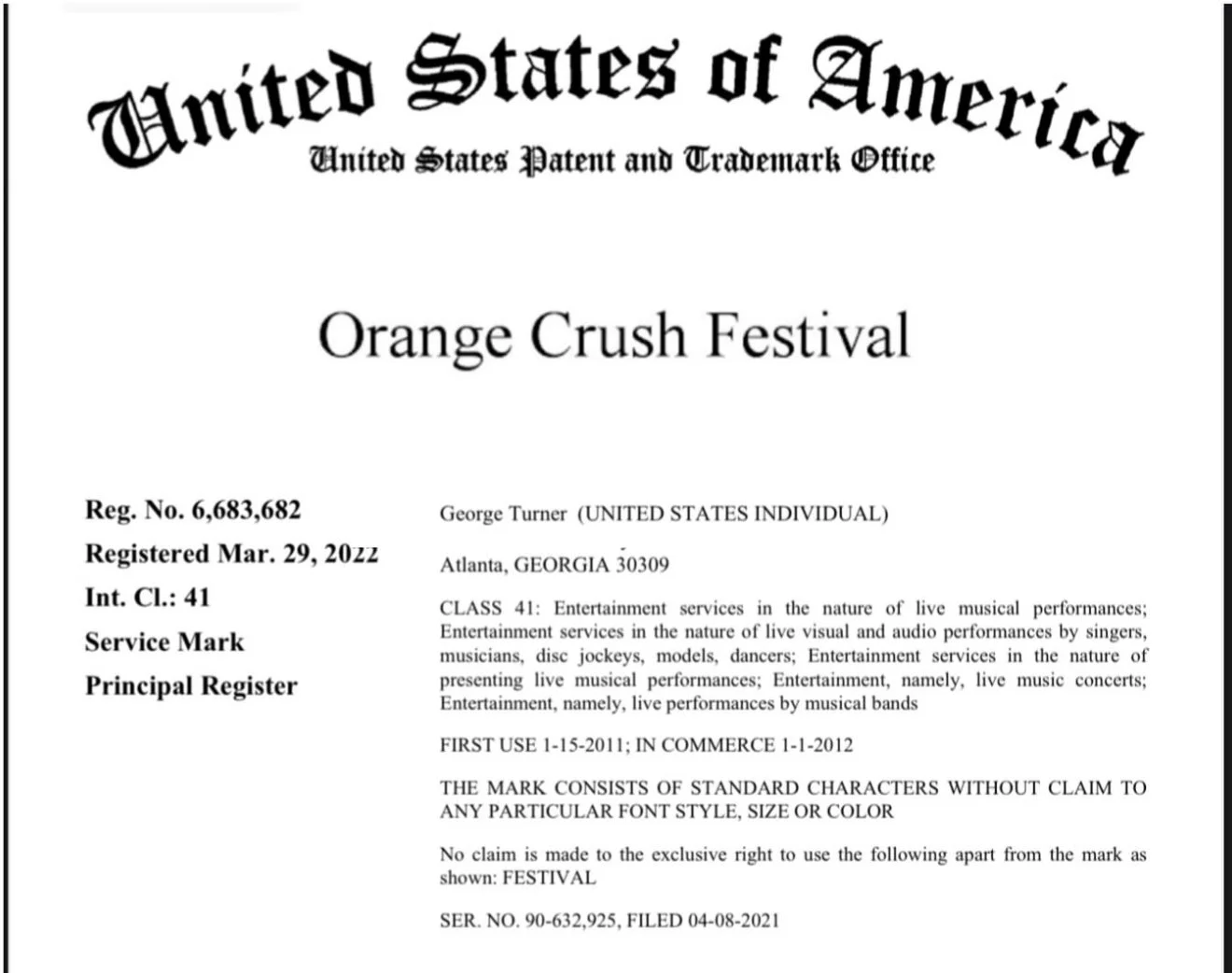
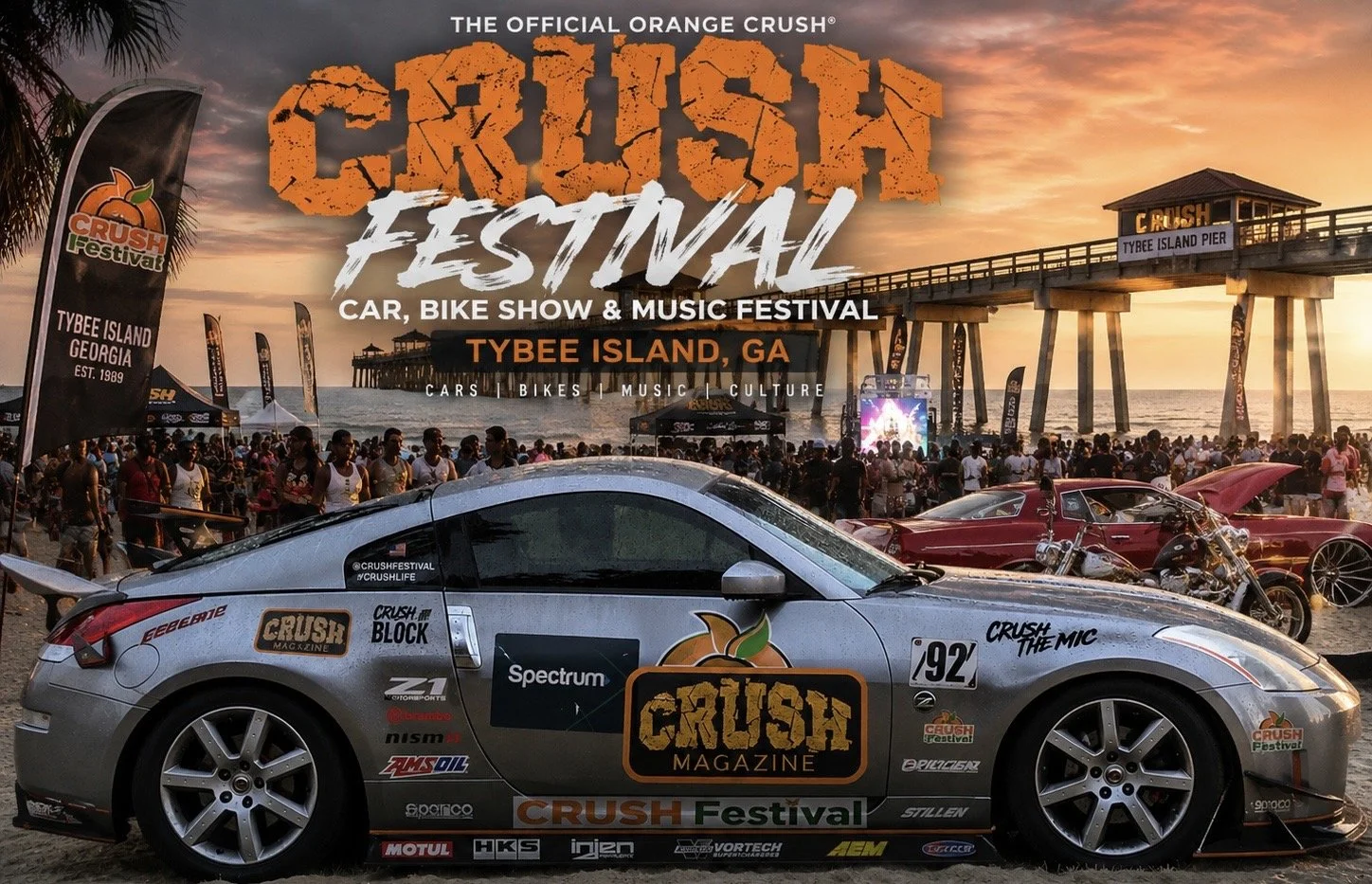
Music + Orange Crush Festival® Tour 2026
PlugNotARapper
PartyPlugMikey
Stream the albums, run the videos, then catch the live moments on the ORANGE CRUSH FESTIVAL® TOUR 2026.
Miami (Mar 13–16) • Savannah/Tybee (Apr 9–18) • Allenhurst (Apr 19) • Atlanta (May 24–31) • Jacksonville (Jun 19–21)
Headliner notes
Music Library
Tap cover art to zoom • Use “Apple Music” + “YouTube” buttons • Expand for extra videos

Swamp Baby
Apple Music + Official Video
Toxic Plug Love
Apple Music + VideosMore videos

Ghetto Ted Talk
Apple Music + Playlist
Not Like Them Rap N*ggaz
Apple Music + VideosMore videos

Baddies Island
Apple Music + VideosMore videos

Mapouka Twerk Doctor
Apple Music + VideosMore videos

Bad Baddies Love Sex (BBLS)
Apple Music + VideosMore videos

FRIENDZ8NE
Apple Music + VideoORANGE CRUSH FESTIVAL® TOUR 2026
Events + ticket buttons + flyer taps (zoom)
Miami • ORANGE CRUSH® Spring Break
March 13–16, 2026 • Mansion Party (Mar 14) • Yacht Party (Mar 15)


Savannah • Week 1
April 9–12, 2026 • Henry St Bistro • BACP (Apr 10) • DNN (Apr 11)


Tybee / Savannah / Allenhurst • Week 2
April 16–19, 2026 • Crush The Mic™ (Apr 16) • Freaknik ’26 (Apr 17) • Tybee (Apr 18) • ABC ’26 (Apr 18)


Allenhurst • CRUSH THE BLOCK®
April 19, 2026 • 258 Linda Loop SE • Truck/Jeep/Car & Bike Show • Pool Party • ATV Trail Ride


Atlanta • CRUSH® ATLANTA
May 24–31, 2026 • Pool Party Part 1 (May 24) • Pool Party Part 2 (May 30)


Jacksonville • ORANGE CRUSH® JUNETEENTH
June 19–21, 2026 • Jacksonville, FL


Countdowns
Live timers to your key dates
ORANGE CRUSH FESTIVAL® TOUR 2026
PartyPlugMikey presents the ORANGE CRUSH FESTIVAL® Tour — March–June 2026. Includes TYBEE BEACH BASH (Apr 18, 2026) + the full tour run.
MIAMI • Mar 15 (Yacht Party)
SAVANNAH Week 1 • Apr 11 (Unpermitted)
TYBEE/SAV Week 2 • Apr 18 (Permitted)
ATLANTA • May 24
JACKSONVILLE • Jun 19
Official Tour Lineup (by date)
ORANGE CRUSH FESTIVAL® TOUR 2026: ORANGE CRUSH® SPRING BREAK (South Beach Miami) • ORANGE CRUSH® TYBEE (Savannah/Tybee) • CRUSH THE MIC™ • FREAKNIK ’26 • ABC ’26 • ORANGE CRUSH FESTIVAL® TYBEE • CRUSH THE BLOCK® • CRUSH® ATLANTA • ORANGE CRUSH® JUNETEENTH (Jax).
ORANGE CRUSH® SPRING BREAK — SOUTH BEACH MIAMI, FL
ORANGE CRUSH® TYBEE — SAVANNAH / TYBEE ISLAND, GA
CRUSH THE BLOCK® — 258 Linda Loop SE, Allenhurst GA
CRUSH® ATLANTA — May 24–31, 2026
TYBEE BEACH GA • Apr 18 • Near Tybee Pier & Pavilion + Hotel Tybee Parking Lot (31328)
MARCH | MIAMI
South Beach Miami Spring Break • March 13–16, 2026
ORANGE CRUSH® MIAMI • Mansion Pool Party
CRUSH® MIAMI • Mansion Pool Party (Alt Flyer)
ORANGE CRUSH® MIAMI • Yacht Party
APRIL | SAVANNAH / TYBEE
April 9–18, 2026 • Henry St Bistro (1308 Montgomery St) + Tybee Beach
BACP • Big A** College Party
DNN • Damn Near Naked Party
CRUSH THE MIC™
FREAKNIK ’26
FREAKNIK ’26 (Alt Flyer)
ORANGE CRUSH FESTIVAL® TYBEE • Beach Bash
ABC ’26 • Anything Butt Clothes
ABC ’26 • Official ORANGE CRUSH Beach After Party (Alt Flyer)
CRUSH THE BLOCK | ALLENHURST
Sunday • April 19, 2026 • 258 Linda Loop SE, Allenhurst GA
CRUSH THE BLOCK®
MAY | ATLANTA
CRUSH® ATLANTA • May 24–31, 2026
Crush’Lanta • Mansion Pool Party Part 1
Crush’Lanta • Mansion Pool Party Part 2
JUNE | JACKSONVILLE
ORANGE CRUSH® JUNETEENTH • June 19–21, 2026
ORANGE CRUSH® JUNETEENTH • Jacksonville
IMG_URL_HERE.
