
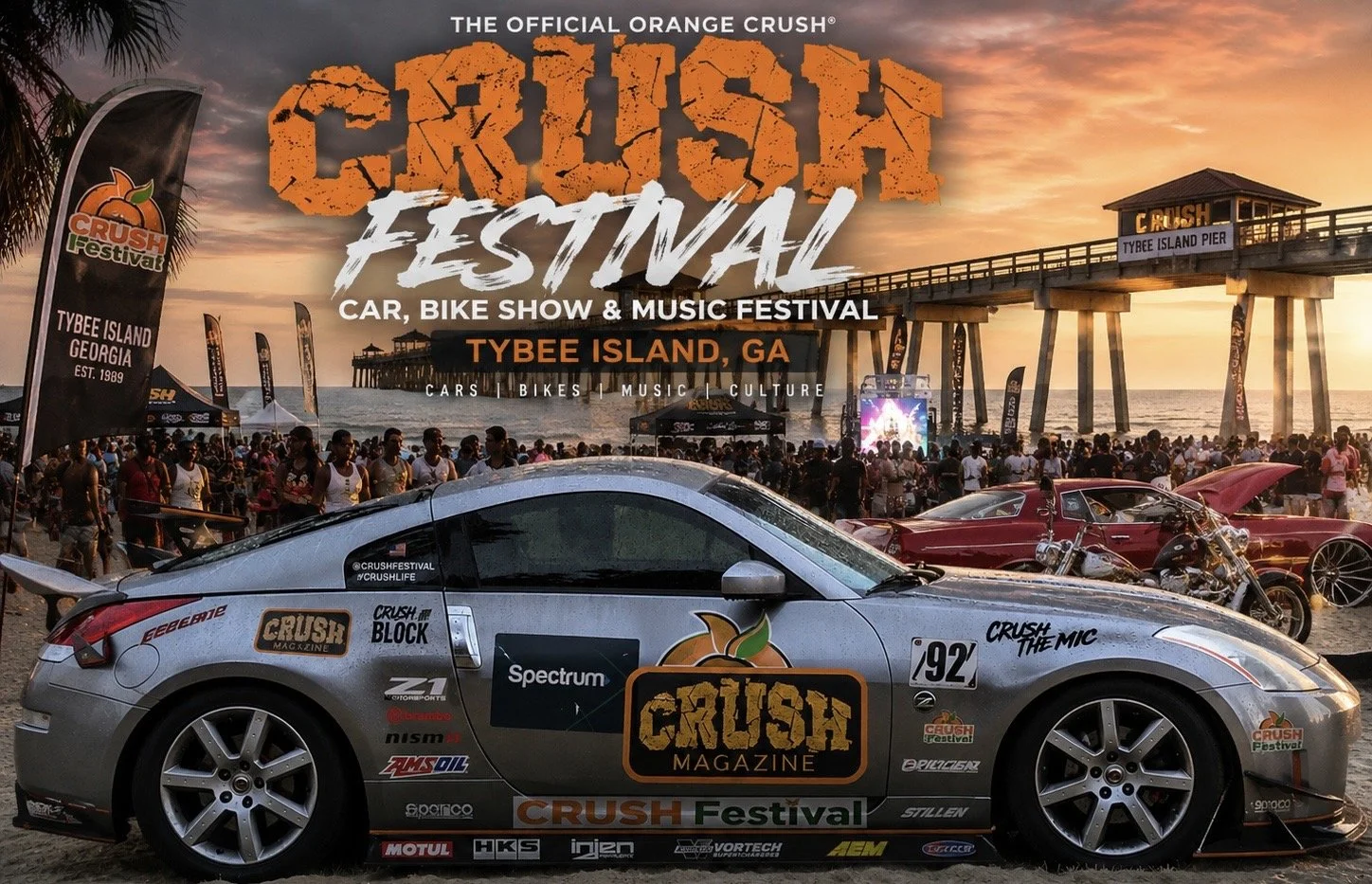
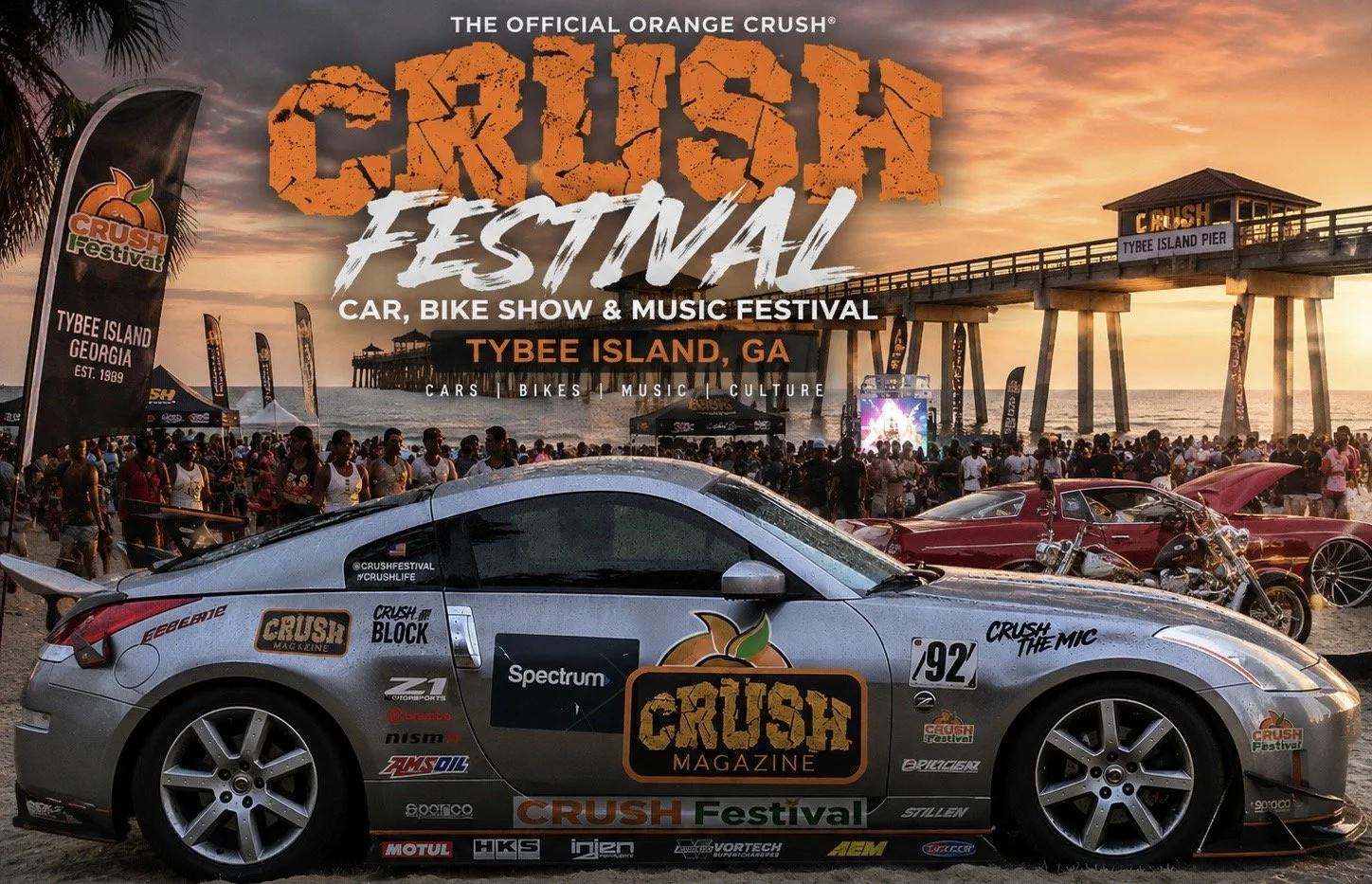
WHEN TYBEE TURNED ORANGE There was the Tybee Island everybody knew. And then there were those weekends when the road filled up, the bass got louder, Savannah started moving toward the ocean—and Tybee
WHEN TYBEE TURNED ORANGE
There was the Tybee Island everybody knew. And then there were those weekends when the road filled up, the bass got louder, Savannah started moving toward the ocean—and Tybee turned Orange.
By CRUSH Magazine
Before you saw the beach, you felt the traffic.
That was part of it.
Cars stretched down the road toward Tybee Island carrying people, coolers, swimsuits, speakers, expectations and enough stories to last until everybody had children old enough to hear them.
Windows down.
Music up.
Sun bouncing off windshields.
Somebody hanging halfway out of a window.
Somebody calling another car trying to figure out where everybody was.
Somebody already irritated because the trip was taking forever.
And somebody in the passenger seat yelling:
“We almost there!”
Everybody wasn’t almost there.
But that didn’t matter.
Because during Orange Crush, getting to Tybee was part of Orange Crush.
The road became the opening act.
And eventually, somewhere between Savannah and the Atlantic Ocean, you realized you weren’t simply headed to the beach anymore.
You were joining everybody else.
THE BEACH BEFORE THE FEED
There was no endless feed showing you what was happening before you arrived.
No livestream.
No location sharing.
No Stories.
No TikTok recap posted before the actual day was finished.
For much of Orange Crush history, you had to physically arrive to know.
That uncertainty created anticipation.
You heard things.
“They already out there.”
“Everybody on the beach.”
“Such-and-such got a room.”
“Meet us by the pier.”
“Call me when y’all get close.”
Plans were approximate.
Meeting places were suggestions.
Phones died.
People disappeared.
Groups separated.
And somehow everybody usually found each other again.
Eventually.
That was life before the little blue dot told us where everybody was standing.
THE ROAD BECAME A CAR SHOW
Some people came to Orange Crush dressed to be seen.
Some brought a vehicle with the same intention.
The procession toward Tybee could become an unofficial exhibition of Southern car culture.
Big rims.
Custom paint.
Convertibles.
Trucks.
Motorcycles.
Systems powerful enough to make the next car hear your song whether they wanted to or not.
Cars weren’t simply transportation.
They were personality.
They announced you before you stepped out.
And when traffic slowed everything down, suddenly everybody had time to look.
Who was driving?
Who was riding?
What were they playing?
What were they sitting on?
Where were they from?
A traffic jam became a parade.
Nobody officially organized it.
Nobody needed to.
YOU HAD TO HAVE A FIT
The beach might have been casual.
Orange Crush wasn’t.
People planned.
The outfit mattered.
The swimsuit mattered.
The shoes mattered—even if choosing expensive shoes for sand made absolutely no practical sense.
Hair mattered.
Sunglasses mattered.
Jewelry mattered.
And if you were staying through the night, that meant another outfit.
Possibly several.
Every generation had its own version.
Different brands.
Different silhouettes.
Different hairstyles.
Different sneakers.
Different definitions of what was considered fresh.
Look at an old Orange Crush photograph today and you can often guess the era before anybody tells you the year.
Fashion timestamps us.
Sometimes beautifully.
Sometimes disrespectfully.
There are pictures from our younger years that should probably remain safely inside the family group chat.
But even the embarrassing ones matter now.
Because what once looked ordinary eventually becomes history.
BEFORE EVERYBODY WAS A PHOTOGRAPHER
There was something different about partying before every person carried a high-definition camera.
A moment could simply happen.
No evidence.
No repost.
No stranger recording from thirty feet away.
No waking up the next morning wondering why your face had accumulated 700,000 views.
If somebody brought a camera, people gathered around it.
One picture mattered.
You posed.
You waited.
Maybe the photograph ended up in an album.
Maybe it got developed.
Maybe somebody eventually scanned it.
Maybe it disappeared into a drawer for fifteen years.
Today those pictures hit differently.
The resolution may be terrible.
The lighting may be worse.
Somebody’s finger might be covering part of the lens.
But everybody looks alive.
Young.
Unbothered.
Frozen.
And because there aren’t 900 nearly identical versions of the same moment, that one photograph becomes precious.
THE SOUND CAME BEFORE THE SAND
You heard Orange Crush before you reached it.
Bass traveled.
Cars competed.
Different songs collided with one another as you walked.
A record could be playing from one vehicle, disappear for fifty feet, then suddenly appear again from another direction.
Music created invisible neighborhoods across the beach and parking areas.
Southern hip-hop was not background decoration.
It was infrastructure.
Atlanta.
Savannah.
Memphis.
New Orleans.
Florida.
The Carolinas.
Different sounds traveled into the same space.
DJs, clubs, mixtapes, radio and car systems helped records move through Black college culture long before streaming platforms could tell the world what was trending.
A song didn’t need a digital trend report.
You knew it was hot because everybody reacted when it came on.
That was analytics.
The crowd told you.
EVERYBODY KNEW SOMEBODY
Orange Crush could make the South feel surprisingly small.
You’d arrive with people from one school and somehow encounter somebody from another city who knew somebody from home.
“How you know her?”
“That’s my cousin.”
“You went to school with him?”
“That’s my boy from Atlanta.”
“I know her from Statesboro.”
Connections multiplied.
Savannah sat in the middle of it all.
College students.
Locals.
Military people.
Promoters.
DJs.
Artists.
Friends of friends.
People who had planned the trip for months.
People who decided to come at the last possible second.
For a weekend, social circles overlapped.
That was part of the magic.
Orange Crush wasn’t just somewhere you went.
It was somewhere you ran into people.
THE HOTEL WAS ITS OWN EVENT
Anybody who remembers the era knows the beach wasn’t the whole story.
The hotel mattered.
And “hotel occupancy” could occasionally become a creative mathematical concept.
One room.
Several people.
Coolers.
Bags everywhere.
Clothes covering furniture.
Somebody sleeping in the bed.
Somebody sleeping on the floor.
Somebody claiming they weren’t going to sleep anyway.
One bathroom attempting to support a population it was never engineered to accommodate.
People knocking.
Music playing.
Somebody getting dressed.
Somebody missing a shoe.
Somebody arguing about who had the room key.
Somebody inviting additional people despite absolutely nobody authorizing additional people.
And somehow:
“Where everybody at?”
The answer could change every fifteen minutes.
The hotel wasn’t simply where you stayed.
It was headquarters.
THEN CAME THE BEACH
Eventually there was sand.
Ocean.
Heat.
Bodies.
Music.
Movement.
Thousands of individual lives temporarily occupying the same landscape.
Some people came to party.
Some came to flirt.
Some came to perform.
Some came to sell something.
Some came to take pictures.
Some came because their friends refused to let them stay home.
Some barely touched the water.
It didn’t matter.
The ocean was almost beside the point.
The attraction was everybody.
People watching people watching people.
A social network before we called social networks social networks.
SAVANNAH AND TYBEE: TWO WORLDS CONNECTED BY ONE ROAD
The geography mattered.
Savannah and Tybee Island are close enough to be connected but culturally distinct enough that the movement between them has always carried meaning.
Savannah is layered.
Black history.
Tourism.
Ports.
Churches.
Colleges.
Neighborhoods.
Military families.
Generational families.
Gullah Geechee influence.
Music.
Nightlife.
Old money.
New money.
Working people.
Students.
Visitors.
Tybee offered something different:
the ocean.
During Orange Crush, those worlds collided.
The beach became the destination, but Savannah remained part of the ecosystem surrounding the weekend.
People ate there.
Stayed there.
Partied there.
Bought gas there.
Met friends there.
Recovered there.
And eventually drove back through it.
To remember Orange Crush only through the sand is to remember half the trip.
NOT EVERY MEMORY IS THE SAME
Nostalgia can make history prettier than it actually was.
Orange Crush was never experienced identically by everyone.
For attendees, the weekend could represent freedom, friendship and youth.
For businesses, it could mean customers and opportunity.
For some residents, large crowds could bring frustration.
For public officials and emergency personnel, crowd management created real logistical challenges.
Traffic, sanitation, safety, policing and access became recurring parts of the public conversation.
As Orange Crush became larger and more visible, those tensions became inseparable from its history.
And race could not simply be erased from the conversation.
A large gathering of predominantly Black young people occupying a highly visible public beach in the American South inevitably existed within a broader history of who has been welcomed, monitored, celebrated, feared, marketed to and restricted in public spaces.
That does not mean every disagreement surrounding Orange Crush can be reduced to race.
It means an honest history cannot pretend race was irrelevant.
Multiple truths can occupy the same beach.
People could have the weekend of their lives while somebody else experienced significant disruption.
A business could make money while a resident complained about traffic.
Attendees could feel over-policed while authorities believed greater police presence was necessary.
The history becomes more credible—not less—when all of those experiences are allowed to exist.
THE MORNING AFTER
Every legendary party eventually encounters daylight.
The music stops.
The beach empties.
Traffic reverses direction.
Hotel rooms reveal the consequences of decisions made twelve hours earlier.
Phones contain mysterious numbers.
Someone asks:
“Who is this?”
Someone else realizes they spent entirely too much money.
People search for missing belongings.
Everybody is hungry.
And the ride home has a completely different energy from the ride in.
Quiet.
Sleep.
Recaps.
Laughing about things that weren’t funny when they happened.
Promises.
“I’m never drinking again.”
Promises nobody expected to survive.
Then Monday arrived.
School.
Work.
Real life.
But something had changed.
Now you had a story.
THEN EVERYBODY GREW UP
This may be Orange Crush’s greatest transformation.
Not the event.
The people.
The 19-year-old became 39.
The student became the parent paying tuition.
The guy trying to impress everybody with his car became somebody telling his teenager to slow down.
The woman spending two hours getting ready for the beach became the mother watching her daughter do the exact same thing.
The people who couldn’t imagine leaving the party before sunrise now get sleepy around 10:30.
Life is disrespectful like that.
But memory remains.
That’s why an old Orange Crush photograph can stop somebody in the middle of scrolling.
For a second, they’re not looking at history.
They’re looking at themselves.
Before the job.
Before the mortgage.
Before the marriage.
Before the divorce.
Before the children.
Before the losses.
Before adulthood accumulated all its weight.
There they are.
Young.
Standing beside a car that no longer exists.
Wearing something they would never wear today.
Beside somebody they may not have spoken to in years.
And behind them:
Tybee.
NOSTALGIA IS REALLY ABOUT PEOPLE
We say we miss places.
Usually we miss versions of ourselves.
We say we miss the old Savannah.
We miss the people who were there with us.
We say we miss the music.
We miss what life felt like when those songs were new.
We say we miss Orange Crush.
Maybe what we really mean is:
I miss us.
That’s why preserving this history matters.
Not because every moment was perfect.
It wasn’t.
Not because every story is flattering.
They aren’t.
Not because everybody agrees about what Orange Crush was or what it should become.
They don’t.
It matters because generations of real people placed pieces of their youth there.
And eventually youth becomes history.
THE PHOTOGRAPHS ARE BECOMING ARTIFACTS
Somewhere right now there is an Orange Crush archive nobody knows exists.
Inside somebody’s closet.
Inside an old photo album.
On a forgotten hard drive.
Inside a Facebook account nobody has checked in ten years.
On a MiniDV tape.
Inside a box at somebody’s mother’s house.
A flyer folded between old college papers.
A T-shirt.
A ticket.
A photograph with a handwritten date on the back.
Those objects matter now.
Not because somebody decided Orange Crush needed to become important.
Because enough time passed.
Time transforms ordinary things into evidence.
A flyer becomes design history.
A photograph becomes fashion history.
A mixtape becomes music history.
A hotel receipt becomes tourism history.
A newspaper clipping becomes political history.
And somebody’s ridiculous picture from the beach becomes evidence of what Black youth culture looked like at a particular moment in the American South.
The archive is already out there.
It simply needs to be assembled.
WHEN TYBEE TURNED ORANGE
There was never a literal moment when the island changed color.
It happened another way.
A car crossed the bridge.
Then another.
And another.
Music followed.
Friends followed.
College students followed.
Photographers followed.
Promoters followed.
Vendors followed.
Stories followed.
Eventually memory followed too.
Years passed.
People moved away.
People came home.
Relationships started.
Relationships ended.
Children were born.
Careers happened.
People died.
Savannah changed.
Tybee changed.
Technology changed.
America changed.
Orange Crush changed.
But every once in a while somebody finds an old photograph.
There is the ocean.
There is the car.
There is the outfit.
There are the friends.
There is that younger face looking directly into a camera with absolutely no idea how quickly the next twenty years are going to move.
And suddenly the road fills with cars again.
The bass comes back.
The windows come down.
Everybody is calling everybody.
Savannah starts moving toward the ocean.
And for just a second—
Tybee turns Orange again.
THE CRUSH ARCHIVE
YOUR PICTURES ARE HISTORY NOW.
CRUSH Magazine is preserving photographs, flyers, videos, clothing, promotional materials and firsthand memories from Orange Crush across generations.
If you were there, your perspective belongs in the historical record.
The archive is especially interested in material that helps identify:
Who was there.
What year it happened.
What people wore.
What people drove.
What people listened to.
Where people stayed.
Who promoted events.
Who performed.
What Savannah and Tybee looked like.
And what the weekend actually felt like.
Future CRUSH Archive editions will document the fashion, music, automobiles, personalities, businesses and individual stories surrounding different eras of Orange Crush.
Because memories disappear when nobody preserves them.
And the pictures sitting in somebody’s closet today may become the photographs another generation studies tomorrow.
CRUSH Magazine
Culture. Memory. Ownership.
ORANGE CRUSH: AN ORAL HISTORY OF A SOUTHERN CULTURAL PHENOMENON
ORANGE CRUSH: AN ORAL HISTORY OF A SOUTHERN CULTURAL PHENOMENON
Before the hashtags, viral videos and algorithms, there was word of mouth. Before everybody carried a camera, there were stories. And before Orange Crush became a name capable of stirring nostalgia, controversy and conversation, it was something much simpler:
Black college students finding each other.
By CRUSH Magazine
There are certain events people remember by year.
There are others they remember by feeling.
Orange Crush belongs to the second category.
Ask enough people about it and eventually somebody’s face changes.
They don’t immediately give you a date.
They tell you what they were wearing.
They remember the car they drove.
They remember who rode with them.
They remember squeezing too many people into a hotel room because nobody was spending all that money just to sleep.
They remember the music before they remember the address.
They remember traffic.
They remember rims.
They remember swimsuits.
They remember cameras coming out before cameras lived permanently inside everyone’s hand.
They remember Savannah.
They remember Tybee.
And almost inevitably, they smile.
“You had to be there.”
Those five words may explain Orange Crush better than any advertisement ever could.
Because long before Orange Crush became something debated in government meetings, covered by news organizations, discussed across social media or transformed into a modern entertainment brand, it existed through participation.
People made it important by showing up.
And then they went home and told somebody else.
BEFORE “VIRAL” HAD A NAME
There was a time when thousands of young people could descend on a destination without an algorithm telling them where to go.
No TikTok.
No Instagram Story.
No influencer campaign.
No location tag broadcasting the party in real time.
Information traveled differently.
A flyer.
A phone call.
A dorm-room conversation.
A promoter.
A DJ.
A friend at another school.
A cousin who had gone the year before.
Somebody saying:
“You coming to Crush?”
That was enough.
Orange Crush emerged from the world of Black college social culture in Savannah, Georgia—a city already carrying generations of Black history, Gullah Geechee influence, Southern tradition, tourism, music, military life and college culture.
Savannah provided the gathering place.
Nearby Tybee Island provided the beach.
And generations of young Black people supplied the energy.
What developed over time became larger than a single party.
Orange Crush became a ritual.
THE ROAD TO TYBEE
Part of the Orange Crush experience happened before anybody touched the sand.
You had to get there.
For generations of attendees, the journey itself became part of the memory.
Cars packed with friends.
Music turned all the way up.
Gas-station stops.
Last-minute outfits.
Phones ringing.
People trying to figure out where everybody else was.
And traffic.
Lots of traffic.
The road toward Tybee could become its own moving car show.
Paint.
Rims.
Convertibles.
Motorcycles.
SUVs packed with people.
License plates arriving from different corners of Georgia and beyond.
Some people came for the beach.
Some came for the party.
Some came because everybody else was coming.
And some came simply because Orange Crush had become one of those experiences young people wanted to say they had lived at least once.
WHAT WE WORE
Every generation leaves behind a uniform.
Look through photographs associated with different Orange Crush eras and the evolution of Black Southern style becomes visible.
Oversized clothes gave way to fitted eras.
Airbrushed shirts had their moment.
Designer labels changed.
Sneakers changed.
Hair changed.
Swimsuits changed.
Sunglasses changed.
Cars changed.
Phones changed.
But one thing remained remarkably consistent:
People came to be seen.
The beach was a runway without pretending to be one.
There were no velvet ropes separating the audience from the spectacle.
The audience was the spectacle.
Everybody had a role.
The person with the loudest car.
The friend who somehow knew everybody.
The DJ.
The promoter.
The photographer.
The woman whose outfit people remembered after the weekend ended.
The guy doing something ridiculous enough to become a story for the ride home.
Orange Crush produced characters without casting them.
THE SOUND OF CRUSH
You can understand an era by listening to what came through its speakers.
Orange Crush evolved alongside Southern hip-hop.
As Atlanta became one of the world’s most important music capitals and Southern rap transformed popular culture, the soundtrack surrounding Black college life changed with it.
Bass mattered.
Car speakers mattered.
Mixtapes mattered.
DJs mattered.
Songs could become attached permanently to summers, relationships, road trips and specific weekends.
Long before streaming platforms could instantly identify what everybody was listening to, songs traveled through cars, clubs, burned CDs, radio, mixtapes and people simply asking:
“What song is that?”
For many attendees, remembering Orange Crush means remembering sound.
Not just music.
Engines.
Crowds.
Waves.
Laughter.
Arguments.
People yelling across parking lots.
The strange collective roar created when thousands of individual weekends occupy the same place.
THE CAMERA CHANGED EVERYTHING
Early Orange Crush existed in an era when experiences could disappear.
Maybe somebody brought a disposable camera.
Maybe somebody had a camcorder.
Maybe somebody developed pictures weeks later.
Maybe the wildest thing that happened all weekend was never photographed at all.
That scarcity gave early memories a particular power.
People had to tell stories.
Then technology changed.
Digital cameras became common.
Camera phones improved.
Facebook albums documented entire weekends.
Twitter accelerated information.
Instagram transformed attendees into photographers.
Snapchat made documentation instantaneous.
TikTok eventually turned moments into globally distributable clips.
Orange Crush moved from something you heard about to something you could watch unfold from hundreds of miles away.
That changed the event.
It also changed memory itself.
The older Orange Crush becomes, the more important its surviving photographs, flyers, videos and firsthand accounts become.
They are no longer simply party memorabilia.
They are cultural artifacts.
SAVANNAH WAS NEVER JUST THE BACKDROP
To understand Orange Crush, you have to understand Savannah.
Savannah is one of America’s most visually recognizable cities, but its beauty has always existed alongside deeper histories.
Black Savannah is not decoration around the city’s tourism industry.
It is foundational to the city itself.
Families.
Churches.
Neighborhoods.
Longshoremen.
Educators.
Artists.
Athletes.
Entrepreneurs.
Students.
Military families.
Gullah Geechee culture.
Historically Black institutions.
Generations of people whose lives existed beyond the postcard version of Savannah.
Orange Crush entered that ecosystem.
The event’s relationship with the region would eventually become complicated, particularly as attendance, traffic, public safety, sanitation, policing, tourism, government policy and competing ideas about access to public space entered the conversation.
Those tensions are part of the history too.
An honest archive cannot preserve only the beautiful photographs.
It must preserve the arguments.
WHEN A PARTY BECOMES A PUBLIC QUESTION
Large gatherings inevitably create logistical challenges.
Orange Crush became no exception.
As crowds grew and media attention increased, discussions surrounding the event expanded beyond entertainment.
Who was responsible for managing crowds?
Who benefited economically?
Who paid for public services?
How should local government respond?
How should law enforcement interact with attendees?
What obligations belonged to organizers, businesses, municipalities and individual visitors?
And underneath some of those practical questions existed more complicated conversations about race, class, tourism, belonging and who gets to occupy desirable public space.
Different people experienced those questions differently.
Residents could view the same weekend differently from visitors.
Business owners could view it differently from government officials.
Attendees could view police presence differently from residents requesting enforcement.
Promoters could disagree with one another.
Politicians could disagree with promoters.
Even people who loved Orange Crush could disagree about what Orange Crush should become.
There is no honest history of the event without acknowledging those contradictions.
Orange Crush could represent freedom to one person and disruption to another.
For some, it was business.
For others, tradition.
For others, headache.
For others, homecoming.
Sometimes it was all four at once.
THE STORIES THAT NEVER MADE THE NEWS
Public coverage of large gatherings naturally gravitates toward what can be counted.
Traffic.
Arrests.
Crowd estimates.
Police presence.
Trash.
Emergency calls.
Economic impact.
But statistics cannot explain why people become nostalgic.
The real Orange Crush archive also lives inside ordinary stories.
The friends who still laugh about the trip twenty years later.
The couple who met during Crush.
The person who saw the ocean for the first time.
The student who saved money for weeks to afford the weekend.
The DJ who remembers playing to the biggest crowd of his young career.
The photographer who unknowingly documented people who would later become parents, executives, artists, soldiers, teachers and business owners.
The outfit somebody wishes they could erase from photographic history.
The car that barely made it back home.
The friend everybody lost for three hours before cell phones made finding people easy.
The hotel floor.
The parking lot.
The cookout.
The argument.
The crush.
The person who became family.
History is usually written around important people.
Culture is remembered through everybody else.
A GENERATION GREW UP
Perhaps the strangest thing about Orange Crush today is simple:
The young people became adults.
Students became parents.
Parents became grandparents.
Party promoters became business owners.
Aspiring artists became professionals.
People who once spent an entire weekend trying to avoid responsibility eventually acquired mortgages, careers, marriages, divorces, children and calendars filled with obligations.
Then somebody posts an old Orange Crush photograph.
And suddenly they’re 21 again.
That is the power of nostalgia.
It doesn’t merely remind us of an event.
It reminds us of who we were when the event happened.
The photograph isn’t valuable because there was a beach behind us.
It’s valuable because the person standing beside us may no longer be in our life.
The car may be gone.
The hairstyle definitely should be gone.
The body might not cooperate with that outfit anymore.
The friend group scattered.
The relationship ended.
Someone passed away.
Somebody became successful.
Somebody disappeared.
Everybody grew older.
But the photograph stayed young.
FROM EVENT TO CULTURAL PROPERTY
The modern Orange Crush story is also a story about branding.
Names that begin as colloquial references can eventually acquire enormous commercial and cultural value.
Events become intellectual property.
Flyers become marketing campaigns.
Promoters become companies.
Social media handles become assets.
Archives become content.
Nostalgia becomes economically valuable.
And once something carries cultural equity, questions surrounding ownership, stewardship, licensing, commercialization and historical credit become increasingly important.
CRUSH Magazine will document those questions as part of this continuing history while distinguishing between documented records, personal recollections, legal claims and editorial interpretation.
Because preserving culture requires more than celebrating it.
It requires getting the record right.
THE ARCHIVE
That is why CRUSH Magazine is building the CRUSH Archive.
We are collecting:
Old Orange Crush photographs.
Original flyers.
Tickets.
T-shirts.
Magazine clippings.
Newspaper coverage.
Camcorder footage.
Digital-camera pictures.
Facebook-era photographs.
Promotional material.
DJ memories.
Artist memories.
Student memories.
Resident memories.
Business-owner memories.
Organizer memories.
And stories from people who were simply there.
Not everything submitted will tell the same version of history.
That’s the point.
Culture rarely belongs to one memory.
An archive becomes meaningful when thousands of fragments begin creating a larger picture.
“YOU HAD TO BE THERE.”
Maybe that’s still the most accurate description.
Orange Crush cannot be reduced to traffic.
It cannot be reduced to controversy.
It cannot be reduced to a promoter.
It cannot be reduced to a government meeting.
It cannot be reduced to a flyer.
It cannot be reduced to a single generation.
And it certainly cannot be reduced to a weekend.
Because weekends end.
Culture travels.
It travels through photographs.
Through music.
Through slang.
Through clothes.
Through businesses.
Through stories.
Through children hearing their parents talk about what Savannah used to feel like.
Through somebody discovering an old picture and asking:
“Where was this?”
And somebody answering:
“Orange Crush.”
Then comes the inevitable follow-up.
“What was Orange Crush like back then?”
The person holding the photograph smiles.
They look at themselves twenty years younger.
They look at the people beside them.
They remember something that isn’t visible inside the picture.
And usually the answer sounds something like this:
You had to be there.
THE CRUSH ARCHIVE
Were you there?
CRUSH Magazine is documenting Orange Crush across generations. Former students, attendees, DJs, artists, photographers, promoters, residents, business owners and others who witnessed the culture are invited to preserve their stories.
Photographs matter.
Flyers matter.
Videos matter.
Memories matter.
Names matter.
Dates matter.
Even the small stories matter.
Because today’s nostalgia is tomorrow’s history.
CRUSH Magazine — Culture. Memory. Ownership
The Next Generation of Sponsorship: From Advertising to Infrastructure
The Next Generation of Sponsorship: From Advertising to Infrastructure
By George “Mikey” Turner III
Orange Crush Magazine
For decades, sponsorship was largely about visibility.
A logo on a banner.
A logo on a stage.
A logo on a T-shirt.
The objective was simple:
Get seen.
While visibility still matters, sponsorship is rapidly evolving into something much bigger.
The next generation of sponsorship is increasingly focused on infrastructure.
Not just supporting events.
Helping power them.
Consumers Expect More
Modern audiences are highly connected.
They expect convenience.
They expect access.
They expect seamless experiences.
When attendees arrive at an event, they often need:
Connectivity
Charging access
Mobile information
Digital ticketing
Navigation assistance
Payment solutions
The organizations that provide those solutions often create stronger impressions than traditional advertisements ever could.
People remember brands that improve their experience.
Utility Creates Engagement
One of the biggest shifts in sponsorship is the growing importance of utility.
Consumers increasingly engage with brands that solve problems.
A company that helps attendees stay connected.
A company that provides charging stations.
A company that improves communication.
A company that enhances convenience.
These organizations become part of the experience itself.
The relationship becomes active rather than passive.
And active engagement often creates stronger outcomes.
Infrastructure Is Becoming a Brand Opportunity
Historically, infrastructure remained invisible.
Today, it can become part of a brand strategy.
Organizations that support:
Connectivity
Technology
Transportation
Sustainability
Safety
Digital engagement
have opportunities to create meaningful value while supporting community experiences.
This approach aligns business objectives with public benefit.
Everyone wins.
Attendees.
Organizers.
Communities.
Sponsors.
Events as Innovation Platforms
Large-scale events provide unique opportunities for innovation.
Thousands of people gather in a concentrated environment.
Technology is tested.
Systems are evaluated.
New ideas are introduced.
For companies focused on connectivity, communications, mobility, and infrastructure, events provide real-world environments where solutions can be demonstrated at scale.
The future of sponsorship may look less like advertising and more like collaboration.
The Communities That Benefit
When sponsors invest in infrastructure-oriented experiences, the impact often extends beyond the event itself.
Communities gain exposure to new technologies.
Businesses discover new solutions.
Visitors enjoy improved experiences.
Partnerships emerge.
Economic opportunities grow.
The benefits can continue long after the event concludes.
Looking Ahead
The sponsorship industry is entering a new era.
An era where usefulness matters.
An era where experiences matter.
An era where infrastructure itself becomes part of the brand story.
The organizations that embrace this shift will be positioned to create deeper relationships, stronger engagement, and greater long-term impact.
Because the future of sponsorship isn’t simply about being seen.
It’s about helping make the experience possible.
About Orange Crush Magazine
Orange Crush Magazine covers business, technology, entrepreneurship, tourism, culture, innovation, and economic development through stories that highlight the trends shaping tomorrow’s communities.
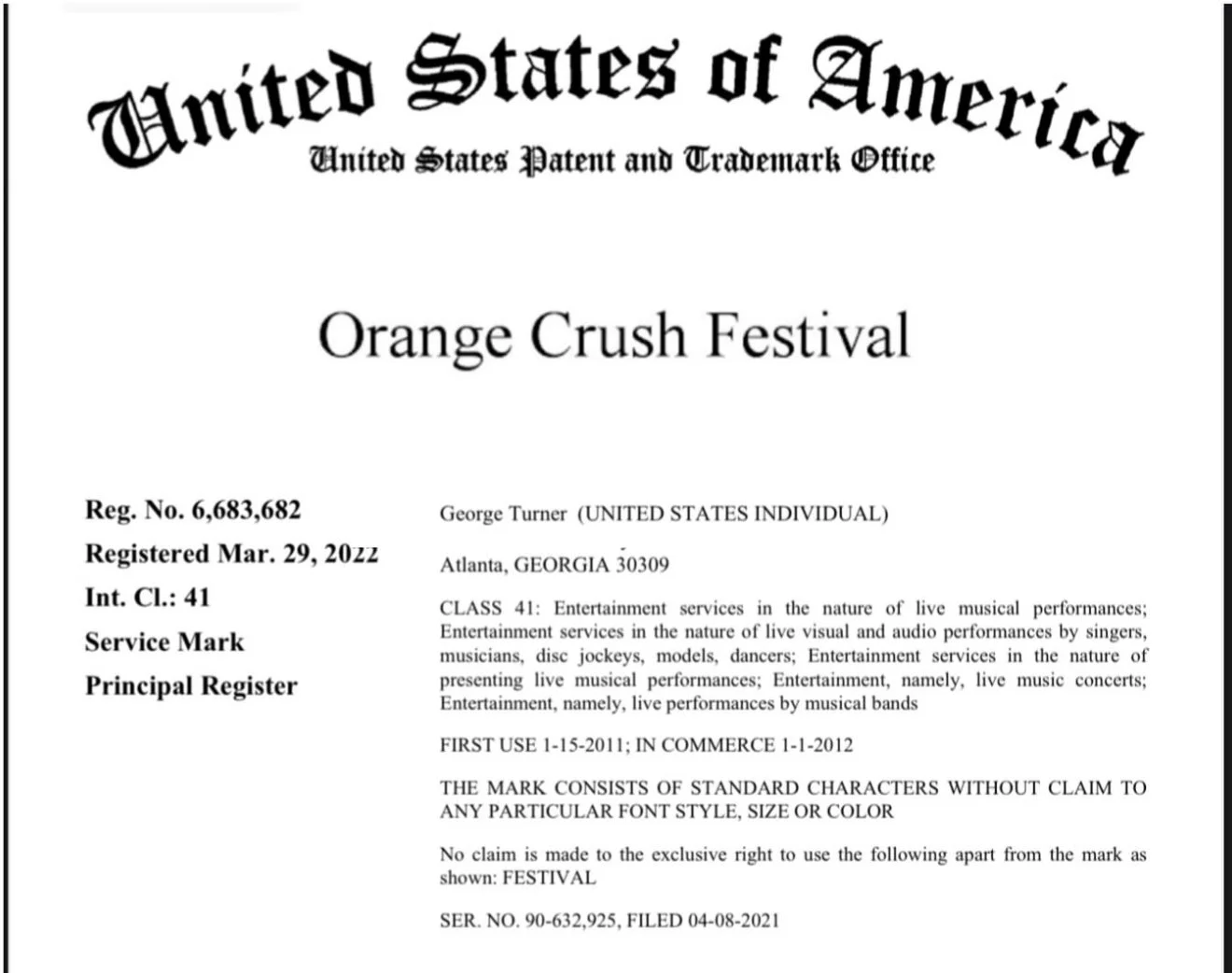
George “Mikey” Turner III is the Founder of Orange Crush Festival® and Executive Director of Orange Crush Magazine, focused on building platforms that connect culture, commerce, technology, tourism, and community development throughout the Southeast and beyond.
The Communities That Win the Future Will Be the Most Connected
The Communities That Win the Future Will Be the Most Connected
By George “Mikey” Turner III
Orange Crush Magazine
Throughout history, communities have competed for growth.
They’ve competed for jobs.
For businesses.
For investment.
For tourism.
For talent.
The communities that attracted opportunity often shared one thing in common:
They were connected.
Connected by ports.
Connected by railroads.
Connected by highways.
Connected by airports.
Today, a new form of connectivity is shaping economic growth.
Digital connectivity.
The Geography of Opportunity Is Changing
For decades, location determined opportunity.
If jobs were in a city, people moved to the city.
If industries were concentrated in a region, workers followed.
Technology is changing that equation.
People can work remotely.
Businesses can serve customers globally.
Entrepreneurs can launch companies from virtually anywhere.
Digital connectivity is creating new pathways for economic participation.
The communities that invest in those pathways are positioning themselves for long-term growth.
Talent Goes Where Opportunity Exists
Economic development is ultimately about people.
Businesses follow talent.
Investment follows talent.
Innovation follows talent.
The challenge for many communities is creating environments where talented people want to live, work, and build.
Connectivity plays a major role in that equation.
People increasingly expect:
Reliable internet access
Strong mobile networks
Digital services
Smart infrastructure
Modern communication tools
Technology has become part of quality of life.
Connectivity Supports Every Industry
Technology is no longer limited to technology companies.
Healthcare depends on it.
Education depends on it.
Tourism depends on it.
Real estate depends on it.
Retail depends on it.
Manufacturing depends on it.
Agriculture depends on it.
Connectivity has become one of the few resources that touches nearly every sector of the economy.
Communities that strengthen digital infrastructure strengthen opportunities across multiple industries simultaneously.
Building Ecosystems, Not Projects
The most successful communities think beyond individual projects.
They focus on ecosystems.
They ask:
How do we support entrepreneurs?
How do we attract investment?
How do we create jobs?
How do we improve quality of life?
How do we connect residents to opportunity?
The answers increasingly involve collaboration between public leaders, private businesses, educational institutions, technology providers, and community organizations.
Growth is rarely created by one organization.
It is created by ecosystems.
A Competitive Advantage for the Next Generation
The next generation of economic development will not simply be measured by buildings constructed or projects completed.
It will be measured by access.
Access to information.
Access to education.
Access to markets.
Access to opportunity.
Communities that prioritize connectivity are helping create that access.
And access remains one of the most powerful drivers of economic mobility.
Looking Ahead
The future will belong to communities that understand a simple reality:
Connection creates opportunity.
The more connected a community becomes, the more possibilities it can unlock.
For businesses.
For entrepreneurs.
For students.
For residents.
For visitors.
For future generations.
Because in the modern economy, connectivity is no longer just infrastructure.
It is opportunity itself.
About Orange Crush Magazine
Orange Crush Magazine explores business, technology, tourism, entrepreneurship, culture, innovation, and economic development through stories that highlight the people and organizations shaping the future of our communities.
George “Mikey” Turner III is the Founder of Orange Crush Festival® and Executive Director of Orange Crush Magazine, focused on building platforms that connect culture, commerce, technology, tourism, and community growth throughout the Southeast and beyond.
The Communities That Win the Future Will Be the Most Connected
The Communities That Win the Future Will Be the Most Connected
By George “Mikey” Turner III
Orange Crush Magazine
Throughout history, communities have competed for growth.
They’ve competed for jobs.
For businesses.
For investment.
For tourism.
For talent.
The communities that attracted opportunity often shared one thing in common:
They were connected.
Connected by ports.
Connected by railroads.
Connected by highways.
Connected by airports.
Today, a new form of connectivity is shaping economic growth.
Digital connectivity.
The Geography of Opportunity Is Changing
For decades, location determined opportunity.
If jobs were in a city, people moved to the city.
If industries were concentrated in a region, workers followed.
Technology is changing that equation.
People can work remotely.
Businesses can serve customers globally.
Entrepreneurs can launch companies from virtually anywhere.
Digital connectivity is creating new pathways for economic participation.
The communities that invest in those pathways are positioning themselves for long-term growth.
Talent Goes Where Opportunity Exists
Economic development is ultimately about people.
Businesses follow talent.
Investment follows talent.
Innovation follows talent.
The challenge for many communities is creating environments where talented people want to live, work, and build.
Connectivity plays a major role in that equation.
People increasingly expect:
Reliable internet access
Strong mobile networks
Digital services
Smart infrastructure
Modern communication tools
Technology has become part of quality of life.
Connectivity Supports Every Industry
Technology is no longer limited to technology companies.
Healthcare depends on it.
Education depends on it.
Tourism depends on it.
Real estate depends on it.
Retail depends on it.
Manufacturing depends on it.
Agriculture depends on it.
Connectivity has become one of the few resources that touches nearly every sector of the economy.
Communities that strengthen digital infrastructure strengthen opportunities across multiple industries simultaneously.
Building Ecosystems, Not Projects
The most successful communities think beyond individual projects.
They focus on ecosystems.
They ask:
How do we support entrepreneurs?
How do we attract investment?
How do we create jobs?
How do we improve quality of life?
How do we connect residents to opportunity?
The answers increasingly involve collaboration between public leaders, private businesses, educational institutions, technology providers, and community organizations.
Growth is rarely created by one organization.
It is created by ecosystems.
A Competitive Advantage for the Next Generation
The next generation of economic development will not simply be measured by buildings constructed or projects completed.
It will be measured by access.
Access to information.
Access to education.
Access to markets.
Access to opportunity.
Communities that prioritize connectivity are helping create that access.
And access remains one of the most powerful drivers of economic mobility.
Looking Ahead
The future will belong to communities that understand a simple reality:
Connection creates opportunity.
The more connected a community becomes, the more possibilities it can unlock.
For businesses.
For entrepreneurs.
For students.
For residents.
For visitors.
For future generations.
Because in the modern economy, connectivity is no longer just infrastructure.
It is opportunity itself.
About Orange Crush Magazine
Orange Crush Magazine explores business, technology, tourism, entrepreneurship, culture, innovation, and economic development through stories that highlight the people and organizations shaping the future of our communities.
George “Mikey” Turner III is the Founder of Orange Crush Festival® and Executive Director of Orange Crush Magazine, focused on building platforms that connect culture, commerce, technology, tourism, and community growth throughout the Southeast and beyond.
The Digital Main Street: How Technology Is Reshaping Local Economies
The Digital Main Street: How Technology Is Reshaping Local Economies
By George “Mikey” Turner III
Orange Crush Magazine
For generations, Main Street was the heartbeat of local commerce.
It was where people shopped.
Where businesses grew.
Where communities gathered.
Where relationships were built.
Today, Main Street still matters.
But it has expanded.
It now exists both physically and digitally.
The businesses that thrive tomorrow will be the ones that successfully operate in both worlds.
Every Business Is Becoming a Technology Business
Whether it’s a restaurant, retail store, contractor, law office, real estate company, or healthcare provider, technology now plays a central role in operations.
Businesses rely on:
Online reviews
Digital payments
Cloud software
Social media
E-commerce platforms
Customer communication tools
Technology is no longer a department.
It’s part of the foundation.
Organizations that embrace digital tools often gain advantages in efficiency, customer service, and growth.
Small Businesses Are Competing on Bigger Stages
One of the most significant shifts in the modern economy is accessibility.
A local business can now reach customers far beyond its immediate market.
A small brand can compete nationally.
An entrepreneur can launch a company from a laptop.
A startup can build an audience without a physical storefront.
Technology has expanded opportunity for businesses of all sizes.
The barriers to entry have never been lower.
The potential reach has never been greater.
Connectivity Fuels Entrepreneurship
Every entrepreneur depends on access.
Access to information.
Access to customers.
Access to tools.
Access to opportunity.
Reliable connectivity helps create that access.
Many of the fastest-growing businesses in America are built upon digital platforms and communication networks.
As technology continues to evolve, connectivity will remain one of the most important drivers of entrepreneurship.
Communities Benefit When Businesses Grow
Strong businesses support strong communities.
They create jobs.
They generate tax revenue.
They support local organizations.
They invest in neighborhoods.
When businesses have access to modern technology and reliable infrastructure, communities often benefit alongside them.
Economic development and digital development are increasingly connected.
The Future of Local Commerce
The next decade will likely bring even more transformation.
Artificial intelligence.
Automation.
Smart infrastructure.
Digital services.
Advanced communications.
The pace of change will continue accelerating.
The communities that adapt will be positioned to attract investment, talent, and innovation.
The businesses that adapt will be positioned to grow.
Looking Ahead
Main Street is no longer limited to a single road.
It now extends across networks, platforms, devices, and digital communities.
The future belongs to organizations that understand how to connect people, technology, and opportunity.
Because the strongest local economies of tomorrow will be built by businesses that can thrive both on the street and on the screen.
About Orange Crush Magazine
Orange Crush Magazine explores business, entrepreneurship, technology, culture, tourism, and economic development through stories that highlight innovation and opportunity across the Southeast and beyond.
George “Mikey” Turner III is the Founder of Orange Crush Festival® and Executive Director of Orange Crush Magazine, focused on building platforms that connect culture, commerce, technology, and community growth.
The Digital Main Street: How Technology Is Reshaping Local Economies
The Digital Main Street: How Technology Is Reshaping Local Economies
By George “Mikey” Turner III
Orange Crush Magazine
For generations, Main Street was the heartbeat of local commerce.
It was where people shopped.
Where businesses grew.
Where communities gathered.
Where relationships were built.
Today, Main Street still matters.
But it has expanded.
It now exists both physically and digitally.
The businesses that thrive tomorrow will be the ones that successfully operate in both worlds.
Every Business Is Becoming a Technology Business
Whether it’s a restaurant, retail store, contractor, law office, real estate company, or healthcare provider, technology now plays a central role in operations.
Businesses rely on:
Online reviews
Digital payments
Cloud software
Social media
E-commerce platforms
Customer communication tools
Technology is no longer a department.
It’s part of the foundation.
Organizations that embrace digital tools often gain advantages in efficiency, customer service, and growth.
Small Businesses Are Competing on Bigger Stages
One of the most significant shifts in the modern economy is accessibility.
A local business can now reach customers far beyond its immediate market.
A small brand can compete nationally.
An entrepreneur can launch a company from a laptop.
A startup can build an audience without a physical storefront.
Technology has expanded opportunity for businesses of all sizes.
The barriers to entry have never been lower.
The potential reach has never been greater.
Connectivity Fuels Entrepreneurship
Every entrepreneur depends on access.
Access to information.
Access to customers.
Access to tools.
Access to opportunity.
Reliable connectivity helps create that access.
Many of the fastest-growing businesses in America are built upon digital platforms and communication networks.
As technology continues to evolve, connectivity will remain one of the most important drivers of entrepreneurship.
Communities Benefit When Businesses Grow
Strong businesses support strong communities.
They create jobs.
They generate tax revenue.
They support local organizations.
They invest in neighborhoods.
When businesses have access to modern technology and reliable infrastructure, communities often benefit alongside them.
Economic development and digital development are increasingly connected.
The Future of Local Commerce
The next decade will likely bring even more transformation.
Artificial intelligence.
Automation.
Smart infrastructure.
Digital services.
Advanced communications.
The pace of change will continue accelerating.
The communities that adapt will be positioned to attract investment, talent, and innovation.
The businesses that adapt will be positioned to grow.
Looking Ahead
Main Street is no longer limited to a single road.
It now extends across networks, platforms, devices, and digital communities.
The future belongs to organizations that understand how to connect people, technology, and opportunity.
Because the strongest local economies of tomorrow will be built by businesses that can thrive both on the street and on the screen.
About Orange Crush Magazine
Orange Crush Magazine explores business, entrepreneurship, technology, culture, tourism, and economic development through stories that highlight innovation and opportunity across the Southeast and beyond.
George “Mikey” Turner III is the Founder of Orange Crush Festival® and Executive Director of Orange Crush Magazine, focused on building platforms that connect culture, commerce, technology, and community growth.
Why Smart Cities Need Smart Events By George “Mikey” Turner III Orange Crush Magazine
Why Smart Cities Need Smart Events
By George “Mikey” Turner III
Orange Crush Magazine
Cities around the world are investing billions into becoming smarter.
They’re improving transportation systems.
Deploying public technology.
Expanding connectivity.
Modernizing infrastructure.
Enhancing public safety.
Supporting innovation.
But one opportunity is often overlooked.
Events.
Large-scale events are among the few environments where thousands of people interact with a city at the same time.
For a brief period, an event becomes a real-world test of how infrastructure, technology, and public services perform under pressure.
That’s why smart cities should view smart events as strategic assets.
Events Create Real-Time Data
Every event generates information.
Traffic patterns.
Transportation demand.
Visitor movement.
Mobile usage.
Consumer spending.
Public engagement.
These insights help communities better understand how people interact with their environments.
The lessons learned from large gatherings can help improve long-term planning and future investments.
Connectivity Is Now Part of Public Infrastructure
Visitors expect to stay connected.
Residents expect access to information.
Businesses depend on communication networks.
Public safety agencies require reliable coordination.
Connectivity now touches nearly every aspect of the modern event experience.
As cities become more connected, events provide opportunities to showcase and strengthen that infrastructure.
Technology is no longer operating in the background.
It is becoming part of the public experience itself.
Innovation Thrives Where People Gather
Throughout history, cities have been centers of innovation.
Ideas spread when people connect.
Partnerships form when communities gather.
Opportunities emerge when industries intersect.
Events accelerate those interactions.
They create environments where businesses, entrepreneurs, technology providers, community leaders, and visitors come together.
Innovation often begins with conversation.
Events help create those conversations.
Public-Private Collaboration
The most successful communities recognize that growth requires collaboration.
Governments cannot do everything alone.
Businesses cannot do everything alone.
Community organizations cannot do everything alone.
Progress often occurs when public and private stakeholders work together toward shared goals.
Events provide natural opportunities for those partnerships to develop and grow.
They create common ground where collaboration becomes possible.
The Future of Community Engagement
As technology continues to evolve, communities will need new ways to engage residents, businesses, and visitors.
Events can help bridge that gap.
They create opportunities to demonstrate innovation, gather feedback, build relationships, and strengthen local ecosystems.
The communities that embrace both technology and engagement will likely be better positioned for future growth.
Looking Ahead
Smart cities are not simply defined by technology.
They are defined by how technology improves people’s lives.
Events offer unique opportunities to connect infrastructure, innovation, business, and community engagement in one place.
The future belongs to communities that understand how those pieces fit together.
Because smart cities need smart infrastructure.
Smart infrastructure needs engagement.
And engagement often begins where people gather.
About Orange Crush Magazine
Orange Crush Magazine explores technology, business, entrepreneurship, tourism, culture, and economic development through stories that highlight innovation and opportunity throughout the Southeast and beyond.
George “Mikey” Turner III is the Founder of Orange Crush Festival® and Executive Director of Orange Crush Magazine, focused on building platforms that connect culture, commerce, technology, and community development.
Why Smart Cities Need Smart Events By George “Mikey” Turner III Orange Crush Magazine
Why Smart Cities Need Smart Events
By George “Mikey” Turner III
Orange Crush Magazine
Cities around the world are investing billions into becoming smarter.
They’re improving transportation systems.
Deploying public technology.
Expanding connectivity.
Modernizing infrastructure.
Enhancing public safety.
Supporting innovation.
But one opportunity is often overlooked.
Events.
Large-scale events are among the few environments where thousands of people interact with a city at the same time.
For a brief period, an event becomes a real-world test of how infrastructure, technology, and public services perform under pressure.
That’s why smart cities should view smart events as strategic assets.
Events Create Real-Time Data
Every event generates information.
Traffic patterns.
Transportation demand.
Visitor movement.
Mobile usage.
Consumer spending.
Public engagement.
These insights help communities better understand how people interact with their environments.
The lessons learned from large gatherings can help improve long-term planning and future investments.
Connectivity Is Now Part of Public Infrastructure
Visitors expect to stay connected.
Residents expect access to information.
Businesses depend on communication networks.
Public safety agencies require reliable coordination.
Connectivity now touches nearly every aspect of the modern event experience.
As cities become more connected, events provide opportunities to showcase and strengthen that infrastructure.
Technology is no longer operating in the background.
It is becoming part of the public experience itself.
Innovation Thrives Where People Gather
Throughout history, cities have been centers of innovation.
Ideas spread when people connect.
Partnerships form when communities gather.
Opportunities emerge when industries intersect.
Events accelerate those interactions.
They create environments where businesses, entrepreneurs, technology providers, community leaders, and visitors come together.
Innovation often begins with conversation.
Events help create those conversations.
Public-Private Collaboration
The most successful communities recognize that growth requires collaboration.
Governments cannot do everything alone.
Businesses cannot do everything alone.
Community organizations cannot do everything alone.
Progress often occurs when public and private stakeholders work together toward shared goals.
Events provide natural opportunities for those partnerships to develop and grow.
They create common ground where collaboration becomes possible.
The Future of Community Engagement
As technology continues to evolve, communities will need new ways to engage residents, businesses, and visitors.
Events can help bridge that gap.
They create opportunities to demonstrate innovation, gather feedback, build relationships, and strengthen local ecosystems.
The communities that embrace both technology and engagement will likely be better positioned for future growth.
Looking Ahead
Smart cities are not simply defined by technology.
They are defined by how technology improves people’s lives.
Events offer unique opportunities to connect infrastructure, innovation, business, and community engagement in one place.
The future belongs to communities that understand how those pieces fit together.
Because smart cities need smart infrastructure.
Smart infrastructure needs engagement.
And engagement often begins where people gather.
About Orange Crush Magazine
Orange Crush Magazine explores technology, business, entrepreneurship, tourism, culture, and economic development through stories that highlight innovation and opportunity throughout the Southeast and beyond.
George “Mikey” Turner III is the Founder of Orange Crush Festival® and Executive Director of Orange Crush Magazine, focused on building platforms that connect culture, commerce, technology, and community development.
The Future of Events Is Powered by Partnerships
The Future of Events Is Powered by Partnerships
By George “Mikey” Turner III
Orange Crush Magazine
No major event succeeds alone.
Behind every successful festival, conference, sporting event, or community gathering is a network of organizations working together toward a common goal.
Sponsors.
Businesses.
Public agencies.
Community leaders.
Technology providers.
Hospitality partners.
Entrepreneurs.
Volunteers.
Each plays a role in creating experiences that people remember.
The future of events will belong to those who understand the power of partnerships.
Collaboration Creates Scale
Every organization has strengths.
Every organization has limitations.
Partnerships allow organizations to combine resources, expertise, and networks in ways that create larger opportunities.
A technology company may provide connectivity.
A hospitality partner may support visitors.
A local business may provide services.
A community organization may help build awareness.
Together, they create an experience that would be difficult to achieve independently.
Collaboration often accelerates growth more effectively than competition.
Today’s Sponsors Want More Than Exposure
The sponsorship industry is evolving.
Organizations are increasingly looking beyond traditional advertising opportunities.
They want engagement.
They want impact.
They want meaningful connections with audiences.
The most successful partnerships are built around creating value rather than simply increasing visibility.
Brands increasingly seek opportunities where they can contribute to the attendee experience and become part of the event ecosystem.
Events as Community Platforms
Modern events often serve as gathering points for entire communities.
They bring together people from different industries, backgrounds, and interests.
Those connections create opportunities for:
Business development
Workforce recruitment
Community engagement
Tourism promotion
Economic growth
Technology adoption
Events have become platforms for relationship-building as much as entertainment.
The organizations that recognize this are positioning themselves for long-term success.
Technology Is Expanding What’s Possible
Technology is creating new opportunities for collaboration.
Organizations can now engage audiences through:
Mobile applications
Digital experiences
Live content
Interactive activations
Connectivity solutions
Real-time communication
As technology continues to evolve, partnerships between event organizers and technology providers will likely become even more important.
The attendee experience is becoming increasingly connected.
Building Long-Term Value
The strongest partnerships do not end when the event ends.
They continue through future projects, new opportunities, and ongoing community engagement.
The goal should not be a single activation.
The goal should be a long-term relationship.
Organizations that focus on creating mutual value often build partnerships that last for years.
Looking Ahead
The future of events will be shaped by collaboration.
No single organization can provide every solution.
No single company can create every opportunity.
But together, organizations can create experiences, economic impact, and community value that extend far beyond any one event.
Because the most successful events are not built by sponsors alone.
They are built by ecosystems.
And strong ecosystems are built through partnerships.
About Orange Crush Magazine
Orange Crush Magazine explores business, technology, tourism, entrepreneurship, culture, and economic development through stories that highlight innovation and opportunity across the Southeast and beyond.
George “Mikey” Turner III is the Founder of Orange Crush Festival® and Executive Director of Orange Crush Magazine, focused on building platforms that connect communities, businesses, technology, and culture.
The Future of Events Is Powered by Partnerships
The Future of Events Is Powered by Partnerships
By George “Mikey” Turner III
Orange Crush Magazine
No major event succeeds alone.
Behind every successful festival, conference, sporting event, or community gathering is a network of organizations working together toward a common goal.
Sponsors.
Businesses.
Public agencies.
Community leaders.
Technology providers.
Hospitality partners.
Entrepreneurs.
Volunteers.
Each plays a role in creating experiences that people remember.
The future of events will belong to those who understand the power of partnerships.
Collaboration Creates Scale
Every organization has strengths.
Every organization has limitations.
Partnerships allow organizations to combine resources, expertise, and networks in ways that create larger opportunities.
A technology company may provide connectivity.
A hospitality partner may support visitors.
A local business may provide services.
A community organization may help build awareness.
Together, they create an experience that would be difficult to achieve independently.
Collaboration often accelerates growth more effectively than competition.
Today’s Sponsors Want More Than Exposure
The sponsorship industry is evolving.
Organizations are increasingly looking beyond traditional advertising opportunities.
They want engagement.
They want impact.
They want meaningful connections with audiences.
The most successful partnerships are built around creating value rather than simply increasing visibility.
Brands increasingly seek opportunities where they can contribute to the attendee experience and become part of the event ecosystem.
Events as Community Platforms
Modern events often serve as gathering points for entire communities.
They bring together people from different industries, backgrounds, and interests.
Those connections create opportunities for:
Business development
Workforce recruitment
Community engagement
Tourism promotion
Economic growth
Technology adoption
Events have become platforms for relationship-building as much as entertainment.
The organizations that recognize this are positioning themselves for long-term success.
Technology Is Expanding What’s Possible
Technology is creating new opportunities for collaboration.
Organizations can now engage audiences through:
Mobile applications
Digital experiences
Live content
Interactive activations
Connectivity solutions
Real-time communication
As technology continues to evolve, partnerships between event organizers and technology providers will likely become even more important.
The attendee experience is becoming increasingly connected.
Building Long-Term Value
The strongest partnerships do not end when the event ends.
They continue through future projects, new opportunities, and ongoing community engagement.
The goal should not be a single activation.
The goal should be a long-term relationship.
Organizations that focus on creating mutual value often build partnerships that last for years.
Looking Ahead
The future of events will be shaped by collaboration.
No single organization can provide every solution.
No single company can create every opportunity.
But together, organizations can create experiences, economic impact, and community value that extend far beyond any one event.
Because the most successful events are not built by sponsors alone.
They are built by ecosystems.
And strong ecosystems are built through partnerships.
About Orange Crush Magazine
Orange Crush Magazine explores business, technology, tourism, entrepreneurship, culture, and economic development through stories that highlight innovation and opportunity across the Southeast and beyond.
George “Mikey” Turner III is the Founder of Orange Crush Festival® and Executive Director of Orange Crush Magazine, focused on building platforms that connect communities, businesses, technology, and culture.
Why Broadband Is Becoming Essential Economic Infrastructure
Why Broadband Is Becoming Essential Economic Infrastructure
By George “Mikey” Turner III
Orange Crush Magazine
A generation ago, communities measured growth through roads, bridges, ports, railways, and utilities.
Those investments helped create jobs, attract businesses, and improve quality of life.
Today, another form of infrastructure is rapidly joining that list.
Broadband connectivity.
Reliable internet access is no longer simply a convenience for entertainment or communication.
It has become a foundational component of economic development.
The New Utility
Businesses depend on connectivity to operate efficiently.
Employees depend on connectivity to work remotely.
Students depend on connectivity to learn.
Healthcare providers depend on connectivity to deliver services.
Entrepreneurs depend on connectivity to launch and grow companies.
Increasingly, internet access influences where people choose to live, work, and invest.
Communities with strong digital infrastructure often possess a competitive advantage in attracting both residents and businesses.
Supporting Small Business Growth
Small businesses are among the largest beneficiaries of modern connectivity.
A local business can now:
Serve customers online
Process digital payments
Manage inventory remotely
Conduct virtual meetings
Run advertising campaigns
Access cloud-based tools
Technology has lowered barriers to growth for entrepreneurs across nearly every industry.
For many small businesses, connectivity is as important as electricity.
Without it, operations become significantly more difficult.
Workforce Development in a Connected Economy
The workforce is changing.
Remote work.
Hybrid work.
Online training.
Virtual collaboration.
Digital certifications.
Many of the fastest-growing opportunities now require reliable access to technology and communication networks.
Communities investing in broadband infrastructure are also investing in workforce competitiveness.
The ability to connect people to education and employment opportunities may become one of the most important economic development tools available.
Attracting Future Investment
Site selectors, developers, and corporate decision-makers increasingly evaluate connectivity when considering investments.
Businesses want confidence that infrastructure can support future growth.
Residents want confidence that technology will support their daily lives.
Visitors expect digital convenience during travel.
Strong connectivity helps support all three.
As a result, broadband infrastructure is becoming an increasingly important factor in long-term planning and development strategies.
Building Communities for the Next Generation
The communities that thrive tomorrow are making investments today.
Not only in roads.
Not only in buildings.
Not only in utilities.
But also in digital infrastructure.
The future economy will be powered by information, communication, and connectivity.
Communities prepared for that future will likely enjoy greater opportunities for growth, innovation, and resilience.
Because in the twenty-first century, broadband is no longer simply technology infrastructure.
It is economic infrastructure.
About Orange Crush Magazine
Orange Crush Magazine covers entrepreneurship, technology, tourism, culture, business, and economic development across the Southeast, highlighting the trends and leaders shaping the future.
George “Mikey” Turner III is the Founder of Orange Crush Festival® and Executive Director of Orange Crush Magazine, focused on building platforms that connect culture, commerce, technology, and community opportunity.
Why Broadband Is Becoming Essential Economic Infrastructure
Why Broadband Is Becoming Essential Economic Infrastructure
By George “Mikey” Turner III
Orange Crush Magazine
A generation ago, communities measured growth through roads, bridges, ports, railways, and utilities.
Those investments helped create jobs, attract businesses, and improve quality of life.
Today, another form of infrastructure is rapidly joining that list.
Broadband connectivity.
Reliable internet access is no longer simply a convenience for entertainment or communication.
It has become a foundational component of economic development.
The New Utility
Businesses depend on connectivity to operate efficiently.
Employees depend on connectivity to work remotely.
Students depend on connectivity to learn.
Healthcare providers depend on connectivity to deliver services.
Entrepreneurs depend on connectivity to launch and grow companies.
Increasingly, internet access influences where people choose to live, work, and invest.
Communities with strong digital infrastructure often possess a competitive advantage in attracting both residents and businesses.
Supporting Small Business Growth
Small businesses are among the largest beneficiaries of modern connectivity.
A local business can now:
Serve customers online
Process digital payments
Manage inventory remotely
Conduct virtual meetings
Run advertising campaigns
Access cloud-based tools
Technology has lowered barriers to growth for entrepreneurs across nearly every industry.
For many small businesses, connectivity is as important as electricity.
Without it, operations become significantly more difficult.
Workforce Development in a Connected Economy
The workforce is changing.
Remote work.
Hybrid work.
Online training.
Virtual collaboration.
Digital certifications.
Many of the fastest-growing opportunities now require reliable access to technology and communication networks.
Communities investing in broadband infrastructure are also investing in workforce competitiveness.
The ability to connect people to education and employment opportunities may become one of the most important economic development tools available.
Attracting Future Investment
Site selectors, developers, and corporate decision-makers increasingly evaluate connectivity when considering investments.
Businesses want confidence that infrastructure can support future growth.
Residents want confidence that technology will support their daily lives.
Visitors expect digital convenience during travel.
Strong connectivity helps support all three.
As a result, broadband infrastructure is becoming an increasingly important factor in long-term planning and development strategies.
Building Communities for the Next Generation
The communities that thrive tomorrow are making investments today.
Not only in roads.
Not only in buildings.
Not only in utilities.
But also in digital infrastructure.
The future economy will be powered by information, communication, and connectivity.
Communities prepared for that future will likely enjoy greater opportunities for growth, innovation, and resilience.
Because in the twenty-first century, broadband is no longer simply technology infrastructure.
It is economic infrastructure.
About Orange Crush Magazine
Orange Crush Magazine covers entrepreneurship, technology, tourism, culture, business, and economic development across the Southeast, highlighting the trends and leaders shaping the future.
George “Mikey” Turner III is the Founder of Orange Crush Festival® and Executive Director of Orange Crush Magazine, focused on building platforms that connect culture, commerce, technology, and community opportunity.
From Event Host to Economic Engine: The Expanding Role of Cultural Festivals
From Event Host to Economic Engine: The Expanding Role of Cultural Festivals
By George “Mikey” Turner III
Orange Crush Magazine
For many years, festivals were viewed primarily as entertainment.
People attended.
Artists performed.
Vendors sold products.
The event ended.
Everyone went home.
Today, the most successful festivals are becoming something much larger.
They’re becoming economic engines.
They’re creating opportunities for businesses, entrepreneurs, workers, sponsors, tourism stakeholders, and local communities.
The conversation is shifting from “How many people attended?” to “How much value was created?”
More Than a Weekend Event
Every major festival activates an ecosystem.
Hotels welcome guests.
Restaurants serve visitors.
Retail stores see increased traffic.
Transportation providers gain customers.
Content creators generate media.
Local workers earn income.
Entrepreneurs gain exposure.
A successful event often creates economic activity far beyond its physical footprint.
The impact can continue long after the final stage is dismantled.
The Rise of the Experience Economy
Consumers increasingly invest in experiences.
People want memories.
They want connection.
They want culture.
They want moments worth sharing.
This trend has fueled growth throughout the event industry and created new opportunities for destinations willing to embrace experiential tourism.
Communities that understand the value of experiences are often better positioned to attract visitors and investment.
Why Brands Are Paying Attention
Brands are increasingly looking for environments where engagement happens naturally.
Festivals provide something unique.
They bring together people who are actively participating, exploring, and connecting.
That creates opportunities for businesses to become part of the experience rather than simply advertise around it.
The strongest partnerships occur when brands contribute value that improves the attendee experience.
People remember usefulness.
People remember positive interactions.
People remember experiences.
Entrepreneurship and Opportunity
Festivals also create pathways for small businesses.
Food vendors.
Merchandise companies.
Media organizations.
Technology providers.
Security firms.
Transportation services.
Marketing agencies.
The event economy supports a wide range of industries.
For many entrepreneurs, a single successful event can lead to long-term business growth and new relationships.
Events often serve as marketplaces for ideas, products, and partnerships.
Building Sustainable Impact
The future of festivals will not be measured solely by attendance.
It will be measured by impact.
Economic impact.
Community impact.
Tourism impact.
Business impact.
Workforce impact.
The events that continue to grow will be the ones that create value for more than just attendees.
They will create value for entire ecosystems.
Looking Ahead
As communities compete for visitors, investment, and economic growth, cultural events will continue to play an important role.
Not simply as entertainment.
But as platforms.
Platforms for entrepreneurship.
Platforms for tourism.
Platforms for innovation.
Platforms for connection.
Because when done effectively, a festival is more than a gathering.
It’s an engine for opportunity.
About Orange Crush Magazine
Orange Crush Magazine explores culture, business, entrepreneurship, tourism, innovation, and economic development through stories that highlight the people and organizations shaping the future of our communities.
George “Mikey” Turner III is the Founder of Orange Crush Festival® and Executive Director of Orange Crush Magazine, focused on building platforms that connect culture, commerce, technology, and community growth throughout the Southeast and beyond.
From Event Host to Economic Engine: The Expanding Role of Cultural Festivals
From Event Host to Economic Engine: The Expanding Role of Cultural Festivals
By George “Mikey” Turner III
Orange Crush Magazine
For many years, festivals were viewed primarily as entertainment.
People attended.
Artists performed.
Vendors sold products.
The event ended.
Everyone went home.
Today, the most successful festivals are becoming something much larger.
They’re becoming economic engines.
They’re creating opportunities for businesses, entrepreneurs, workers, sponsors, tourism stakeholders, and local communities.
The conversation is shifting from “How many people attended?” to “How much value was created?”
More Than a Weekend Event
Every major festival activates an ecosystem.
Hotels welcome guests.
Restaurants serve visitors.
Retail stores see increased traffic.
Transportation providers gain customers.
Content creators generate media.
Local workers earn income.
Entrepreneurs gain exposure.
A successful event often creates economic activity far beyond its physical footprint.
The impact can continue long after the final stage is dismantled.
The Rise of the Experience Economy
Consumers increasingly invest in experiences.
People want memories.
They want connection.
They want culture.
They want moments worth sharing.
This trend has fueled growth throughout the event industry and created new opportunities for destinations willing to embrace experiential tourism.
Communities that understand the value of experiences are often better positioned to attract visitors and investment.
Why Brands Are Paying Attention
Brands are increasingly looking for environments where engagement happens naturally.
Festivals provide something unique.
They bring together people who are actively participating, exploring, and connecting.
That creates opportunities for businesses to become part of the experience rather than simply advertise around it.
The strongest partnerships occur when brands contribute value that improves the attendee experience.
People remember usefulness.
People remember positive interactions.
People remember experiences.
Entrepreneurship and Opportunity
Festivals also create pathways for small businesses.
Food vendors.
Merchandise companies.
Media organizations.
Technology providers.
Security firms.
Transportation services.
Marketing agencies.
The event economy supports a wide range of industries.
For many entrepreneurs, a single successful event can lead to long-term business growth and new relationships.
Events often serve as marketplaces for ideas, products, and partnerships.
Building Sustainable Impact
The future of festivals will not be measured solely by attendance.
It will be measured by impact.
Economic impact.
Community impact.
Tourism impact.
Business impact.
Workforce impact.
The events that continue to grow will be the ones that create value for more than just attendees.
They will create value for entire ecosystems.
Looking Ahead
As communities compete for visitors, investment, and economic growth, cultural events will continue to play an important role.
Not simply as entertainment.
But as platforms.
Platforms for entrepreneurship.
Platforms for tourism.
Platforms for innovation.
Platforms for connection.
Because when done effectively, a festival is more than a gathering.
It’s an engine for opportunity.
About Orange Crush Magazine
Orange Crush Magazine explores culture, business, entrepreneurship, tourism, innovation, and economic development through stories that highlight the people and organizations shaping the future of our communities.
George “Mikey” Turner III is the Founder of Orange Crush Festival® and Executive Director of Orange Crush Magazine, focused on building platforms that connect culture, commerce, technology, and community growth throughout the Southeast and beyond.
The Infrastructure Behind Every Great Destination
The Infrastructure Behind Every Great Destination
By George “Mikey” Turner III
Orange Crush Magazine
When people think about successful destinations, they often picture beaches, attractions, restaurants, entertainment districts, and hotels.
What they rarely think about is infrastructure.
Yet infrastructure is often the difference between a destination that grows and one that struggles to keep pace.
Roads matter.
Public safety matters.
Transportation matters.
And increasingly, connectivity matters.
In today’s economy, digital infrastructure has become just as important as physical infrastructure.
The Modern Visitor Journey
Long before a visitor arrives, technology is already influencing their experience.
They search online.
Read reviews.
Book accommodations.
Purchase tickets.
Use navigation apps.
Research local attractions.
Communicate with family and friends.
The visitor experience begins digitally long before it begins physically.
Destinations that recognize this reality are positioning themselves for long-term success.
Connectivity Drives Commerce
Every year, billions of dollars move through digital platforms.
Hotels process reservations.
Restaurants receive online orders.
Retail stores process electronic payments.
Transportation companies manage bookings.
Small businesses engage customers through social media.
Reliable connectivity supports nearly every aspect of modern commerce.
For many organizations, internet access is no longer a support system.
It is a business necessity.
Tourism and Technology Are Converging
The tourism industry continues to evolve.
Visitors expect instant access to information.
Real-time updates.
Digital payments.
Mobile applications.
Interactive experiences.
Reliable communication.
Technology has become embedded within the visitor experience.
As a result, communities that invest in digital infrastructure often improve their competitiveness as destinations.
The ability to support connected experiences can influence visitor satisfaction, spending, and repeat visitation.
Opportunities for Public and Private Collaboration
No single organization builds a successful destination alone.
Growth often requires collaboration between:
Local governments
Businesses
Community organizations
Technology providers
Educational institutions
Tourism stakeholders
When these groups work together, they create environments that support economic growth and innovation.
Strong partnerships frequently lead to stronger outcomes.
Building for the Future
The communities that thrive over the next decade will likely be those that understand an important truth:
Infrastructure is no longer limited to roads, bridges, and buildings.
Digital infrastructure is becoming equally important.
Connectivity supports commerce.
Commerce supports opportunity.
Opportunity supports growth.
And growth supports stronger communities.
The destinations that invest in both physical and digital foundations will be best positioned to compete in an increasingly connected world.
Because great destinations aren’t built by accident.
They’re built through vision, investment, and infrastructure.
About Orange Crush Magazine
Orange Crush Magazine explores the intersection of culture, business, tourism, technology, entrepreneurship, and community development through stories that highlight innovation and opportunity.
George “Mikey” Turner III is the Founder of Orange Crush Festival® and Executive Director of Orange Crush Magazine, focused on building platforms that connect people, businesses, technology, and communities throughout the Southeast and beyond.
The Infrastructure Behind Every Great Destination
The Infrastructure Behind Every Great Destination
By George “Mikey” Turner III
Orange Crush Magazine
When people think about successful destinations, they often picture beaches, attractions, restaurants, entertainment districts, and hotels.
What they rarely think about is infrastructure.
Yet infrastructure is often the difference between a destination that grows and one that struggles to keep pace.
Roads matter.
Public safety matters.
Transportation matters.
And increasingly, connectivity matters.
In today’s economy, digital infrastructure has become just as important as physical infrastructure.
The Modern Visitor Journey
Long before a visitor arrives, technology is already influencing their experience.
They search online.
Read reviews.
Book accommodations.
Purchase tickets.
Use navigation apps.
Research local attractions.
Communicate with family and friends.
The visitor experience begins digitally long before it begins physically.
Destinations that recognize this reality are positioning themselves for long-term success.
Connectivity Drives Commerce
Every year, billions of dollars move through digital platforms.
Hotels process reservations.
Restaurants receive online orders.
Retail stores process electronic payments.
Transportation companies manage bookings.
Small businesses engage customers through social media.
Reliable connectivity supports nearly every aspect of modern commerce.
For many organizations, internet access is no longer a support system.
It is a business necessity.
Tourism and Technology Are Converging
The tourism industry continues to evolve.
Visitors expect instant access to information.
Real-time updates.
Digital payments.
Mobile applications.
Interactive experiences.
Reliable communication.
Technology has become embedded within the visitor experience.
As a result, communities that invest in digital infrastructure often improve their competitiveness as destinations.
The ability to support connected experiences can influence visitor satisfaction, spending, and repeat visitation.
Opportunities for Public and Private Collaboration
No single organization builds a successful destination alone.
Growth often requires collaboration between:
Local governments
Businesses
Community organizations
Technology providers
Educational institutions
Tourism stakeholders
When these groups work together, they create environments that support economic growth and innovation.
Strong partnerships frequently lead to stronger outcomes.
Building for the Future
The communities that thrive over the next decade will likely be those that understand an important truth:
Infrastructure is no longer limited to roads, bridges, and buildings.
Digital infrastructure is becoming equally important.
Connectivity supports commerce.
Commerce supports opportunity.
Opportunity supports growth.
And growth supports stronger communities.
The destinations that invest in both physical and digital foundations will be best positioned to compete in an increasingly connected world.
Because great destinations aren’t built by accident.
They’re built through vision, investment, and infrastructure.
About Orange Crush Magazine
Orange Crush Magazine explores the intersection of culture, business, tourism, technology, entrepreneurship, and community development through stories that highlight innovation and opportunity.
George “Mikey” Turner III is the Founder of Orange Crush Festival® and Executive Director of Orange Crush Magazine, focused on building platforms that connect people, businesses, technology, and communities throughout the Southeast and beyond.
Beyond Sponsorship: Why Brands Are Investing in Community Ecosystems
Beyond Sponsorship: Why Brands Are Investing in Community Ecosystems
By George “Mikey” Turner III
Orange Crush Magazine
The strongest brands in America are no longer asking a simple question:
“How many people will see our logo?”
They’re asking a different question:
“How can we become part of the community?”
That shift is changing the future of sponsorship, marketing, and brand engagement.
Companies are realizing that visibility alone is no longer enough.
Consumers want authenticity.
They want value.
They want experiences.
Most importantly, they want brands that contribute to the communities they serve.
Communities Create Long-Term Value
Advertising can generate awareness.
Community involvement generates trust.
Trust is one of the most valuable assets a business can build.
Whether it’s a local business supporting a neighborhood event or a national company investing in a cultural experience, the impact often extends far beyond the event itself.
Strong communities create:
Stronger local economies
Stronger customer relationships
Stronger brand loyalty
Stronger business opportunities
The return on investment isn’t always measured in days or weeks.
Sometimes it’s measured in years.
Modern Consumers Expect More
Today’s consumers are highly informed.
They know when a company is simply advertising.
They also know when a company is genuinely investing in people.
Organizations that support education, entrepreneurship, workforce development, cultural experiences, and community engagement often build deeper connections with their audiences.
People remember brands that show up.
People remember brands that contribute.
People remember brands that help.
The Rise of Experience-Based Engagement
Consumers increasingly value experiences over traditional marketing messages.
They want interaction.
They want participation.
They want memorable moments.
Events provide unique opportunities to create those experiences.
A meaningful interaction often creates more impact than thousands of traditional advertisements.
That’s why many organizations are shifting resources toward experiential marketing, community outreach, and strategic partnerships.
They’re looking for ways to engage rather than simply promote.
Why Community Platforms Matter
Community-focused platforms serve as bridges.
They connect businesses.
Residents.
Visitors.
Entrepreneurs.
Students.
Artists.
Nonprofits.
And local leaders.
When those groups come together, opportunities emerge.
New businesses launch.
Partnerships form.
Careers develop.
Ideas grow.
The organizations that help facilitate those connections often become valuable long-term assets within their communities.
Looking Forward
The future of sponsorship is bigger than branding.
The future of sponsorship is participation.
The most successful companies will be those that invest not only in visibility, but also in relationships.
Not only in marketing, but in impact.
Not only in audiences, but in communities.
Because the brands that become part of the ecosystem are often the brands that remain relevant for generations.
About Orange Crush Magazine
Orange Crush Magazine highlights the people, organizations, businesses, and ideas shaping culture, innovation, entrepreneurship, tourism, and community development across the Southeast.
George “Mikey” Turner III is the Founder of Orange Crush Festival® and Executive Director of Orange Crush Magazine, dedicated to building platforms that connect culture, business, technology, and community opportunity.
Beyond Sponsorship: Why Brands Are Investing in Community Ecosystems
Beyond Sponsorship: Why Brands Are Investing in Community Ecosystems
By George “Mikey” Turner III
Orange Crush Magazine
The strongest brands in America are no longer asking a simple question:
“How many people will see our logo?”
They’re asking a different question:
“How can we become part of the community?”
That shift is changing the future of sponsorship, marketing, and brand engagement.
Companies are realizing that visibility alone is no longer enough.
Consumers want authenticity.
They want value.
They want experiences.
Most importantly, they want brands that contribute to the communities they serve.
Communities Create Long-Term Value
Advertising can generate awareness.
Community involvement generates trust.
Trust is one of the most valuable assets a business can build.
Whether it’s a local business supporting a neighborhood event or a national company investing in a cultural experience, the impact often extends far beyond the event itself.
Strong communities create:
Stronger local economies
Stronger customer relationships
Stronger brand loyalty
Stronger business opportunities
The return on investment isn’t always measured in days or weeks.
Sometimes it’s measured in years.
Modern Consumers Expect More
Today’s consumers are highly informed.
They know when a company is simply advertising.
They also know when a company is genuinely investing in people.
Organizations that support education, entrepreneurship, workforce development, cultural experiences, and community engagement often build deeper connections with their audiences.
People remember brands that show up.
People remember brands that contribute.
People remember brands that help.
The Rise of Experience-Based Engagement
Consumers increasingly value experiences over traditional marketing messages.
They want interaction.
They want participation.
They want memorable moments.
Events provide unique opportunities to create those experiences.
A meaningful interaction often creates more impact than thousands of traditional advertisements.
That’s why many organizations are shifting resources toward experiential marketing, community outreach, and strategic partnerships.
They’re looking for ways to engage rather than simply promote.
Why Community Platforms Matter
Community-focused platforms serve as bridges.
They connect businesses.
Residents.
Visitors.
Entrepreneurs.
Students.
Artists.
Nonprofits.
And local leaders.
When those groups come together, opportunities emerge.
New businesses launch.
Partnerships form.
Careers develop.
Ideas grow.
The organizations that help facilitate those connections often become valuable long-term assets within their communities.
Looking Forward
The future of sponsorship is bigger than branding.
The future of sponsorship is participation.
The most successful companies will be those that invest not only in visibility, but also in relationships.
Not only in marketing, but in impact.
Not only in audiences, but in communities.
Because the brands that become part of the ecosystem are often the brands that remain relevant for generations.
About Orange Crush Magazine
Orange Crush Magazine highlights the people, organizations, businesses, and ideas shaping culture, innovation, entrepreneurship, tourism, and community development across the Southeast.
George “Mikey” Turner III is the Founder of Orange Crush Festival® and Executive Director of Orange Crush Magazine, dedicated to building platforms that connect culture, business, technology, and community opportunity.
New Currency of Events: Attention, Data, and Experience
The New Currency of Events: Attention, Data, and Experience
By George “Mikey” Turner III
Orange Crush Magazine
For decades, the event industry measured success primarily through attendance.
The bigger the crowd, the bigger the success.
While attendance still matters, the most valuable asset at any event today isn’t simply the number of people who show up.
It’s engagement.
Modern events exist at the intersection of physical experiences and digital interactions.
Every attendee carries a smartphone.
Every attendee creates data.
Every attendee has the ability to share experiences instantly with hundreds—or thousands—of people.
This shift has fundamentally changed how organizations think about events.
The Experience Economy
Consumers today have more entertainment options than ever before.
Streaming services.
Social media.
Gaming.
Virtual experiences.
To earn someone’s time and attention, events must deliver something memorable.
People don’t just attend events anymore.
They document them.
Share them.
Review them.
Promote them.
Critique them.
The attendee experience has become one of the most valuable assets an event can create.
Attention Is Valuable
Brands understand that attention has become increasingly difficult to earn.
Consumers see thousands of marketing messages every day.
Most are ignored.
Events provide something unique.
They create concentrated moments where people are actively engaged with their environment.
That level of engagement is valuable not only for event organizers but also for businesses looking to connect with audiences in authentic ways.
The future belongs to organizations that understand how to create meaningful interactions instead of simply displaying advertisements.
The Role of Technology
Technology now influences nearly every part of the event journey.
Discovery.
Registration.
Navigation.
Communication.
Purchasing.
Content sharing.
Feedback.
The organizations that leverage technology effectively often create smoother and more enjoyable experiences for attendees.
Connectivity is no longer operating behind the scenes.
It has become part of the experience itself.
What Sponsors Are Looking For
Today’s sponsors increasingly evaluate opportunities differently than they did ten years ago.
Visibility remains important.
But engagement matters more.
Sponsors want opportunities to create value.
To solve problems.
To improve experiences.
To connect with audiences in ways that feel useful and memorable.
The most successful partnerships are built around enhancing the attendee experience rather than simply placing logos on marketing materials.
The Future of Event Growth
The events that thrive in the years ahead will be those that understand three important realities:
Attention is valuable.
Technology is essential.
Experience is everything.
Organizations that successfully combine all three will be positioned to create stronger communities, stronger partnerships, and stronger economic impact.
Because in today’s environment, people aren’t just attending events.
They’re participating in connected experiences that extend far beyond the event itself.
About Orange Crush Magazine
Orange Crush Magazine covers business, culture, technology, entrepreneurship, tourism, innovation, and community impact throughout the Southeast and beyond.
George “Mikey” Turner III is the Founder of Orange Crush Festival® and Executive Director of Orange Crush Magazine, where he focuses on the intersection of culture, commerce, technology, and community development.