
HBCU’s ARE INSTITUTIONS OF EXCELLENCE.
HBCU’s ARE INSTITUTIONS OF EXCELLENCE.
Before brands discovered HBCU culture, HBCUs were already producing the athletes, artists, executives, engineers, entrepreneurs, educators and tastemakers moving America forward. CRUSH Magazine is putting that ecosystem where it belongs: at the forefront.
By CRUSH Magazine
There is a particular moment that happens on an HBCU campus when everything comes together.
The band is somewhere in the distance.
Music is coming from somewhere closer.
Fraternities and sororities are moving through the crowd.
Alumni are back.
Students are outside.
Somebody is selling something.
Somebody is campaigning for something.
Somebody is filming content.
Somebody is networking without calling it networking.
Somebody has an internship lined up.
Somebody is trying to get one.
An athlete walks past.
An artist is performing later.
A future CEO is standing in line for food.
A future teacher is laughing beside them.
A future engineer is DJing tonight.
A future politician is probably arguing with somebody about something.
Everybody is dressed like there might be a camera nearby.
Because there probably is.
It looks like a celebration.
It is.
But look closer.
You’re watching an ecosystem.
BEFORE AMERICA CALLED IT CULTURE
Historically Black Colleges and Universities did not appear because Black Americans needed another version of college.
They emerged in an America where access to education itself was restricted by race.
Their existence became an answer to exclusion.
Places where Black people could study.
Teach.
Organize.
Experiment.
Build institutions.
Develop professions.
Create networks.
Compete.
Lead.
And imagine lives larger than the structures surrounding them.
That history matters because HBCUs are sometimes discussed today primarily through their most visually spectacular moments.
The bands.
The homecomings.
The step shows.
The football classics.
The fashion.
The celebrities.
The parties.
Those things matter.
They are culture.
But they exist on top of something deeper.
Institution building.
That is the foundation.
THE CULTURE WAS ALREADY HERE
America has a habit of discovering things Black people have been doing for years.
Then somebody gives it a new name.
A new campaign.
A new aesthetic.
A corporate sponsorship.
A hashtag.
And suddenly the thing that was supposedly niche becomes valuable.
HBCU culture understands this phenomenon intimately.
Fashion trends move through campuses.
Slang moves through campuses.
Music moves through campuses.
Dance moves through campuses.
Political ideas move through campuses.
Athletes develop there.
Artists develop there.
Relationships develop there.
Businesses begin there.
Movements organize there.
HBCUs have functioned as cultural laboratories for generations.
The mainstream eventually catches up.
HBCU × CRUSH
CRUSH Magazine has a particular responsibility to understand that history.
Because Orange Crush itself is inseparable from the broader story of Black college culture in Savannah.
The history extends beyond any contemporary company, promoter or trademark.
Before the modern brand architecture, before social-media campaigns and before destination expansion, there was a Black college social ecosystem.
Students gathered.
Friends invited friends.
Networks expanded.
Savannah connected with the beach.
And a tradition grew.
That means HBCU culture isn’t an occasional CRUSH Magazine category.
It is part of the publication’s cultural ancestry.
We aren’t visiting the HBCU world when homecoming arrives.
We came through it.
SAVANNAH
You cannot discuss this history without Savannah.
Savannah is frequently marketed through Spanish moss, historic squares, architecture and tourism.
Those things are real.
So is another Savannah.
Black Savannah.
Working Savannah.
College Savannah.
Port Savannah.
Church Savannah.
Military Savannah.
Neighborhood Savannah.
Gullah Geechee Savannah.
Young Savannah.
Old Savannah.
And inside that landscape sits a historically Black institution whose presence has shaped generations:
Savannah State University.
The university belongs to a much larger national HBCU story.
But locally, its significance is impossible to separate from the evolution of Black student culture in the region.
For CRUSH, that makes Savannah more than headquarters, nostalgia or geography.
It is an editorial starting point.
BUT THE STORY IS NATIONAL
Savannah may be home territory.
The HBCU universe is much bigger.
Atlanta alone offers one of the most extraordinary concentrations of historically Black higher education anywhere in America.
Across the country, HBCUs carry distinct personalities.
Different traditions.
Different rivalries.
Different sounds.
Different alumni networks.
Different regional cultures.
No serious HBCU publication strategy should flatten all of that into one generic aesthetic.
An HBCU in Georgia is not interchangeable with one in Florida.
A campus in Washington, D.C. carries a different cultural geography from one in Alabama.
North Carolina has its own traditions.
Tennessee has its own.
Louisiana has its own.
Texas has its own.
Virginia has its own.
The details matter.
CRUSH wants the details.
HOMECOMING IS CULTURAL INFRASTRUCTURE
Homecoming may be one of the clearest examples of how HBCUs blur the line between institution and culture.
Officially, it is a university tradition.
In practice, it can become an entire economic and social ecosystem.
Students.
Alumni.
Families.
Athletes.
Artists.
Promoters.
Restaurants.
Hotels.
Barbers.
Stylists.
Designers.
Vendors.
Photographers.
DJs.
Nightclubs.
Transportation companies.
Security companies.
Content creators.
Local businesses.
Everybody participates in the economy surrounding the moment.
A single weekend can simultaneously function as reunion, fashion week, music festival, networking conference, sporting event, family gathering and party.
That deserves serious business coverage.
Not just photo galleries.
THE BAND IS NOT HALFTIME ENTERTAINMENT
At many HBCUs, the band is an institution inside the institution.
Precision.
Sound.
Competition.
Tradition.
Recruitment.
Musicianship.
Identity.
Generations of alumni can recognize songs and formations tied to specific periods of their lives.
Bands compete without needing a scoreboard.
Crowds know.
The opposing band knows.
The alumni definitely know.
That culture deserves coverage with the same seriousness mainstream sports publications give rivalries.
Who are the elite arrangers?
Who are the emerging musicians?
How are programs funded?
How do band scholarships work?
What happens behind the scenes during a major classic?
Where do those musicians go professionally?
What musical innovations emerge from these programs?
The fifth quarter is culture.
CRUSH will treat it that way.
HBCU SPORTS ARE ENTERING A NEW ECONOMY
College sports has changed.
NIL transformed what athletes can legally do with their own commercial identities.
The transfer portal transformed roster construction.
Social media transformed recruiting.
Streaming transformed exposure.
Conference realignment transformed economics.
And athletes increasingly understand themselves as media properties and businesses.
For HBCU athletes, that creates both opportunity and challenge.
Visibility isn’t distributed equally.
Resources aren’t distributed equally.
Media coverage isn’t distributed equally.
But talent has never required equal distribution to exist.
CRUSH Sports wants to identify the athletes whose stories deserve attention before national audiences discover them.
Football.
Basketball.
Track.
Baseball.
Softball.
Volleyball.
Tennis.
Golf.
And the sports that receive almost no mainstream attention at all.
Not simply:
Who won?
But:
Who should we know?
THE NEXT STAR MAY ALREADY BE ON CAMPUS
Mainstream media often arrives at the end of discovery.
After the viral clip.
After the major deal.
After the breakout game.
After the celebrity cosign.
After everybody else already agrees someone matters.
That’s useful reporting.
It isn’t discovery.
CRUSH wants to move earlier.
The freshman averaging numbers nobody outside the conference noticed.
The producer making beats between classes.
The student photographer whose visual language is already professional.
The computer-science major building software in a dorm room.
The fashion designer making custom pieces for classmates.
The student promoter who understands audience acquisition better than people twice his age.
The journalism student building an independent media platform.
The engineering student filing a patent.
The student athlete turning NIL into an actual business instead of temporary spending money.
Find them early.
That becomes the editorial advantage.
HBCU × MUSIC
The relationship is natural.
Music moves through Black college campuses with extraordinary speed.
A DJ plays something.
A dance starts.
A fraternity or sorority adopts it.
A video circulates.
Another campus catches it.
A regional record moves.
The mainstream arrives later.
But the story isn’t limited to artists.
There are producers.
Engineers.
Managers.
DJs.
Promoters.
Songwriters.
Videographers.
Graphic designers.
Content creators.
Future entertainment attorneys.
Future label executives.
Future touring professionals.
A campus music scene can contain an entire industry before anybody has a corporate title.
CRUSH Music wants to document the pipeline.
HBCU × FASHION
Walk through a major HBCU homecoming and you’ll see something fashion publications spend enormous resources trying to manufacture:
authentic street-level trend formation.
Vintage school apparel.
Custom pieces.
Designer clothing.
Sneakers.
Greek paraphernalia.
Tailoring.
Streetwear.
Luxury.
Thrift.
Regional style.
Alumni style.
Student style.
People aren’t simply wearing clothes.
They’re communicating affiliation.
Class year.
Organization.
City.
Taste.
Money.
Humor.
History.
Identity.
CRUSH Style will document that visual language.
Not merely who’s wearing an expensive brand.
Who actually has style?
There is a difference.
HBCU × TECHNOLOGY
The stereotypical image of technology culture remains too narrow.
The future of technology does not belong exclusively to Silicon Valley.
It belongs wherever talented people have computers, ideas and access.
HBCU computer-science programs.
Engineering departments.
Cybersecurity labs.
Research centers.
Student founders.
Artificial-intelligence projects.
Robotics teams.
Fintech ideas.
Health technology.
Media technology.
Gaming.
Software.
Data science.
Students are already building.
The question is whether the capital, mentorship, coverage and opportunities find them early enough.
CRUSH Technology wants to cover the builder before the funding announcement.
The prototype before the acquisition.
The dorm-room company before the headquarters.
HBCU × BUSINESS
There may be no more important CRUSH HBCU question than:
What are you building?
Not merely:
Where are you trying to get hired?
Employment matters.
So does ownership.
Student businesses deserve attention.
Alumni businesses deserve attention.
HBCU venture capital deserves attention.
Real estate.
Franchising.
Technology.
Media.
Beauty.
Food.
Fashion.
Logistics.
Transportation.
Entertainment.
Professional services.
Intellectual property.
We should celebrate the graduate who lands the major corporate position.
We should also celebrate the graduate who creates 50 positions.
Both matter.
HBCU × NIGHTLIFE
We aren’t going to pretend the party doesn’t exist.
That would be dishonest.
The social experience is part of college culture.
Homecomings.
Classics.
After-parties.
Day parties.
Concerts.
Greek events.
Beach weekends.
Promoters.
DJs.
Venues.
Some of America’s most influential Black entertainment professionals learned audience psychology long before anybody gave them an executive title.
They learned it throwing parties.
Who can move a crowd?
Who can sell tickets?
Who understands marketing?
Who understands timing?
Who understands talent?
Who can turn 300 people into 3,000?
There is business intelligence inside nightlife.
CRUSH knows because nightlife is part of our own history.
The objective is not to glorify every party.
It is to understand the ecosystem.
HBCU × GREEK LIFE
The Divine Nine represents more than colors, calls and stepping.
Black Greek-letter organizations have histories tied to scholarship, service, leadership, civic participation, professional networking and community.
Their cultural visibility can sometimes overshadow that institutional history.
CRUSH coverage should capture both.
The step show.
And the scholarship.
The stroll.
And the service project.
The homecoming plot.
And the professional network.
Tradition becomes more meaningful when people understand what created it.
HBCU × MAINSTREAM
There is another question worth asking.
Why does HBCU culture receive so much mainstream attention at certain moments?
Celebrity enrollment.
A famous coach.
A viral band performance.
A major donation.
A corporate campaign.
A homecoming appearance.
Then the cameras leave.
The institution remains.
That cycle needs scrutiny.
HBCUs don’t become important when celebrities arrive.
They don’t become innovative when corporations notice them.
They don’t become culturally valuable when mainstream media produces a special package.
The value was already there.
The attention was temporary.
CRUSH intends to cover what remains after everybody leaves.
HBCU × UNDERGROUND
This may be where CRUSH can become particularly valuable.
Every campus has people who are famous on campus before they’re famous anywhere else.
The rapper everybody knows.
The photographer everybody books.
The promoter who can fill a venue.
The athlete everybody believes deserves more attention.
The designer making everybody’s clothes.
The comedian everybody follows.
The student entrepreneur everybody buys from.
The DJ everybody requests.
The coder building something strange in the dorm.
Those people form an underground economy of reputation.
Campus fame is often a test market.
Some of those names disappear after graduation.
Others become national.
We want the archive from before everybody knew them.
THE HBCU CRUSH LIST
Every year, CRUSH Magazine intends to identify emerging HBCU talent across disciplines.
Not a popularity contest.
A discovery platform.
ATHLETES
The competitors demanding national attention.
ARTISTS
The voices developing the next sound.
FOUNDERS
The students and alumni building businesses.
TECHNOLOGISTS
The engineers, programmers and researchers creating what’s next.
CREATIVES
Photographers, filmmakers, designers and storytellers developing new visual languages.
CAMPUS LEADERS
The organizers making institutions stronger.
TASTEMAKERS
The people influencing what everybody else wears, hears, watches and attends.
ALUMNI
Graduates turning education into influence, service, enterprise and ownership.
Call it:
THE HBCU CRUSH LIST
WHO’S NEXT—BEFORE EVERYBODY KNOWS.
THE HBCU ROAD
CRUSH shouldn’t understand HBCU culture from a desk.
Go there.
Walk the yard.
Attend the games.
Hear the bands.
Talk to students.
Talk to professors.
Talk to alumni.
Talk to coaches.
Talk to founders.
Talk to the person selling plates.
Talk to the DJ.
Talk to the student government president.
Talk to the engineering major.
Talk to the freshman who just started a company.
Talk to the senior who has no idea what comes next.
Document the ecosystem while it is alive.
Atlanta.
Savannah.
Florida.
The Carolinas.
Alabama.
Tennessee.
Virginia.
Washington.
Louisiana.
Texas.
And beyond.
Not every campus needs the same story.
Every campus deserves to be understood on its own terms.
FROM THE YARD TO THE WORLD
There is an old mistake in the way culture gets documented.
People wait until someone becomes important.
Then they go backward looking for the beginning.
CRUSH wants the beginning.
Before the championship.
Before the platinum album.
Before the IPO.
Before the Grammy.
Before the draft.
Before the million followers.
Before the company headquarters.
Before the documentary.
Before everybody suddenly claims they knew all along.
We want the dorm room.
The first performance.
The empty gym.
The student business.
The campus election.
The prototype.
The first mixtape.
The first 100 customers.
The first viral clip.
The first homecoming where everybody started asking:
“Who is that?”
BECAUSE HBCUs DON’T JUST PRODUCE GRADUATES.
They produce networks.
They produce traditions.
They produce institutions.
They produce professionals.
They produce research.
They produce movements.
They produce athletes.
They produce artists.
They produce entrepreneurs.
They produce engineers.
They produce educators.
They produce executives.
They produce public servants.
They produce memories.
And yes—
they produce culture.
A lot of the culture America eventually calls mainstream begins somewhere smaller.
A dorm.
A yard.
A gym.
A studio.
A classroom.
A tailgate.
A group chat.
A student organization.
A DJ booth.
A laptop.
A conversation between people nobody outside campus knows yet.
Until suddenly everybody does.
HBCU AT THE FOREFRONT
CRUSH Magazine will cover mainstream America.
We will cover underground America.
We will cover professional sports.
Music.
Entertainment.
Technology.
Business.
Nightlife.
Fashion.
Ownership.
But HBCUs will not sit somewhere near the bottom of that editorial structure as a diversity category.
They belong near the beginning.
Because the relationship isn’t cosmetic.
It’s historical.
Orange Crush emerged from a world shaped by Black college culture.
Savannah remains part of that history.
And the next generation deserves a publication willing to document what they’re creating while they’re creating it.
So when the mainstream eventually arrives, there will already be a record.
We were there when the artist had 900 followers.
We were there before the athlete was drafted.
We were there before the founder raised the round.
We were there when the designer was working from a dorm.
We were there before the song traveled.
We were there before the company scaled.
We were there before everybody knew.
Because that is what cultural journalism should do.
Not simply report popularity.
Recognize significance.
HBCU × CRUSH
THE YARD IS A NETWORK.
THE BAND IS AN INSTITUTION.
THE ATHLETE IS A BUSINESS.
THE ARTIST IS INTELLECTUAL PROPERTY.
THE STUDENT IS A FOUNDER.
THE ALUMNUS IS A CONNECTION.
THE HOMECOMING IS AN ECONOMY.
THE CAMPUS IS A CULTURAL LABORATORY.
And the culture doesn’t become important when somebody else discovers it.
IT WAS ALREADY IMPORTANT.
CRUSH MAGAZINE
HBCU. MAINSTREAM. UNDERGROUND.
SPORTS × MUSIC × BUSINESS × TECHNOLOGY × ENTERTAINMENT × FASHION × NIGHTLIFE × OWNERSHIP
FROM THE YARD TO THE WORLD.
Culture. Memory. Discovery. Ownership.
GEORGE “MIKEY” RANSOM TURNER III: THE MAN MR. CRUSH Basketball player. Soldier. Father. Promoter. Artist. Entrepreneur. Trademark owner. Author. George “Mikey” Ransom Turner III
GEORGE “MIKEY” RANSOM TURNER III: THE MAN BEHIND CRUSH
Basketball player. Soldier. Father. Promoter. Artist. Entrepreneur. Trademark owner. Author. George “Mikey” Ransom Turner III has spent much of his life moving between worlds that aren’t supposed to fit neatly together. CRUSH may be the first thing big enough to hold all of them.
By CRUSH Magazine
There is a temptation to explain George “Mikey” Ransom Turner III through Orange Crush.
That would be convenient.
It would also be incomplete.
Before the festivals, there was basketball.
Before the trademarks, there was a family name.
Before the parties became businesses, there was Savannah.
Before the entrepreneur, there was a soldier.
Before the artist called Plug Not A Rapper, there was somebody who understood the strange power of being known without fitting neatly into one category.
And before CRUSH became an expanding cultural brand, Turner had already spent most of his life moving between worlds.
Sports.
Music.
Military life.
College.
Nightlife.
Fatherhood.
Business.
Technology.
Media.
Savannah.
Atlanta.
Mainstream America.
Underground Black culture.
Those worlds may appear disconnected.
Turner sees a common thread.
Attention.
Who gets it.
Who controls it.
Who profits from it.
Who gets remembered.
And eventually:
who owns it.
“YOU PRONOUNCE GEORGE III AS MIKEY.”
Start with the name.
George “Mikey” Ransom Turner III.
Even that contains multiple identities.
George is lineage.
Ransom is inheritance.
Turner is family.
III is continuation.
Mikey is personality.
The nickname became the easiest way to distinguish the child from the generations of Georges around him.
Eventually it became something larger.
An identity.
A character.
A brand before he understood branding.
Turner grew up in Savannah, Georgia, inside an extended Black Southern family structure where identity wasn’t created by one household alone.
Different homes.
Different relatives.
Different rules.
Different influences.
The same child moving between them.
Savannah taught him something early:
You can belong to several worlds simultaneously.
That lesson would follow him everywhere.
BEFORE THE STAGE, THERE WAS THE GYM
Long before Turner understood event promotion, he understood crowds.
Basketball taught him.
At Calvary Day School in Savannah, Turner played point guard in a city where basketball reputation mattered.
He wasn’t built like the prototype scouts traditionally imagined when evaluating elite prospects.
Around six feet tall.
Not overwhelmingly explosive.
A history of knee injuries.
But his game leaned toward creativity.
Ball handling.
Passing.
Pull-up shooting.
Deep threes.
Rebounding from the guard position.
Changing pace.
Manipulating defenders.
Playing toward the energy of the crowd.
Turner describes his high-school style through a modern comparison:
Kyrie Irving’s creative scoring instincts mixed with Rajon Rondo’s orchestration and visual passing.
That is a stylistic comparison—not a claim of equivalent talent or career accomplishment.
The distinction matters.
Because Turner’s basketball story is ultimately less about what he became than what he believed he could become.
His teams repeatedly reached postseason competition.
He earned regional recognition.
He made 55 three-pointers during one season.
He played on a team that opened a season 28–0.
At a University of Georgia basketball camp, Turner remembers scoring 30 points during an invitational championship.
Then came knee trouble.
Two surgeries during high school.
Recruiters saw limitations.
Turner saw possibility.
Coaches discussed development.
Adding weight.
Becoming a more traditional point guard.
Potentially redshirting.
Possibly taking a junior-college route.
Turner wanted something else.
Major Division I basketball.
A full scholarship.
Blue-chip treatment.
That collision—between how a young athlete understands himself and how institutions project him—never completely left.
It simply moved into other industries.
THE PLAYER AND THE SYSTEM
Sports teaches young people about power before most of them know that’s what they’re learning.
A player produces performance.
A coach determines minutes.
A scout determines evaluation.
A ranking service determines perception.
A school determines opportunity.
Media determines narrative.
Fans determine attention.
The athlete may be the product everybody came to see while simultaneously controlling remarkably little of the infrastructure surrounding his own value.
Today, college athletes operate in the NIL era.
Name.
Image.
Likeness.
Turner came of age before that language reshaped college sports.
But the underlying question fascinated him later:
What is the value of a name?
That question eventually followed him far beyond basketball.
FROM SAVANNAH TO SOLDIER
Life didn’t follow the basketball script Turner imagined.
Few lives do.
Eventually another uniform appeared.
United States Army.
Turner served as a soldier, including overseas service in Kuwait and Saudi Arabia.
And somehow basketball followed him there too.
During his deployment period, he played point guard in military recreation competition against teams in the region.
Different country.
Different uniform.
Same ball.
That chapter widened his perspective.
Savannah had taught him neighborhood.
Basketball had taught him competition.
The military taught him systems.
Structure.
Hierarchy.
Logistics.
Movement.
Planning.
Accountability.
And the difference between an idea and an operation.
Those lessons would later become surprisingly relevant in entertainment.
Because a festival may look like chaos from outside.
Behind the scenes, everything is logistics.
People.
Vehicles.
Locations.
Schedules.
Security.
Vendors.
Communication.
Contingencies.
Money.
Timing.
The party is what the public sees.
The operation is what makes the party possible.
NIGHTLIFE IS A BUSINESS SCHOOL
There are industries where culture moves faster than corporations.
Nightlife is one of them.
A promoter can know a record is hot before radio programmers acknowledge it.
A DJ can recognize an emerging artist before a label commits.
A bartender can tell when a neighborhood’s demographic is changing.
A club owner understands consumer behavior in real time.
A photographer knows who everybody wants to see.
The line outside tells you something.
The parking lot tells you something.
The VIP section tells you something.
The people who leave early tell you something too.
Nightlife is data disguised as fun.
Turner understood the emotional side first.
Get people excited.
Give them somewhere to go.
Create anticipation.
Create scarcity.
Make people feel that missing the event means missing the moment.
Then he began understanding the economic side.
Attention becomes traffic.
Traffic becomes transactions.
Transactions create businesses.
Businesses create intellectual property.
And intellectual property can outlive the party.
ORANGE CRUSH CHANGED THE EQUATION
Orange Crush existed long before Turner became part of its modern business story.
That distinction is essential.
The culture has deeper roots than one contemporary entrepreneur.
But Turner’s relationship with Orange Crush eventually became the central laboratory for his ideas about culture, attention and ownership.
What happens when something culturally recognizable becomes commercially valuable?
Who owns the name?
Who owns the event?
Can anybody own a tradition?
What exactly does a trademark protect?
What’s the difference between cultural history and commercial intellectual property?
Can competing promoters operate around the same cultural moment?
What happens when municipalities become part of the equation?
Those aren’t merely party questions.
They are business questions.
Legal questions.
Media questions.
Technology questions.
Brand questions.
And increasingly, questions affecting modern culture everywhere.
PLUG NOT A RAPPER
Then there is music.
Turner records under the name Plug Not A Rapper.
The contradiction is intentional.
He makes rap music while resisting the idea that “rapper” completely describes him.
The music functions less like a separate career than another document inside the larger archive.
Songs preserve periods.
Relationships.
Ambition.
Money.
Fatherhood.
Ego.
Mistakes.
Success.
Savannah.
Atlanta.
Orange Crush.
The lifestyle surrounding the business.
In that sense, Turner treats music similarly to the way CRUSH Magazine treats photographs.
As evidence of an era.
A song can preserve what somebody believed at 29 in a way a 45-year-old autobiography never could.
The older the catalog becomes, the more interesting that function becomes.
THEN CAME THE BIGGER IDEA
At some point, Orange Crush stopped being large enough to explain CRUSH.
The brand began expanding conceptually.
Festival.
Music.
Magazine.
Archive.
Merchandise.
Intellectual property.
Destination experiences.
Publishing.
Digital media.
The connective tissue wasn’t orange.
It was culture.
And culture is much larger than nightlife.
Turner’s ambition for CRUSH Magazine is therefore deliberately broad.
Not random.
Broad.
Because the same person who listens to an underground Savannah artist may watch the NBA that night.
The entrepreneur building a startup may attend a mansion party Saturday.
The software engineer may collect sneakers.
The college athlete may release music.
The DJ may own rental properties.
The rapper may become a venture investor.
The promoter may become a technology founder.
Real people don’t live inside media categories.
Why should culture?
MAINSTREAM × UNDERGROUND
CRUSH Magazine intends to live in the space between the two.
Mainstream culture provides scale.
Underground culture provides discovery.
One tells you what millions of people already know.
The other tells you what they may know next.
CRUSH wants both.
That means covering a superstar when the story matters.
But it also means covering the artist performing for 80 people before 80,000 people know the name.
The nationally ranked athlete.
And the high-school guard whose highlights haven’t escaped his city yet.
The Fortune 500 executive.
And the person building a company from a laptop at the kitchen table.
The arena tour.
And the club everybody important somehow knows about despite there being almost no advertising.
The global fashion house.
And the designer selling the first 50 pieces directly through Instagram.
Culture doesn’t begin when mainstream media discovers it.
Usually by then, culture has already been working.
SPORTS
CRUSH Sports won’t simply ask who won.
The scoreboard is available everywhere.
The more interesting questions live around it.
Who is next?
Who was overlooked?
How is NIL changing high-school and college decision-making?
How are athletes becoming businesses?
What happens to players after the dream changes?
How does fashion move through locker rooms?
How does music move through sports?
How do athletes become cultural figures beyond competition?
And what can yesterday’s overlooked prospect teach us about today’s evaluation systems?
Sports is competition.
But sports is also identity.
Economics.
Technology.
Fashion.
Psychology.
Media.
Ownership.
That’s CRUSH territory.
MUSIC
CRUSH Music should exist in two directions simultaneously.
Who’s dominating?
And:
Who’s next?
Major releases deserve coverage.
So do regional scenes.
Atlanta.
Savannah.
Jacksonville.
Miami.
Memphis.
Detroit.
Houston.
New Orleans.
The Carolinas.
And wherever the next sound begins before the industry knows what to call it.
Artists.
Producers.
DJs.
Engineers.
Managers.
Independent labels.
Streaming economics.
Catalog ownership.
Touring.
Publishing.
Sampling.
Artificial intelligence.
The business behind the record matters as much as the record.
Because musicians aren’t simply making songs anymore.
They’re building intellectual-property portfolios.
ENTERTAINMENT
Film.
Television.
Comedy.
Streaming.
Creators.
Podcasts.
Internet personalities.
Independent productions.
Celebrity.
Virality.
The entertainment industry is collapsing into the creator economy in real time.
Someone with a phone can now compete for the same hour of human attention once controlled almost exclusively by studios and networks.
That changes everything.
CRUSH wants to document the people taking advantage of that shift before the history books explain it afterward.
NIGHTLIFE
Nightlife remains part of the DNA.
Not simply because parties are entertaining.
Because nightlife is where worlds collide.
Music meets fashion.
Athletes meet artists.
Entrepreneurs meet influencers.
Tourists meet locals.
Underground records meet mainstream audiences.
Brands meet consumers.
And tomorrow morning’s rumor is often born around 1:47 tonight.
CRUSH understands nightlife because CRUSH came through nightlife.
The goal isn’t to pretend otherwise.
The goal is to take that cultural fluency into bigger rooms.
BUSINESS
Who owns it?
That may become the most repeated question in CRUSH Magazine.
Not:
Who looks successful?
Who actually owns the company?
Who owns the building?
Who owns the trademark?
Who owns the publishing?
Who owns the masters?
Who owns the technology?
Who controls distribution?
Who has equity?
Who is licensing what?
Who is building something that can survive without them?
Business coverage should make ownership understandable without making it boring.
Because financial literacy becomes much more interesting when attached to something people already care about.
IT + TECHNOLOGY
Technology is culture now.
There is no meaningful separation.
Artificial intelligence influences music.
Algorithms influence fame.
Software influences nightlife.
Ticketing platforms influence events.
Data influences sports.
Streaming influences entertainment.
Fintech influences business.
Phones influence human relationships.
Social platforms influence language.
Cybersecurity influences ownership.
Digital archives influence history.
Technology is no longer the section of a magazine reserved for people who like computers.
It is the infrastructure underneath almost everything else.
CRUSH Technology will cover innovation from the perspective of the people actually living inside its consequences.
What changed?
Who benefits?
Who gets displaced?
Who owns the technology?
And what should ordinary people understand before the next transformation arrives?
THE CRUSH CONVERSATION
Put everything together and the editorial map becomes clearer.
SPORTS × MUSIC × ENTERTAINMENT × NIGHTLIFE × BUSINESS × TECHNOLOGY × FASHION × CULTURE × OWNERSHIP
Not as separate islands.
As intersections.
A basketball player launches a record label.
That’s CRUSH.
A rapper invests in technology.
That’s CRUSH.
An underground DJ breaks a record that becomes mainstream six months later.
That’s CRUSH.
A promoter builds software for independent events.
That’s CRUSH.
A Savannah entrepreneur turns a regional idea into a national company.
That’s CRUSH.
A high-school athlete learns to monetize his name responsibly.
That’s CRUSH.
A Black software engineer builds an AI company nobody is talking about yet.
That’s CRUSH.
A comedian turns internet attention into an independent tour.
That’s CRUSH.
A local restaurant becomes a national franchise.
That’s CRUSH.
A nightclub becomes the birthplace of a musical movement.
That’s CRUSH.
The mainstream matters.
The underground matters.
What happens between them may matter most.
THE INTERNET DESTROYED THE GATE
For generations, culture needed permission.
A record label.
A television network.
A newspaper editor.
A radio programmer.
A magazine publisher.
A scout.
A distributor.
A venue owner.
Somebody had to open the gate.
The internet weakened that system.
It didn’t eliminate gatekeepers.
It created new ones.
Algorithms.
Platforms.
Search engines.
Recommendation systems.
Follower counts.
Digital marketplaces.
Now the question isn’t simply:
Can you get published?
Anyone can publish.
The question is:
Can you become trusted?
That is harder.
And trust is where CRUSH Magazine intends to compete.
Not by pretending to know everything.
By documenting what it knows carefully.
Correcting what needs correcting.
Separating opinion from reporting.
Separating memory from documented history.
Giving underground voices serious presentation.
And refusing to assume mainstream popularity automatically equals cultural importance.
CRUSH IS NOT TRYING TO COVER EVERYTHING
It is trying to understand how everything connects.
That’s different.
Sports connects to business.
Business connects to technology.
Technology connects to music.
Music connects to nightlife.
Nightlife connects to fashion.
Fashion connects to celebrity.
Celebrity connects to media.
Media connects to attention.
Attention connects to money.
Money connects to ownership.
Ownership connects to power.
And power determines whose version of history survives.
Which brings everything back to the beginning.
A name.
GEORGE “MIKEY” RANSOM TURNER III
The child who carried several names became an adult obsessed with what names could become.
Basketball taught him attention.
Injury taught him impermanence.
The military taught him systems.
Nightlife taught him people.
Music taught him documentation.
Business taught him leverage.
Orange Crush taught him culture.
Ownership taught him the difference between being associated with something and controlling an asset connected to it.
And fatherhood made the question longer-term:
What survives you?
Turner doesn’t present a finished story.
There are contradictions in it.
Successes.
Failures.
Disputes.
Reinventions.
Relationships.
Courtrooms.
Businesses.
Songs.
Parties.
Uniforms.
Children.
Ideas that worked.
Ideas that didn’t.
Ideas still being tested.
That’s precisely why the archive begins now.
Not after everything becomes clean enough for a biography.
FROM MIKEY TO MAINSTREAM
CRUSH Magazine will feature famous people.
It will also feature people who aren’t famous yet.
Championship athletes.
And overlooked prospects.
Platinum artists.
And artists recording in bedrooms.
CEOs.
And hustlers turning legitimate ideas into their first LLC.
Hollywood.
And YouTube.
Wall Street.
And the neighborhood business.
Artificial intelligence.
And the DJ with a hard drive full of records nobody else has heard.
Miami.
Savannah.
Atlanta.
Jacksonville.
And eventually wherever culture takes us next.
Because prestige isn’t created by standing beside famous people.
Prestige is created by becoming credible enough that important people—famous or unknown—trust you to tell their stories.
WELCOME TO CRUSH MAGAZINE
This is not simply an Orange Crush publication.
Orange Crush is part of its history.
CRUSH is the larger lens.
A publication about ambition.
Taste.
Competition.
Entertainment.
Innovation.
Money.
Technology.
Nightlife.
Legacy.
Discovery.
And ownership.
A place where mainstream culture meets the underground before anybody decides which is which.
A place where nostalgia can sit beside artificial intelligence.
Where an old Savannah flyer can sit beside a technology founder.
Where a retired athlete can explain what the recruiting system missed.
Where the next artist can appear before the first platinum record.
Where entrepreneurs can talk about the numbers behind the lifestyle.
Where the party gets documented—but so does the business that produced it.
Where culture isn’t treated as disposable entertainment.
It is treated as intellectual property.
As history.
As enterprise.
As something worth preserving.
George “Mikey” Ransom Turner III may be the man behind CRUSH.
But if the vision works—
CRUSH Magazine becomes bigger than the man who built it.
That’s the point.
CRUSH MAGAZINE
MAINSTREAM × UNDERGROUND
SPORTS.
MUSIC.
ENTERTAINMENT.
NIGHTLIFE.
BUSINESS.
TECHNOLOGY.
FASHION.
CULTURE.
OWNERSHIP.
We cover the people everybody knows.
We discover the people everybody will know.
And we preserve the people history shouldn’t forget.
THIS IS CRUSH.
Culture. Memory. Discovery. Ownership.
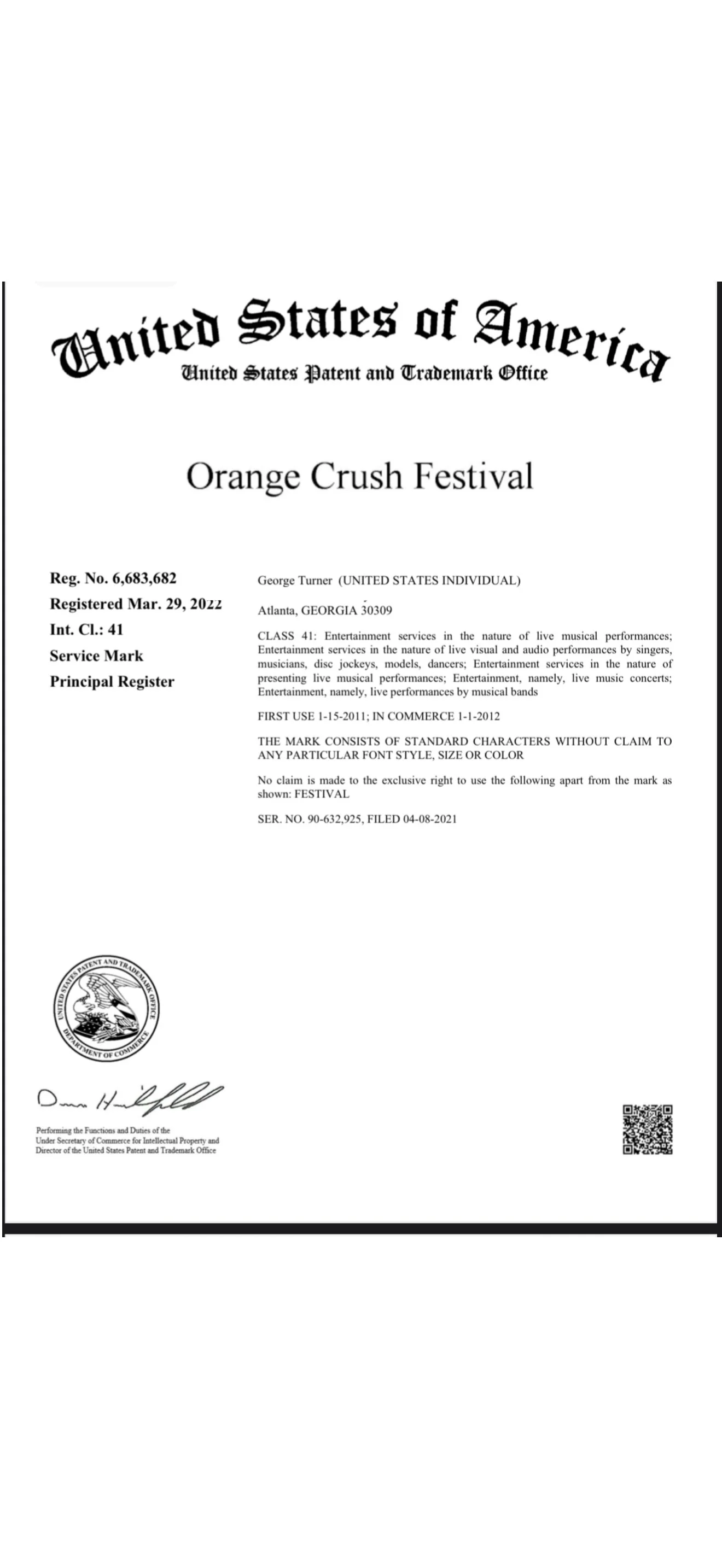
THE ORANGE CRUSH TIMELINE: THEN → NOW From Black college tradition to beach phenomenon. From handwritten directions and paper flyers to social media and destination weekends. From Savannah to Tybee t
THE ORANGE CRUSH TIMELINE: THEN → NOW
From Black college tradition to beach phenomenon. From handwritten directions and paper flyers to social media and destination weekends. From Savannah to Tybee—and now beyond Georgia.
By CRUSH Magazine
Some cultural events are created on a specific day.
Orange Crush is harder to contain.
Its history lives across generations.
Across Savannah.
Across college campuses.
Across Tybee Island.
Across photographs nobody has digitized yet.
Across old flyers.
Across newspaper archives.
Across hotel rooms, parking lots, beach weekends, parties, political debates, social media feeds and stories that begin with the same four words:
“I remember when…”
That makes constructing an Orange Crush timeline complicated.
Memory is not always documentation.
Tradition is not always trademark.
A party is not necessarily an organization.
And a cultural gathering can exist long before anybody realizes that future generations will want to know exactly how it started.
So CRUSH Magazine is approaching the history differently.
We are building a living timeline.
Where dates can be independently documented, they should be documented.
Where history survives primarily through firsthand recollection, those memories should be attributed as recollections.
Where accounts conflict, the conflict belongs in the archive too.
Because the objective isn’t to make history cleaner.
It is to make the record deeper.
This is Orange Crush:
Then → Now.
THE BEGINNING
1980s–1990s
BLACK COLLEGE CULTURE MEETS THE COAST
The roots of Orange Crush are widely associated with Savannah’s Black college community and the spring social traditions surrounding students in the region.
Savannah provided something unusual.
A historic Southern city.
A significant Black population.
College culture.
Nightlife.
Tourism.
And just down the road:
the Atlantic Ocean.
Tybee Island gave students something every college town couldn’t provide.
A beach.
What began as a gathering connected to Black college social life developed over time into something larger than any campus.
Students told students.
Friends invited friends.
People came from other schools.
Then other cities.
The network expanded.
Before sophisticated digital marketing existed, Orange Crush grew through one of the oldest distribution systems in Black culture:
word of mouth.
THE 1990s
THE TRADITION SPREADS
By the 1990s, Orange Crush was becoming part of a broader regional vocabulary.
The name represented more than a formal itinerary.
It represented a weekend.
A destination.
A social ritual.
You didn’t necessarily need a minute-by-minute schedule.
You needed to know where people were going.
Savannah.
Tybee.
The beach.
The parties.
Everything else could be figured out when you arrived.
This was the era when cultural reputation traveled largely without permanent digital evidence.
Flyers disappeared.
Photographs stayed inside albums.
Video remained on tapes.
Stories survived because people repeated them.
That makes this period especially important to preserve.
Every surviving artifact becomes more valuable with time.
THE EARLY 2000s
ORANGE CRUSH BECOMES A SOUTHERN RITE OF PASSAGE
The new millennium brought a new generation.
And that generation brought different music.
Different fashion.
Different cars.
Different technology.
But the fundamental Orange Crush formula remained recognizable:
friends + road trip + Savannah + beach + music + everybody else.
Southern hip-hop was simultaneously exploding into national and international popular culture.
Atlanta’s influence grew.
Regional sounds traveled farther.
Mixtape culture flourished.
Custom-car culture remained highly visible.
College students became increasingly connected through early digital platforms.
Orange Crush existed directly inside that transition.
The culture was moving from analog memory toward digital memory.
And then came the camera phone.
THE SOCIAL-MEDIA TRANSITION
MID-2000s–EARLY 2010s
THE WEEKEND BECOMES VISIBLE
Facebook changed college social life.
Suddenly an entire weekend could become an album.
Hundreds of photographs could appear Monday morning.
People who weren’t there could see what they missed.
That changed the mathematics of FOMO.
Before social media, someone could tell you Orange Crush was crazy.
Now they could show you.
Digital cameras improved.
Phones improved.
Twitter accelerated information.
Promoters gained direct access to audiences.
Flyers no longer needed to remain physical.
They could move instantly.
Orange Crush was no longer dependent entirely on people remembering the story.
The internet remembered too.
2010s
THE AGE OF THE FEED
Instagram transformed events everywhere.
Orange Crush was no exception.
The beach became content.
Cars became content.
Outfits became content.
Crowds became content.
Arguments became content.
Police interactions became content.
Traffic became content.
Everything became visible.
And visibility changed the scale of the conversation.
A local or regional event could suddenly reach people who had never been to Savannah.
One viral clip could shape how outsiders understood an entire weekend.
That created opportunity.
It also created distortion.
A camera captures what is pointed at.
An algorithm amplifies what holds attention.
Neither necessarily captures the totality of a culture.
The difference between Orange Crush as experienced and Orange Crush as viewed online became increasingly important.
2011 AND BEYOND
A NEW GENERATION OF PROMOTION
The 2010s also produced another generation of entrepreneurs, party promoters, artists and cultural operators attempting to shape, organize, market and commercialize experiences associated with the Orange Crush name and surrounding culture.
George “Mikey” Ransom Turner III emerged during this broader period as one of the figures who would later build businesses, entertainment properties and intellectual-property claims around CRUSH and Orange Crush branding.
His story would eventually intersect with Savannah, Tybee Island, entertainment, music, event production, trademark ownership and disputes over the modern direction of Orange Crush.
That story deserves its own documentation.
And it will receive it.
Because the history of a culture and the history of a brand connected to that culture are related—
but they are not automatically the same history.
CRUSH Magazine will preserve that distinction.
APRIL 26, 2019
A WEEKEND BECOMES PERSONAL HISTORY
For Turner, the 2019 Orange Crush period became a major chapter in his personal relationship with Tybee Island after an arrest during the weekend.
Turner has stated that the charges arising from that incident were ultimately dismissed.
The episode later became part of a much larger personal narrative involving Orange Crush, Tybee Island, public authority, entrepreneurship and his evolving understanding of ownership.
For the archive, 2019 represents something else too:
the closing years of the pre-pandemic world.
Nobody standing on the beach knew how dramatically public gatherings were about to change.
2020
THE WORLD STOPS
COVID-19 disrupted almost every form of large-scale social gathering.
Festivals.
Concerts.
Nightlife.
College life.
Travel.
Tourism.
The fundamental human behavior Orange Crush depended upon—people gathering together—suddenly became a public-health question.
For event culture everywhere, 2020 created a dividing line.
There was life before the shutdown.
And life after it.
THE RETURN
2021–2024
EVENTS COME BACK. THE INTERNET GETS LOUDER.
When public life returned, it returned to a different media environment.
TikTok had become culturally dominant.
Short-form video could transform an isolated moment into national conversation within hours.
Independent creators could reach audiences once accessible only through major media.
Everybody could broadcast.
Everybody could comment.
Everybody could become part of the narrative.
Orange Crush returned to a world where the physical gathering and the digital conversation surrounding the gathering could become almost equally important.
Tybee remained central to the public imagination.
But another transformation was underway.
Orange Crush increasingly existed not only as a weekend people attended—
but as a cultural property people argued about.
Who represents it?
Who organizes it?
Who owns what?
Who benefits?
Who bears responsibility?
What is tradition?
What is a brand?
What belongs to the public?
What can belong to a company?
Those questions would become increasingly consequential.
2021
THE NAME BECOMES AN OWNERSHIP QUESTION
Turner’s modern CRUSH business strategy increasingly emphasized intellectual property, trademarks, media, entertainment and the conversion of event recognition into a broader brand ecosystem.
That represented a fundamental shift in thinking.
Orange Crush didn’t have to exist only as something that happened.
It could potentially exist across:
media.
music.
merchandise.
events.
digital platforms.
licensing.
publishing.
archives.
and destination experiences.
The weekend could become an ecosystem.
2023–2024
SCALE, SOCIAL MEDIA AND THE NATIONAL CONVERSATION
Orange Crush again generated substantial attention as large crowds traveled to the Savannah/Tybee area.
Images circulated widely.
So did debates.
Supporters emphasized tradition, tourism, cultural freedom and the importance of a historically Black gathering.
Critics emphasized congestion, public safety, sanitation and the burden placed on local infrastructure.
Those conversations were not new.
Social media simply made them impossible to keep local.
Orange Crush was becoming something people far outside coastal Georgia could recognize.
Sometimes accurately.
Sometimes through a single clip.
Sometimes through controversy alone.
That visibility raised the stakes for everybody.
2025
PERMISSION, ORGANIZATION AND A NEW ERA
The relationship between Orange Crush and Tybee Island entered another consequential period.
Formal permitting, event organization, public safety planning and competing interests surrounding the weekend became increasingly central to the modern story.
For the first time, the future of Orange Crush could not simply be understood as:
Are people coming to Tybee?
The questions were becoming institutional.
Who is producing what?
What has municipal approval?
What intellectual property is involved?
What responsibilities accompany an organized event?
How should a historically decentralized cultural gathering coexist with formal event production?
And perhaps the biggest question:
Does Orange Crush have to remain one place?
2026
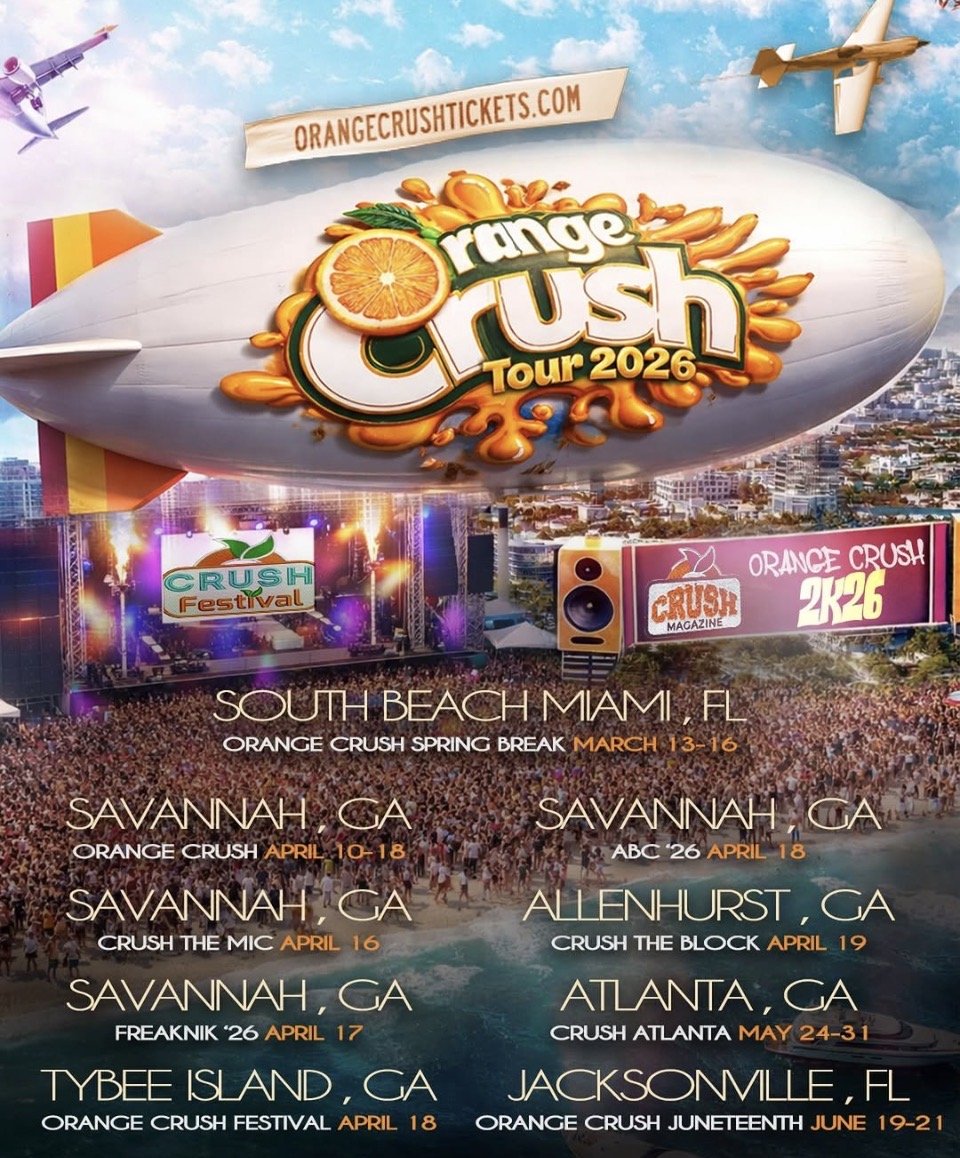
ORANGE CRUSH LEAVES THE BOX
For decades, three words were almost inseparable:
Orange Crush. Tybee Island.
That relationship remains historically significant.
You cannot tell the Orange Crush story without Tybee.
You cannot erase Savannah.
You cannot manufacture decades of nostalgia somewhere else.
History doesn’t work that way.
But history also does not require the future to repeat itself forever.
By 2026, the modern Orange Crush Festival brand enters a different phase.
Not abandoning its roots.
Expanding from them.
The idea is no longer simply to bring everybody to one beach on one weekend.
The vision becomes a seasonal cultural circuit.
Different cities.
Different experiences.
Different atmospheres.
One connected CRUSH identity.
Miami.
Tybee.
Atlanta.
Jacksonville.
Spring Break.
Beach culture.
Luxury lifestyle.
Pool parties.
Juneteenth.
Four months.
Four destination weekends.
Four different expressions of the same evolving cultural universe.
FROM ONE WEEKEND TO A SEASON
There is symbolism in the calendar.
March begins with movement.
April returns to history.
May enters Atlanta.
June closes around freedom.
Each destination represents something different.
Each weekend carries its own personality.
And together they create the modern Orange Crush Festival season.
Not four copies of the same party.
Four chapters.
MARCH
ORANGE CRUSH FESTIVAL
MIAMI SPRING BREAK
Winter ends.
The flights start boarding.
The temperature changes.
Palm trees replace pine trees.
Ocean air comes through the windows.
And CRUSH season begins.
Miami represents escape.
Swimwear.
Nightlife.
Luxury.
Cars.
Yachts.
Music.
Beautiful people arriving from different places for the universal ritual of Spring Break.
The modern season doesn’t begin quietly.
It begins in South Florida.
MARCH.
MIAMI.
SPRING BREAK.
The first Crush of the year.
APRIL
ORANGE CRUSH FESTIVAL
TYBEE RELOADED
Then comes home.
Not because history requires us to stand still.
Because roots deserve acknowledgment.
Savannah.
The road east.
The islands.
The traffic.
The memories.
The Atlantic.
Tybee represents something none of the other destinations can manufacture:
nostalgia.
Generations already left memories here.
The sand already knows the name.
April is not simply another stop.
It is a return to the geography that became inseparable from Orange Crush history.
But history cannot be replayed exactly.
So it reloads.
New generation.
New era.
Same ocean.
APRIL.
TYBEE.
RELOADED.
MAY
ORANGE CRUSH ATLANTA
MANSION POOL PARTY SERIES
Then the energy moves inland.
Atlanta doesn’t need an introduction.
It is one of the capitals of modern Black culture.
Music.
Entertainment.
Fashion.
Entrepreneurship.
Film.
Nightlife.
Influence.
But Atlanta CRUSH isn’t the beach.
It isn’t supposed to be.
The swimsuits remain.
The water remains.
Everything else changes.
Private estates.
Pools.
Luxury cars arriving outside.
DJs.
Cameras.
Invitations.
Daylight becoming nightlife without anybody noticing exactly when it happened.
May represents the lifestyle evolution of CRUSH.
From beach gathering to curated experience.
From shoreline to estate.
MAY.
ATLANTA.
THE MANSION POOL PARTY SERIES.
JUNE
ORANGE CRUSH JACKSONVILLE
JUNETEENTH
And then comes June.
Florida again.
But this time the meaning changes.
Jacksonville.
Juneteenth.
Summer.
Freedom.
Black culture.
Celebration.
Community.
Music.
The ocean nearby.
A modern festival season that began with Spring Break arrives at a weekend carrying a much deeper historical word:
freedom.
Juneteenth commemorates the continuing story of emancipation in America.
CRUSH does not own that history.
No entertainment brand does.
The responsibility is to enter that weekend with respect for what the holiday represents while creating space for Black joy, enterprise, music, reunion and celebration.
Because freedom is historical.
But Black joy is historical too.
JUNE.
JACKSONVILLE.
JUNETEENTH.
FOUR MONTHS.
FOUR CITIES.
FOUR WEEKENDS.
For decades, people asked one question:
“You going to Crush?”
Now the question gets bigger.
MARCH
ORANGE CRUSH FESTIVAL — MIAMI SPRING BREAK
Sun. Ocean. Nightlife.
THE ESCAPE.
APRIL
ORANGE CRUSH FESTIVAL — TYBEE RELOADED
Savannah. Tybee. History.
THE RETURN.
MAY
ORANGE CRUSH ATLANTA — MANSION POOL PARTY SERIES
Pools. Estates. Atlanta.
THE LIFESTYLE.
JUNE
ORANGE CRUSH JACKSONVILLE — JUNETEENTH
Culture. Celebration. Freedom.
THE FINALE.
MIAMI.
TYBEE.
ATLANTA.
JACKSONVILLE.
It started as people finding each other.
Then people started bringing their friends.
Friends brought cities.
Cities created generations.
Generations created memories.
Memories became nostalgia.
Nostalgia became culture.
Culture became history.
And history created something worth carrying forward.
The road that once seemed to lead in only one direction now stretches farther.
South to Miami.
Back home toward Tybee.
North into Atlanta.
Down the coast to Jacksonville.
Four destinations.
Four identities.
One season.
One archive still being written.
One name traveling through all of it.
ORANGE CRUSH.
THEN.
NOW.
NEXT.
THE HISTORIC FOUR
MARCH — MIAMI SPRING BREAK
APRIL — TYBEE RELOADED
MAY — ATLANTA MANSION POOL PARTY SERIES
JUNE — JACKSONVILLE JUNETEENTH
Four weekends designed to carry CRUSH from the first days of spring into the beginning of summer.
The beach that helped create the memories remains part of the story.
But the story no longer ends at the beach.
This time, we’re taking the memories with us.
ORANGE CRUSH FESTIVAL
MIAMI → TYBEE → ATLANTA → JACKSONVILLE
THE CULTURE IS GOING ON TOUR.
CRUSH Magazine
Culture. Memory. Ownership.
WHEN TYBEE TURNED ORANGE There was the Tybee Island everybody knew. And then there were those weekends when the road filled up, the bass got louder, Savannah started moving toward the ocean—and Tybee
WHEN TYBEE TURNED ORANGE
There was the Tybee Island everybody knew. And then there were those weekends when the road filled up, the bass got louder, Savannah started moving toward the ocean—and Tybee turned Orange.
By CRUSH Magazine
Before you saw the beach, you felt the traffic.
That was part of it.
Cars stretched down the road toward Tybee Island carrying people, coolers, swimsuits, speakers, expectations and enough stories to last until everybody had children old enough to hear them.
Windows down.
Music up.
Sun bouncing off windshields.
Somebody hanging halfway out of a window.
Somebody calling another car trying to figure out where everybody was.
Somebody already irritated because the trip was taking forever.
And somebody in the passenger seat yelling:
“We almost there!”
Everybody wasn’t almost there.
But that didn’t matter.
Because during Orange Crush, getting to Tybee was part of Orange Crush.
The road became the opening act.
And eventually, somewhere between Savannah and the Atlantic Ocean, you realized you weren’t simply headed to the beach anymore.
You were joining everybody else.
THE BEACH BEFORE THE FEED
There was no endless feed showing you what was happening before you arrived.
No livestream.
No location sharing.
No Stories.
No TikTok recap posted before the actual day was finished.
For much of Orange Crush history, you had to physically arrive to know.
That uncertainty created anticipation.
You heard things.
“They already out there.”
“Everybody on the beach.”
“Such-and-such got a room.”
“Meet us by the pier.”
“Call me when y’all get close.”
Plans were approximate.
Meeting places were suggestions.
Phones died.
People disappeared.
Groups separated.
And somehow everybody usually found each other again.
Eventually.
That was life before the little blue dot told us where everybody was standing.
THE ROAD BECAME A CAR SHOW
Some people came to Orange Crush dressed to be seen.
Some brought a vehicle with the same intention.
The procession toward Tybee could become an unofficial exhibition of Southern car culture.
Big rims.
Custom paint.
Convertibles.
Trucks.
Motorcycles.
Systems powerful enough to make the next car hear your song whether they wanted to or not.
Cars weren’t simply transportation.
They were personality.
They announced you before you stepped out.
And when traffic slowed everything down, suddenly everybody had time to look.
Who was driving?
Who was riding?
What were they playing?
What were they sitting on?
Where were they from?
A traffic jam became a parade.
Nobody officially organized it.
Nobody needed to.
YOU HAD TO HAVE A FIT
The beach might have been casual.
Orange Crush wasn’t.
People planned.
The outfit mattered.
The swimsuit mattered.
The shoes mattered—even if choosing expensive shoes for sand made absolutely no practical sense.
Hair mattered.
Sunglasses mattered.
Jewelry mattered.
And if you were staying through the night, that meant another outfit.
Possibly several.
Every generation had its own version.
Different brands.
Different silhouettes.
Different hairstyles.
Different sneakers.
Different definitions of what was considered fresh.
Look at an old Orange Crush photograph today and you can often guess the era before anybody tells you the year.
Fashion timestamps us.
Sometimes beautifully.
Sometimes disrespectfully.
There are pictures from our younger years that should probably remain safely inside the family group chat.
But even the embarrassing ones matter now.
Because what once looked ordinary eventually becomes history.
BEFORE EVERYBODY WAS A PHOTOGRAPHER
There was something different about partying before every person carried a high-definition camera.
A moment could simply happen.
No evidence.
No repost.
No stranger recording from thirty feet away.
No waking up the next morning wondering why your face had accumulated 700,000 views.
If somebody brought a camera, people gathered around it.
One picture mattered.
You posed.
You waited.
Maybe the photograph ended up in an album.
Maybe it got developed.
Maybe somebody eventually scanned it.
Maybe it disappeared into a drawer for fifteen years.
Today those pictures hit differently.
The resolution may be terrible.
The lighting may be worse.
Somebody’s finger might be covering part of the lens.
But everybody looks alive.
Young.
Unbothered.
Frozen.
And because there aren’t 900 nearly identical versions of the same moment, that one photograph becomes precious.
THE SOUND CAME BEFORE THE SAND
You heard Orange Crush before you reached it.
Bass traveled.
Cars competed.
Different songs collided with one another as you walked.
A record could be playing from one vehicle, disappear for fifty feet, then suddenly appear again from another direction.
Music created invisible neighborhoods across the beach and parking areas.
Southern hip-hop was not background decoration.
It was infrastructure.
Atlanta.
Savannah.
Memphis.
New Orleans.
Florida.
The Carolinas.
Different sounds traveled into the same space.
DJs, clubs, mixtapes, radio and car systems helped records move through Black college culture long before streaming platforms could tell the world what was trending.
A song didn’t need a digital trend report.
You knew it was hot because everybody reacted when it came on.
That was analytics.
The crowd told you.
EVERYBODY KNEW SOMEBODY
Orange Crush could make the South feel surprisingly small.
You’d arrive with people from one school and somehow encounter somebody from another city who knew somebody from home.
“How you know her?”
“That’s my cousin.”
“You went to school with him?”
“That’s my boy from Atlanta.”
“I know her from Statesboro.”
Connections multiplied.
Savannah sat in the middle of it all.
College students.
Locals.
Military people.
Promoters.
DJs.
Artists.
Friends of friends.
People who had planned the trip for months.
People who decided to come at the last possible second.
For a weekend, social circles overlapped.
That was part of the magic.
Orange Crush wasn’t just somewhere you went.
It was somewhere you ran into people.
THE HOTEL WAS ITS OWN EVENT
Anybody who remembers the era knows the beach wasn’t the whole story.
The hotel mattered.
And “hotel occupancy” could occasionally become a creative mathematical concept.
One room.
Several people.
Coolers.
Bags everywhere.
Clothes covering furniture.
Somebody sleeping in the bed.
Somebody sleeping on the floor.
Somebody claiming they weren’t going to sleep anyway.
One bathroom attempting to support a population it was never engineered to accommodate.
People knocking.
Music playing.
Somebody getting dressed.
Somebody missing a shoe.
Somebody arguing about who had the room key.
Somebody inviting additional people despite absolutely nobody authorizing additional people.
And somehow:
“Where everybody at?”
The answer could change every fifteen minutes.
The hotel wasn’t simply where you stayed.
It was headquarters.
THEN CAME THE BEACH
Eventually there was sand.
Ocean.
Heat.
Bodies.
Music.
Movement.
Thousands of individual lives temporarily occupying the same landscape.
Some people came to party.
Some came to flirt.
Some came to perform.
Some came to sell something.
Some came to take pictures.
Some came because their friends refused to let them stay home.
Some barely touched the water.
It didn’t matter.
The ocean was almost beside the point.
The attraction was everybody.
People watching people watching people.
A social network before we called social networks social networks.
SAVANNAH AND TYBEE: TWO WORLDS CONNECTED BY ONE ROAD
The geography mattered.
Savannah and Tybee Island are close enough to be connected but culturally distinct enough that the movement between them has always carried meaning.
Savannah is layered.
Black history.
Tourism.
Ports.
Churches.
Colleges.
Neighborhoods.
Military families.
Generational families.
Gullah Geechee influence.
Music.
Nightlife.
Old money.
New money.
Working people.
Students.
Visitors.
Tybee offered something different:
the ocean.
During Orange Crush, those worlds collided.
The beach became the destination, but Savannah remained part of the ecosystem surrounding the weekend.
People ate there.
Stayed there.
Partied there.
Bought gas there.
Met friends there.
Recovered there.
And eventually drove back through it.
To remember Orange Crush only through the sand is to remember half the trip.
NOT EVERY MEMORY IS THE SAME
Nostalgia can make history prettier than it actually was.
Orange Crush was never experienced identically by everyone.
For attendees, the weekend could represent freedom, friendship and youth.
For businesses, it could mean customers and opportunity.
For some residents, large crowds could bring frustration.
For public officials and emergency personnel, crowd management created real logistical challenges.
Traffic, sanitation, safety, policing and access became recurring parts of the public conversation.
As Orange Crush became larger and more visible, those tensions became inseparable from its history.
And race could not simply be erased from the conversation.
A large gathering of predominantly Black young people occupying a highly visible public beach in the American South inevitably existed within a broader history of who has been welcomed, monitored, celebrated, feared, marketed to and restricted in public spaces.
That does not mean every disagreement surrounding Orange Crush can be reduced to race.
It means an honest history cannot pretend race was irrelevant.
Multiple truths can occupy the same beach.
People could have the weekend of their lives while somebody else experienced significant disruption.
A business could make money while a resident complained about traffic.
Attendees could feel over-policed while authorities believed greater police presence was necessary.
The history becomes more credible—not less—when all of those experiences are allowed to exist.
THE MORNING AFTER
Every legendary party eventually encounters daylight.
The music stops.
The beach empties.
Traffic reverses direction.
Hotel rooms reveal the consequences of decisions made twelve hours earlier.
Phones contain mysterious numbers.
Someone asks:
“Who is this?”
Someone else realizes they spent entirely too much money.
People search for missing belongings.
Everybody is hungry.
And the ride home has a completely different energy from the ride in.
Quiet.
Sleep.
Recaps.
Laughing about things that weren’t funny when they happened.
Promises.
“I’m never drinking again.”
Promises nobody expected to survive.
Then Monday arrived.
School.
Work.
Real life.
But something had changed.
Now you had a story.
THEN EVERYBODY GREW UP
This may be Orange Crush’s greatest transformation.
Not the event.
The people.
The 19-year-old became 39.
The student became the parent paying tuition.
The guy trying to impress everybody with his car became somebody telling his teenager to slow down.
The woman spending two hours getting ready for the beach became the mother watching her daughter do the exact same thing.
The people who couldn’t imagine leaving the party before sunrise now get sleepy around 10:30.
Life is disrespectful like that.
But memory remains.
That’s why an old Orange Crush photograph can stop somebody in the middle of scrolling.
For a second, they’re not looking at history.
They’re looking at themselves.
Before the job.
Before the mortgage.
Before the marriage.
Before the divorce.
Before the children.
Before the losses.
Before adulthood accumulated all its weight.
There they are.
Young.
Standing beside a car that no longer exists.
Wearing something they would never wear today.
Beside somebody they may not have spoken to in years.
And behind them:
Tybee.
NOSTALGIA IS REALLY ABOUT PEOPLE
We say we miss places.
Usually we miss versions of ourselves.
We say we miss the old Savannah.
We miss the people who were there with us.
We say we miss the music.
We miss what life felt like when those songs were new.
We say we miss Orange Crush.
Maybe what we really mean is:
I miss us.
That’s why preserving this history matters.
Not because every moment was perfect.
It wasn’t.
Not because every story is flattering.
They aren’t.
Not because everybody agrees about what Orange Crush was or what it should become.
They don’t.
It matters because generations of real people placed pieces of their youth there.
And eventually youth becomes history.
THE PHOTOGRAPHS ARE BECOMING ARTIFACTS
Somewhere right now there is an Orange Crush archive nobody knows exists.
Inside somebody’s closet.
Inside an old photo album.
On a forgotten hard drive.
Inside a Facebook account nobody has checked in ten years.
On a MiniDV tape.
Inside a box at somebody’s mother’s house.
A flyer folded between old college papers.
A T-shirt.
A ticket.
A photograph with a handwritten date on the back.
Those objects matter now.
Not because somebody decided Orange Crush needed to become important.
Because enough time passed.
Time transforms ordinary things into evidence.
A flyer becomes design history.
A photograph becomes fashion history.
A mixtape becomes music history.
A hotel receipt becomes tourism history.
A newspaper clipping becomes political history.
And somebody’s ridiculous picture from the beach becomes evidence of what Black youth culture looked like at a particular moment in the American South.
The archive is already out there.
It simply needs to be assembled.
WHEN TYBEE TURNED ORANGE
There was never a literal moment when the island changed color.
It happened another way.
A car crossed the bridge.
Then another.
And another.
Music followed.
Friends followed.
College students followed.
Photographers followed.
Promoters followed.
Vendors followed.
Stories followed.
Eventually memory followed too.
Years passed.
People moved away.
People came home.
Relationships started.
Relationships ended.
Children were born.
Careers happened.
People died.
Savannah changed.
Tybee changed.
Technology changed.
America changed.
Orange Crush changed.
But every once in a while somebody finds an old photograph.
There is the ocean.
There is the car.
There is the outfit.
There are the friends.
There is that younger face looking directly into a camera with absolutely no idea how quickly the next twenty years are going to move.
And suddenly the road fills with cars again.
The bass comes back.
The windows come down.
Everybody is calling everybody.
Savannah starts moving toward the ocean.
And for just a second—
Tybee turns Orange again.
THE CRUSH ARCHIVE
YOUR PICTURES ARE HISTORY NOW.
CRUSH Magazine is preserving photographs, flyers, videos, clothing, promotional materials and firsthand memories from Orange Crush across generations.
If you were there, your perspective belongs in the historical record.
The archive is especially interested in material that helps identify:
Who was there.
What year it happened.
What people wore.
What people drove.
What people listened to.
Where people stayed.
Who promoted events.
Who performed.
What Savannah and Tybee looked like.
And what the weekend actually felt like.
Future CRUSH Archive editions will document the fashion, music, automobiles, personalities, businesses and individual stories surrounding different eras of Orange Crush.
Because memories disappear when nobody preserves them.
And the pictures sitting in somebody’s closet today may become the photographs another generation studies tomorrow.
CRUSH Magazine
Culture. Memory. Ownership.
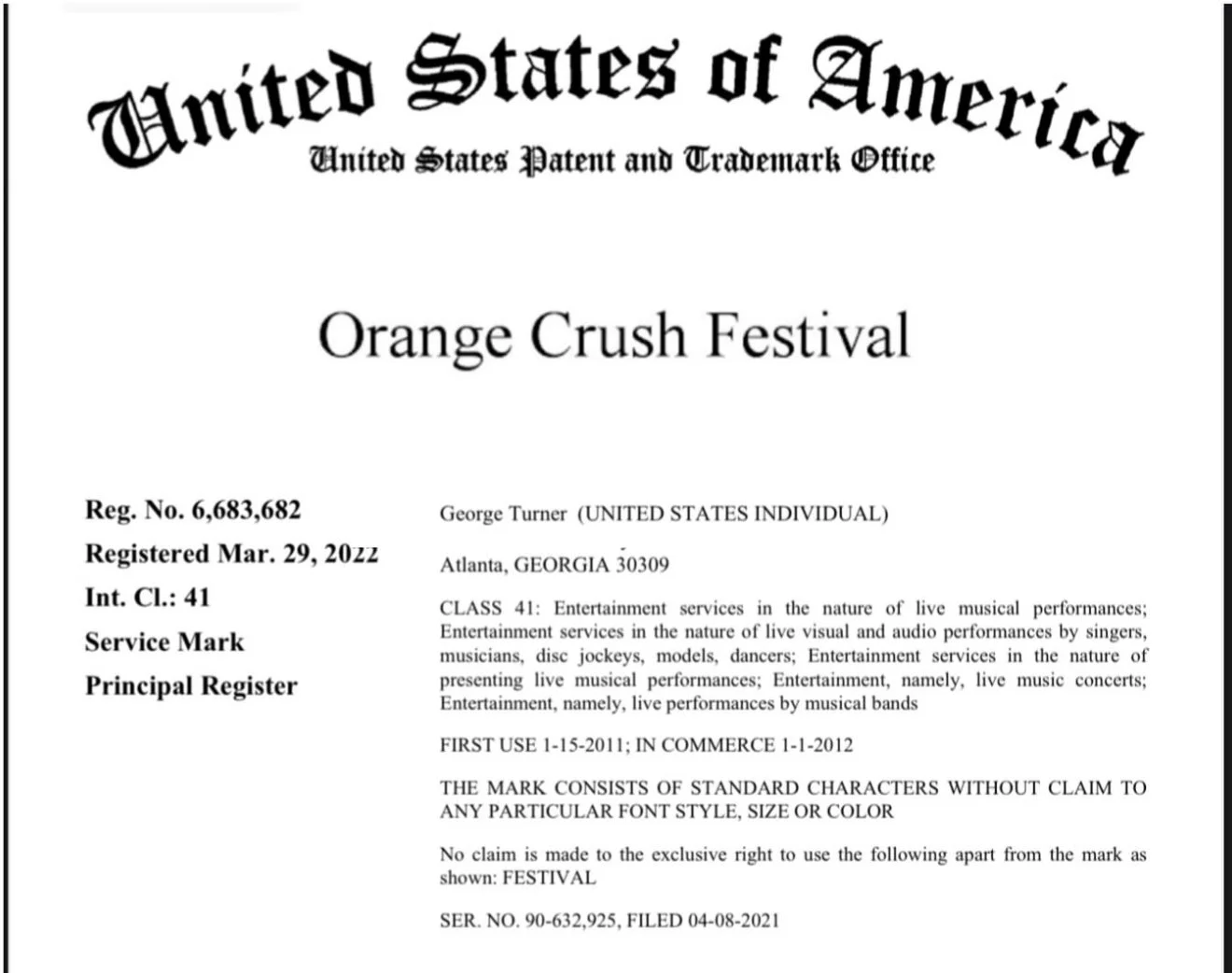
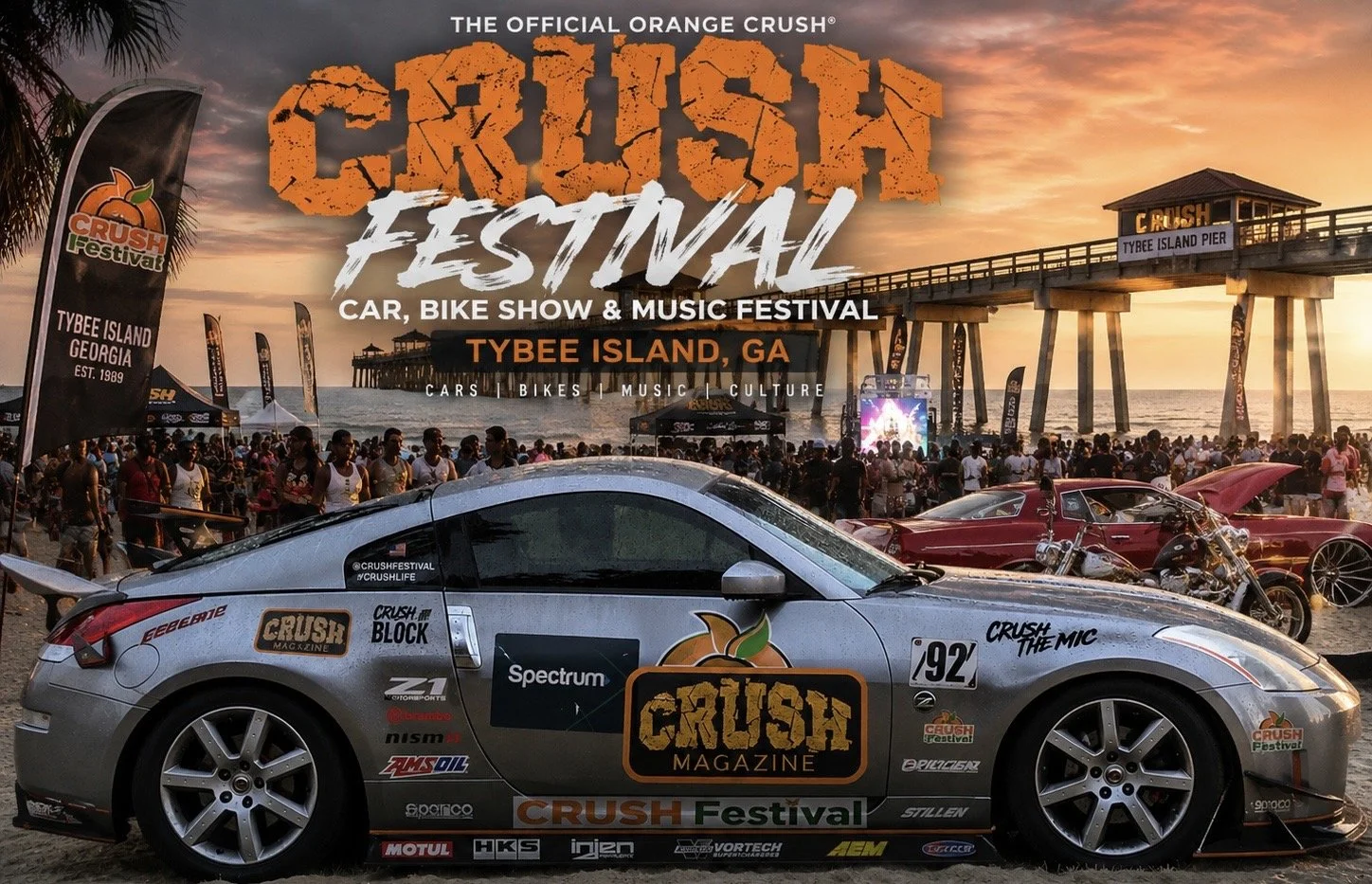
ORANGE CRUSH: AN ORAL HISTORY OF A SOUTHERN CULTURAL PHENOMENON
ORANGE CRUSH: AN ORAL HISTORY OF A SOUTHERN CULTURAL PHENOMENON
Before the hashtags, viral videos and algorithms, there was word of mouth. Before everybody carried a camera, there were stories. And before Orange Crush became a name capable of stirring nostalgia, controversy and conversation, it was something much simpler:
Black college students finding each other.
By CRUSH Magazine
There are certain events people remember by year.
There are others they remember by feeling.
Orange Crush belongs to the second category.
Ask enough people about it and eventually somebody’s face changes.
They don’t immediately give you a date.
They tell you what they were wearing.
They remember the car they drove.
They remember who rode with them.
They remember squeezing too many people into a hotel room because nobody was spending all that money just to sleep.
They remember the music before they remember the address.
They remember traffic.
They remember rims.
They remember swimsuits.
They remember cameras coming out before cameras lived permanently inside everyone’s hand.
They remember Savannah.
They remember Tybee.
And almost inevitably, they smile.
“You had to be there.”
Those five words may explain Orange Crush better than any advertisement ever could.
Because long before Orange Crush became something debated in government meetings, covered by news organizations, discussed across social media or transformed into a modern entertainment brand, it existed through participation.
People made it important by showing up.
And then they went home and told somebody else.
BEFORE “VIRAL” HAD A NAME
There was a time when thousands of young people could descend on a destination without an algorithm telling them where to go.
No TikTok.
No Instagram Story.
No influencer campaign.
No location tag broadcasting the party in real time.
Information traveled differently.
A flyer.
A phone call.
A dorm-room conversation.
A promoter.
A DJ.
A friend at another school.
A cousin who had gone the year before.
Somebody saying:
“You coming to Crush?”
That was enough.
Orange Crush emerged from the world of Black college social culture in Savannah, Georgia—a city already carrying generations of Black history, Gullah Geechee influence, Southern tradition, tourism, music, military life and college culture.
Savannah provided the gathering place.
Nearby Tybee Island provided the beach.
And generations of young Black people supplied the energy.
What developed over time became larger than a single party.
Orange Crush became a ritual.
THE ROAD TO TYBEE
Part of the Orange Crush experience happened before anybody touched the sand.
You had to get there.
For generations of attendees, the journey itself became part of the memory.
Cars packed with friends.
Music turned all the way up.
Gas-station stops.
Last-minute outfits.
Phones ringing.
People trying to figure out where everybody else was.
And traffic.
Lots of traffic.
The road toward Tybee could become its own moving car show.
Paint.
Rims.
Convertibles.
Motorcycles.
SUVs packed with people.
License plates arriving from different corners of Georgia and beyond.
Some people came for the beach.
Some came for the party.
Some came because everybody else was coming.
And some came simply because Orange Crush had become one of those experiences young people wanted to say they had lived at least once.
WHAT WE WORE
Every generation leaves behind a uniform.
Look through photographs associated with different Orange Crush eras and the evolution of Black Southern style becomes visible.
Oversized clothes gave way to fitted eras.
Airbrushed shirts had their moment.
Designer labels changed.
Sneakers changed.
Hair changed.
Swimsuits changed.
Sunglasses changed.
Cars changed.
Phones changed.
But one thing remained remarkably consistent:
People came to be seen.
The beach was a runway without pretending to be one.
There were no velvet ropes separating the audience from the spectacle.
The audience was the spectacle.
Everybody had a role.
The person with the loudest car.
The friend who somehow knew everybody.
The DJ.
The promoter.
The photographer.
The woman whose outfit people remembered after the weekend ended.
The guy doing something ridiculous enough to become a story for the ride home.
Orange Crush produced characters without casting them.
THE SOUND OF CRUSH
You can understand an era by listening to what came through its speakers.
Orange Crush evolved alongside Southern hip-hop.
As Atlanta became one of the world’s most important music capitals and Southern rap transformed popular culture, the soundtrack surrounding Black college life changed with it.
Bass mattered.
Car speakers mattered.
Mixtapes mattered.
DJs mattered.
Songs could become attached permanently to summers, relationships, road trips and specific weekends.
Long before streaming platforms could instantly identify what everybody was listening to, songs traveled through cars, clubs, burned CDs, radio, mixtapes and people simply asking:
“What song is that?”
For many attendees, remembering Orange Crush means remembering sound.
Not just music.
Engines.
Crowds.
Waves.
Laughter.
Arguments.
People yelling across parking lots.
The strange collective roar created when thousands of individual weekends occupy the same place.
THE CAMERA CHANGED EVERYTHING
Early Orange Crush existed in an era when experiences could disappear.
Maybe somebody brought a disposable camera.
Maybe somebody had a camcorder.
Maybe somebody developed pictures weeks later.
Maybe the wildest thing that happened all weekend was never photographed at all.
That scarcity gave early memories a particular power.
People had to tell stories.
Then technology changed.
Digital cameras became common.
Camera phones improved.
Facebook albums documented entire weekends.
Twitter accelerated information.
Instagram transformed attendees into photographers.
Snapchat made documentation instantaneous.
TikTok eventually turned moments into globally distributable clips.
Orange Crush moved from something you heard about to something you could watch unfold from hundreds of miles away.
That changed the event.
It also changed memory itself.
The older Orange Crush becomes, the more important its surviving photographs, flyers, videos and firsthand accounts become.
They are no longer simply party memorabilia.
They are cultural artifacts.
SAVANNAH WAS NEVER JUST THE BACKDROP
To understand Orange Crush, you have to understand Savannah.
Savannah is one of America’s most visually recognizable cities, but its beauty has always existed alongside deeper histories.
Black Savannah is not decoration around the city’s tourism industry.
It is foundational to the city itself.
Families.
Churches.
Neighborhoods.
Longshoremen.
Educators.
Artists.
Athletes.
Entrepreneurs.
Students.
Military families.
Gullah Geechee culture.
Historically Black institutions.
Generations of people whose lives existed beyond the postcard version of Savannah.
Orange Crush entered that ecosystem.
The event’s relationship with the region would eventually become complicated, particularly as attendance, traffic, public safety, sanitation, policing, tourism, government policy and competing ideas about access to public space entered the conversation.
Those tensions are part of the history too.
An honest archive cannot preserve only the beautiful photographs.
It must preserve the arguments.
WHEN A PARTY BECOMES A PUBLIC QUESTION
Large gatherings inevitably create logistical challenges.
Orange Crush became no exception.
As crowds grew and media attention increased, discussions surrounding the event expanded beyond entertainment.
Who was responsible for managing crowds?
Who benefited economically?
Who paid for public services?
How should local government respond?
How should law enforcement interact with attendees?
What obligations belonged to organizers, businesses, municipalities and individual visitors?
And underneath some of those practical questions existed more complicated conversations about race, class, tourism, belonging and who gets to occupy desirable public space.
Different people experienced those questions differently.
Residents could view the same weekend differently from visitors.
Business owners could view it differently from government officials.
Attendees could view police presence differently from residents requesting enforcement.
Promoters could disagree with one another.
Politicians could disagree with promoters.
Even people who loved Orange Crush could disagree about what Orange Crush should become.
There is no honest history of the event without acknowledging those contradictions.
Orange Crush could represent freedom to one person and disruption to another.
For some, it was business.
For others, tradition.
For others, headache.
For others, homecoming.
Sometimes it was all four at once.
THE STORIES THAT NEVER MADE THE NEWS
Public coverage of large gatherings naturally gravitates toward what can be counted.
Traffic.
Arrests.
Crowd estimates.
Police presence.
Trash.
Emergency calls.
Economic impact.
But statistics cannot explain why people become nostalgic.
The real Orange Crush archive also lives inside ordinary stories.
The friends who still laugh about the trip twenty years later.
The couple who met during Crush.
The person who saw the ocean for the first time.
The student who saved money for weeks to afford the weekend.
The DJ who remembers playing to the biggest crowd of his young career.
The photographer who unknowingly documented people who would later become parents, executives, artists, soldiers, teachers and business owners.
The outfit somebody wishes they could erase from photographic history.
The car that barely made it back home.
The friend everybody lost for three hours before cell phones made finding people easy.
The hotel floor.
The parking lot.
The cookout.
The argument.
The crush.
The person who became family.
History is usually written around important people.
Culture is remembered through everybody else.
A GENERATION GREW UP
Perhaps the strangest thing about Orange Crush today is simple:
The young people became adults.
Students became parents.
Parents became grandparents.
Party promoters became business owners.
Aspiring artists became professionals.
People who once spent an entire weekend trying to avoid responsibility eventually acquired mortgages, careers, marriages, divorces, children and calendars filled with obligations.
Then somebody posts an old Orange Crush photograph.
And suddenly they’re 21 again.
That is the power of nostalgia.
It doesn’t merely remind us of an event.
It reminds us of who we were when the event happened.
The photograph isn’t valuable because there was a beach behind us.
It’s valuable because the person standing beside us may no longer be in our life.
The car may be gone.
The hairstyle definitely should be gone.
The body might not cooperate with that outfit anymore.
The friend group scattered.
The relationship ended.
Someone passed away.
Somebody became successful.
Somebody disappeared.
Everybody grew older.
But the photograph stayed young.
FROM EVENT TO CULTURAL PROPERTY
The modern Orange Crush story is also a story about branding.
Names that begin as colloquial references can eventually acquire enormous commercial and cultural value.
Events become intellectual property.
Flyers become marketing campaigns.
Promoters become companies.
Social media handles become assets.
Archives become content.
Nostalgia becomes economically valuable.
And once something carries cultural equity, questions surrounding ownership, stewardship, licensing, commercialization and historical credit become increasingly important.
CRUSH Magazine will document those questions as part of this continuing history while distinguishing between documented records, personal recollections, legal claims and editorial interpretation.
Because preserving culture requires more than celebrating it.
It requires getting the record right.
THE ARCHIVE
That is why CRUSH Magazine is building the CRUSH Archive.
We are collecting:
Old Orange Crush photographs.
Original flyers.
Tickets.
T-shirts.
Magazine clippings.
Newspaper coverage.
Camcorder footage.
Digital-camera pictures.
Facebook-era photographs.
Promotional material.
DJ memories.
Artist memories.
Student memories.
Resident memories.
Business-owner memories.
Organizer memories.
And stories from people who were simply there.
Not everything submitted will tell the same version of history.
That’s the point.
Culture rarely belongs to one memory.
An archive becomes meaningful when thousands of fragments begin creating a larger picture.
“YOU HAD TO BE THERE.”
Maybe that’s still the most accurate description.
Orange Crush cannot be reduced to traffic.
It cannot be reduced to controversy.
It cannot be reduced to a promoter.
It cannot be reduced to a government meeting.
It cannot be reduced to a flyer.
It cannot be reduced to a single generation.
And it certainly cannot be reduced to a weekend.
Because weekends end.
Culture travels.
It travels through photographs.
Through music.
Through slang.
Through clothes.
Through businesses.
Through stories.
Through children hearing their parents talk about what Savannah used to feel like.
Through somebody discovering an old picture and asking:
“Where was this?”
And somebody answering:
“Orange Crush.”
Then comes the inevitable follow-up.
“What was Orange Crush like back then?”
The person holding the photograph smiles.
They look at themselves twenty years younger.
They look at the people beside them.
They remember something that isn’t visible inside the picture.
And usually the answer sounds something like this:
You had to be there.
THE CRUSH ARCHIVE
Were you there?
CRUSH Magazine is documenting Orange Crush across generations. Former students, attendees, DJs, artists, photographers, promoters, residents, business owners and others who witnessed the culture are invited to preserve their stories.
Photographs matter.
Flyers matter.
Videos matter.
Memories matter.
Names matter.
Dates matter.
Even the small stories matter.
Because today’s nostalgia is tomorrow’s history.
CRUSH Magazine — Culture. Memory. Ownership
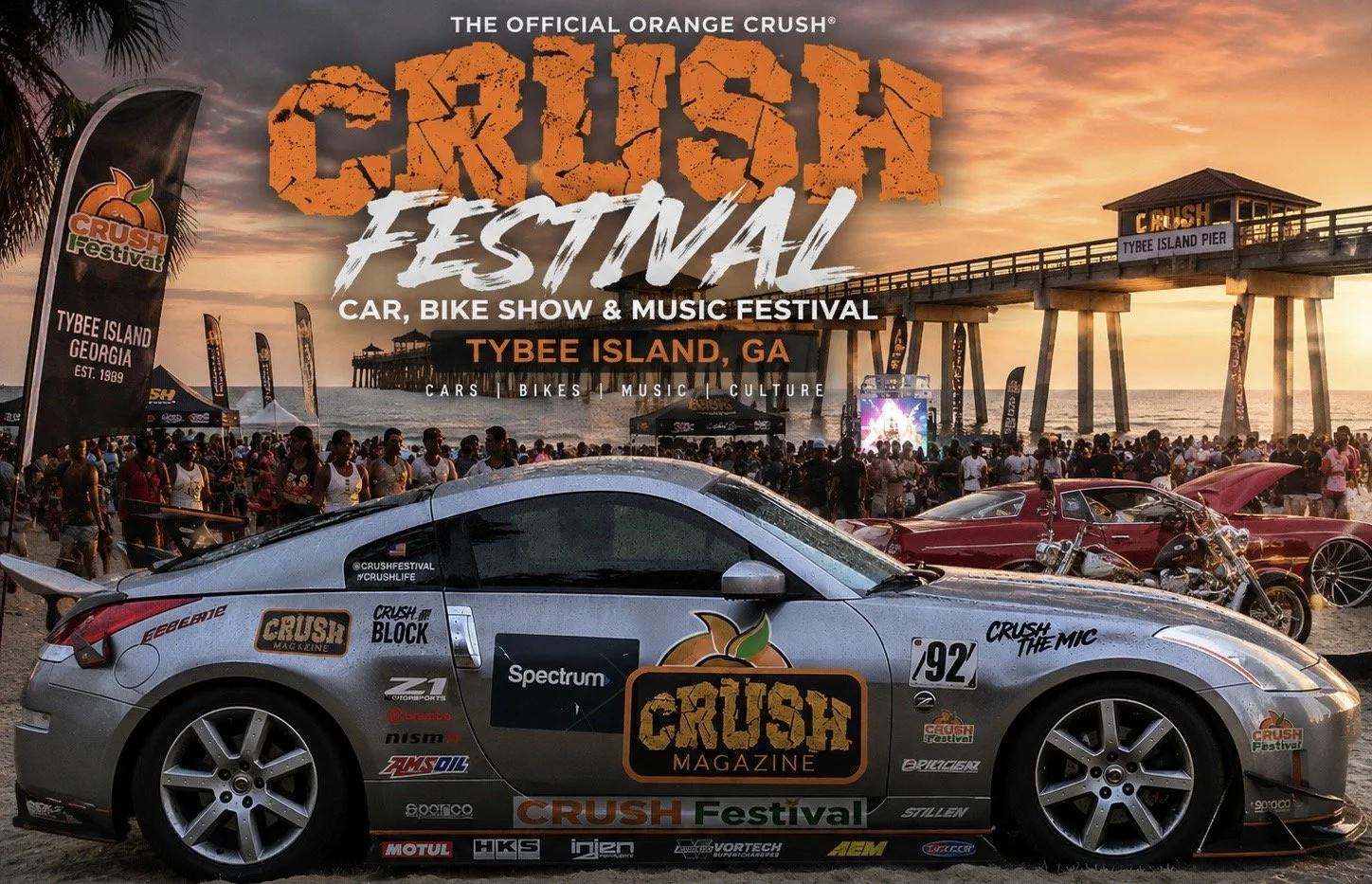
The Next Generation of Sponsorship: From Advertising to Infrastructure
The Next Generation of Sponsorship: From Advertising to Infrastructure
By George “Mikey” Turner III
Orange Crush Magazine
For decades, sponsorship was largely about visibility.
A logo on a banner.
A logo on a stage.
A logo on a T-shirt.
The objective was simple:
Get seen.
While visibility still matters, sponsorship is rapidly evolving into something much bigger.
The next generation of sponsorship is increasingly focused on infrastructure.
Not just supporting events.
Helping power them.
Consumers Expect More
Modern audiences are highly connected.
They expect convenience.
They expect access.
They expect seamless experiences.
When attendees arrive at an event, they often need:
Connectivity
Charging access
Mobile information
Digital ticketing
Navigation assistance
Payment solutions
The organizations that provide those solutions often create stronger impressions than traditional advertisements ever could.
People remember brands that improve their experience.
Utility Creates Engagement
One of the biggest shifts in sponsorship is the growing importance of utility.
Consumers increasingly engage with brands that solve problems.
A company that helps attendees stay connected.
A company that provides charging stations.
A company that improves communication.
A company that enhances convenience.
These organizations become part of the experience itself.
The relationship becomes active rather than passive.
And active engagement often creates stronger outcomes.
Infrastructure Is Becoming a Brand Opportunity
Historically, infrastructure remained invisible.
Today, it can become part of a brand strategy.
Organizations that support:
Connectivity
Technology
Transportation
Sustainability
Safety
Digital engagement
have opportunities to create meaningful value while supporting community experiences.
This approach aligns business objectives with public benefit.
Everyone wins.
Attendees.
Organizers.
Communities.
Sponsors.
Events as Innovation Platforms
Large-scale events provide unique opportunities for innovation.
Thousands of people gather in a concentrated environment.
Technology is tested.
Systems are evaluated.
New ideas are introduced.
For companies focused on connectivity, communications, mobility, and infrastructure, events provide real-world environments where solutions can be demonstrated at scale.
The future of sponsorship may look less like advertising and more like collaboration.
The Communities That Benefit
When sponsors invest in infrastructure-oriented experiences, the impact often extends beyond the event itself.
Communities gain exposure to new technologies.
Businesses discover new solutions.
Visitors enjoy improved experiences.
Partnerships emerge.
Economic opportunities grow.
The benefits can continue long after the event concludes.
Looking Ahead
The sponsorship industry is entering a new era.
An era where usefulness matters.
An era where experiences matter.
An era where infrastructure itself becomes part of the brand story.
The organizations that embrace this shift will be positioned to create deeper relationships, stronger engagement, and greater long-term impact.
Because the future of sponsorship isn’t simply about being seen.
It’s about helping make the experience possible.
About Orange Crush Magazine
Orange Crush Magazine covers business, technology, entrepreneurship, tourism, culture, innovation, and economic development through stories that highlight the trends shaping tomorrow’s communities.
George “Mikey” Turner III is the Founder of Orange Crush Festival® and Executive Director of Orange Crush Magazine, focused on building platforms that connect culture, commerce, technology, tourism, and community development throughout the Southeast and beyond.
The Communities That Win the Future Will Be the Most Connected
The Communities That Win the Future Will Be the Most Connected
By George “Mikey” Turner III
Orange Crush Magazine
Throughout history, communities have competed for growth.
They’ve competed for jobs.
For businesses.
For investment.
For tourism.
For talent.
The communities that attracted opportunity often shared one thing in common:
They were connected.
Connected by ports.
Connected by railroads.
Connected by highways.
Connected by airports.
Today, a new form of connectivity is shaping economic growth.
Digital connectivity.
The Geography of Opportunity Is Changing
For decades, location determined opportunity.
If jobs were in a city, people moved to the city.
If industries were concentrated in a region, workers followed.
Technology is changing that equation.
People can work remotely.
Businesses can serve customers globally.
Entrepreneurs can launch companies from virtually anywhere.
Digital connectivity is creating new pathways for economic participation.
The communities that invest in those pathways are positioning themselves for long-term growth.
Talent Goes Where Opportunity Exists
Economic development is ultimately about people.
Businesses follow talent.
Investment follows talent.
Innovation follows talent.
The challenge for many communities is creating environments where talented people want to live, work, and build.
Connectivity plays a major role in that equation.
People increasingly expect:
Reliable internet access
Strong mobile networks
Digital services
Smart infrastructure
Modern communication tools
Technology has become part of quality of life.
Connectivity Supports Every Industry
Technology is no longer limited to technology companies.
Healthcare depends on it.
Education depends on it.
Tourism depends on it.
Real estate depends on it.
Retail depends on it.
Manufacturing depends on it.
Agriculture depends on it.
Connectivity has become one of the few resources that touches nearly every sector of the economy.
Communities that strengthen digital infrastructure strengthen opportunities across multiple industries simultaneously.
Building Ecosystems, Not Projects
The most successful communities think beyond individual projects.
They focus on ecosystems.
They ask:
How do we support entrepreneurs?
How do we attract investment?
How do we create jobs?
How do we improve quality of life?
How do we connect residents to opportunity?
The answers increasingly involve collaboration between public leaders, private businesses, educational institutions, technology providers, and community organizations.
Growth is rarely created by one organization.
It is created by ecosystems.
A Competitive Advantage for the Next Generation
The next generation of economic development will not simply be measured by buildings constructed or projects completed.
It will be measured by access.
Access to information.
Access to education.
Access to markets.
Access to opportunity.
Communities that prioritize connectivity are helping create that access.
And access remains one of the most powerful drivers of economic mobility.
Looking Ahead
The future will belong to communities that understand a simple reality:
Connection creates opportunity.
The more connected a community becomes, the more possibilities it can unlock.
For businesses.
For entrepreneurs.
For students.
For residents.
For visitors.
For future generations.
Because in the modern economy, connectivity is no longer just infrastructure.
It is opportunity itself.
About Orange Crush Magazine
Orange Crush Magazine explores business, technology, tourism, entrepreneurship, culture, innovation, and economic development through stories that highlight the people and organizations shaping the future of our communities.
George “Mikey” Turner III is the Founder of Orange Crush Festival® and Executive Director of Orange Crush Magazine, focused on building platforms that connect culture, commerce, technology, tourism, and community growth throughout the Southeast and beyond.
The Communities That Win the Future Will Be the Most Connected
The Communities That Win the Future Will Be the Most Connected
By George “Mikey” Turner III
Orange Crush Magazine
Throughout history, communities have competed for growth.
They’ve competed for jobs.
For businesses.
For investment.
For tourism.
For talent.
The communities that attracted opportunity often shared one thing in common:
They were connected.
Connected by ports.
Connected by railroads.
Connected by highways.
Connected by airports.
Today, a new form of connectivity is shaping economic growth.
Digital connectivity.
The Geography of Opportunity Is Changing
For decades, location determined opportunity.
If jobs were in a city, people moved to the city.
If industries were concentrated in a region, workers followed.
Technology is changing that equation.
People can work remotely.
Businesses can serve customers globally.
Entrepreneurs can launch companies from virtually anywhere.
Digital connectivity is creating new pathways for economic participation.
The communities that invest in those pathways are positioning themselves for long-term growth.
Talent Goes Where Opportunity Exists
Economic development is ultimately about people.
Businesses follow talent.
Investment follows talent.
Innovation follows talent.
The challenge for many communities is creating environments where talented people want to live, work, and build.
Connectivity plays a major role in that equation.
People increasingly expect:
Reliable internet access
Strong mobile networks
Digital services
Smart infrastructure
Modern communication tools
Technology has become part of quality of life.
Connectivity Supports Every Industry
Technology is no longer limited to technology companies.
Healthcare depends on it.
Education depends on it.
Tourism depends on it.
Real estate depends on it.
Retail depends on it.
Manufacturing depends on it.
Agriculture depends on it.
Connectivity has become one of the few resources that touches nearly every sector of the economy.
Communities that strengthen digital infrastructure strengthen opportunities across multiple industries simultaneously.
Building Ecosystems, Not Projects
The most successful communities think beyond individual projects.
They focus on ecosystems.
They ask:
How do we support entrepreneurs?
How do we attract investment?
How do we create jobs?
How do we improve quality of life?
How do we connect residents to opportunity?
The answers increasingly involve collaboration between public leaders, private businesses, educational institutions, technology providers, and community organizations.
Growth is rarely created by one organization.
It is created by ecosystems.
A Competitive Advantage for the Next Generation
The next generation of economic development will not simply be measured by buildings constructed or projects completed.
It will be measured by access.
Access to information.
Access to education.
Access to markets.
Access to opportunity.
Communities that prioritize connectivity are helping create that access.
And access remains one of the most powerful drivers of economic mobility.
Looking Ahead
The future will belong to communities that understand a simple reality:
Connection creates opportunity.
The more connected a community becomes, the more possibilities it can unlock.
For businesses.
For entrepreneurs.
For students.
For residents.
For visitors.
For future generations.
Because in the modern economy, connectivity is no longer just infrastructure.
It is opportunity itself.
About Orange Crush Magazine
Orange Crush Magazine explores business, technology, tourism, entrepreneurship, culture, innovation, and economic development through stories that highlight the people and organizations shaping the future of our communities.
George “Mikey” Turner III is the Founder of Orange Crush Festival® and Executive Director of Orange Crush Magazine, focused on building platforms that connect culture, commerce, technology, tourism, and community growth throughout the Southeast and beyond.
The Digital Main Street: How Technology Is Reshaping Local Economies
The Digital Main Street: How Technology Is Reshaping Local Economies
By George “Mikey” Turner III
Orange Crush Magazine
For generations, Main Street was the heartbeat of local commerce.
It was where people shopped.
Where businesses grew.
Where communities gathered.
Where relationships were built.
Today, Main Street still matters.
But it has expanded.
It now exists both physically and digitally.
The businesses that thrive tomorrow will be the ones that successfully operate in both worlds.
Every Business Is Becoming a Technology Business
Whether it’s a restaurant, retail store, contractor, law office, real estate company, or healthcare provider, technology now plays a central role in operations.
Businesses rely on:
Online reviews
Digital payments
Cloud software
Social media
E-commerce platforms
Customer communication tools
Technology is no longer a department.
It’s part of the foundation.
Organizations that embrace digital tools often gain advantages in efficiency, customer service, and growth.
Small Businesses Are Competing on Bigger Stages
One of the most significant shifts in the modern economy is accessibility.
A local business can now reach customers far beyond its immediate market.
A small brand can compete nationally.
An entrepreneur can launch a company from a laptop.
A startup can build an audience without a physical storefront.
Technology has expanded opportunity for businesses of all sizes.
The barriers to entry have never been lower.
The potential reach has never been greater.
Connectivity Fuels Entrepreneurship
Every entrepreneur depends on access.
Access to information.
Access to customers.
Access to tools.
Access to opportunity.
Reliable connectivity helps create that access.
Many of the fastest-growing businesses in America are built upon digital platforms and communication networks.
As technology continues to evolve, connectivity will remain one of the most important drivers of entrepreneurship.
Communities Benefit When Businesses Grow
Strong businesses support strong communities.
They create jobs.
They generate tax revenue.
They support local organizations.
They invest in neighborhoods.
When businesses have access to modern technology and reliable infrastructure, communities often benefit alongside them.
Economic development and digital development are increasingly connected.
The Future of Local Commerce
The next decade will likely bring even more transformation.
Artificial intelligence.
Automation.
Smart infrastructure.
Digital services.
Advanced communications.
The pace of change will continue accelerating.
The communities that adapt will be positioned to attract investment, talent, and innovation.
The businesses that adapt will be positioned to grow.
Looking Ahead
Main Street is no longer limited to a single road.
It now extends across networks, platforms, devices, and digital communities.
The future belongs to organizations that understand how to connect people, technology, and opportunity.
Because the strongest local economies of tomorrow will be built by businesses that can thrive both on the street and on the screen.
About Orange Crush Magazine
Orange Crush Magazine explores business, entrepreneurship, technology, culture, tourism, and economic development through stories that highlight innovation and opportunity across the Southeast and beyond.
George “Mikey” Turner III is the Founder of Orange Crush Festival® and Executive Director of Orange Crush Magazine, focused on building platforms that connect culture, commerce, technology, and community growth.
The Digital Main Street: How Technology Is Reshaping Local Economies
The Digital Main Street: How Technology Is Reshaping Local Economies
By George “Mikey” Turner III
Orange Crush Magazine
For generations, Main Street was the heartbeat of local commerce.
It was where people shopped.
Where businesses grew.
Where communities gathered.
Where relationships were built.
Today, Main Street still matters.
But it has expanded.
It now exists both physically and digitally.
The businesses that thrive tomorrow will be the ones that successfully operate in both worlds.
Every Business Is Becoming a Technology Business
Whether it’s a restaurant, retail store, contractor, law office, real estate company, or healthcare provider, technology now plays a central role in operations.
Businesses rely on:
Online reviews
Digital payments
Cloud software
Social media
E-commerce platforms
Customer communication tools
Technology is no longer a department.
It’s part of the foundation.
Organizations that embrace digital tools often gain advantages in efficiency, customer service, and growth.
Small Businesses Are Competing on Bigger Stages
One of the most significant shifts in the modern economy is accessibility.
A local business can now reach customers far beyond its immediate market.
A small brand can compete nationally.
An entrepreneur can launch a company from a laptop.
A startup can build an audience without a physical storefront.
Technology has expanded opportunity for businesses of all sizes.
The barriers to entry have never been lower.
The potential reach has never been greater.
Connectivity Fuels Entrepreneurship
Every entrepreneur depends on access.
Access to information.
Access to customers.
Access to tools.
Access to opportunity.
Reliable connectivity helps create that access.
Many of the fastest-growing businesses in America are built upon digital platforms and communication networks.
As technology continues to evolve, connectivity will remain one of the most important drivers of entrepreneurship.
Communities Benefit When Businesses Grow
Strong businesses support strong communities.
They create jobs.
They generate tax revenue.
They support local organizations.
They invest in neighborhoods.
When businesses have access to modern technology and reliable infrastructure, communities often benefit alongside them.
Economic development and digital development are increasingly connected.
The Future of Local Commerce
The next decade will likely bring even more transformation.
Artificial intelligence.
Automation.
Smart infrastructure.
Digital services.
Advanced communications.
The pace of change will continue accelerating.
The communities that adapt will be positioned to attract investment, talent, and innovation.
The businesses that adapt will be positioned to grow.
Looking Ahead
Main Street is no longer limited to a single road.
It now extends across networks, platforms, devices, and digital communities.
The future belongs to organizations that understand how to connect people, technology, and opportunity.
Because the strongest local economies of tomorrow will be built by businesses that can thrive both on the street and on the screen.
About Orange Crush Magazine
Orange Crush Magazine explores business, entrepreneurship, technology, culture, tourism, and economic development through stories that highlight innovation and opportunity across the Southeast and beyond.
George “Mikey” Turner III is the Founder of Orange Crush Festival® and Executive Director of Orange Crush Magazine, focused on building platforms that connect culture, commerce, technology, and community growth.
Why Smart Cities Need Smart Events By George “Mikey” Turner III Orange Crush Magazine
Why Smart Cities Need Smart Events
By George “Mikey” Turner III
Orange Crush Magazine
Cities around the world are investing billions into becoming smarter.
They’re improving transportation systems.
Deploying public technology.
Expanding connectivity.
Modernizing infrastructure.
Enhancing public safety.
Supporting innovation.
But one opportunity is often overlooked.
Events.
Large-scale events are among the few environments where thousands of people interact with a city at the same time.
For a brief period, an event becomes a real-world test of how infrastructure, technology, and public services perform under pressure.
That’s why smart cities should view smart events as strategic assets.
Events Create Real-Time Data
Every event generates information.
Traffic patterns.
Transportation demand.
Visitor movement.
Mobile usage.
Consumer spending.
Public engagement.
These insights help communities better understand how people interact with their environments.
The lessons learned from large gatherings can help improve long-term planning and future investments.
Connectivity Is Now Part of Public Infrastructure
Visitors expect to stay connected.
Residents expect access to information.
Businesses depend on communication networks.
Public safety agencies require reliable coordination.
Connectivity now touches nearly every aspect of the modern event experience.
As cities become more connected, events provide opportunities to showcase and strengthen that infrastructure.
Technology is no longer operating in the background.
It is becoming part of the public experience itself.
Innovation Thrives Where People Gather
Throughout history, cities have been centers of innovation.
Ideas spread when people connect.
Partnerships form when communities gather.
Opportunities emerge when industries intersect.
Events accelerate those interactions.
They create environments where businesses, entrepreneurs, technology providers, community leaders, and visitors come together.
Innovation often begins with conversation.
Events help create those conversations.
Public-Private Collaboration
The most successful communities recognize that growth requires collaboration.
Governments cannot do everything alone.
Businesses cannot do everything alone.
Community organizations cannot do everything alone.
Progress often occurs when public and private stakeholders work together toward shared goals.
Events provide natural opportunities for those partnerships to develop and grow.
They create common ground where collaboration becomes possible.
The Future of Community Engagement
As technology continues to evolve, communities will need new ways to engage residents, businesses, and visitors.
Events can help bridge that gap.
They create opportunities to demonstrate innovation, gather feedback, build relationships, and strengthen local ecosystems.
The communities that embrace both technology and engagement will likely be better positioned for future growth.
Looking Ahead
Smart cities are not simply defined by technology.
They are defined by how technology improves people’s lives.
Events offer unique opportunities to connect infrastructure, innovation, business, and community engagement in one place.
The future belongs to communities that understand how those pieces fit together.
Because smart cities need smart infrastructure.
Smart infrastructure needs engagement.
And engagement often begins where people gather.
About Orange Crush Magazine
Orange Crush Magazine explores technology, business, entrepreneurship, tourism, culture, and economic development through stories that highlight innovation and opportunity throughout the Southeast and beyond.
George “Mikey” Turner III is the Founder of Orange Crush Festival® and Executive Director of Orange Crush Magazine, focused on building platforms that connect culture, commerce, technology, and community development.
Why Smart Cities Need Smart Events By George “Mikey” Turner III Orange Crush Magazine
Why Smart Cities Need Smart Events
By George “Mikey” Turner III
Orange Crush Magazine
Cities around the world are investing billions into becoming smarter.
They’re improving transportation systems.
Deploying public technology.
Expanding connectivity.
Modernizing infrastructure.
Enhancing public safety.
Supporting innovation.
But one opportunity is often overlooked.
Events.
Large-scale events are among the few environments where thousands of people interact with a city at the same time.
For a brief period, an event becomes a real-world test of how infrastructure, technology, and public services perform under pressure.
That’s why smart cities should view smart events as strategic assets.
Events Create Real-Time Data
Every event generates information.
Traffic patterns.
Transportation demand.
Visitor movement.
Mobile usage.
Consumer spending.
Public engagement.
These insights help communities better understand how people interact with their environments.
The lessons learned from large gatherings can help improve long-term planning and future investments.
Connectivity Is Now Part of Public Infrastructure
Visitors expect to stay connected.
Residents expect access to information.
Businesses depend on communication networks.
Public safety agencies require reliable coordination.
Connectivity now touches nearly every aspect of the modern event experience.
As cities become more connected, events provide opportunities to showcase and strengthen that infrastructure.
Technology is no longer operating in the background.
It is becoming part of the public experience itself.
Innovation Thrives Where People Gather
Throughout history, cities have been centers of innovation.
Ideas spread when people connect.
Partnerships form when communities gather.
Opportunities emerge when industries intersect.
Events accelerate those interactions.
They create environments where businesses, entrepreneurs, technology providers, community leaders, and visitors come together.
Innovation often begins with conversation.
Events help create those conversations.
Public-Private Collaboration
The most successful communities recognize that growth requires collaboration.
Governments cannot do everything alone.
Businesses cannot do everything alone.
Community organizations cannot do everything alone.
Progress often occurs when public and private stakeholders work together toward shared goals.
Events provide natural opportunities for those partnerships to develop and grow.
They create common ground where collaboration becomes possible.
The Future of Community Engagement
As technology continues to evolve, communities will need new ways to engage residents, businesses, and visitors.
Events can help bridge that gap.
They create opportunities to demonstrate innovation, gather feedback, build relationships, and strengthen local ecosystems.
The communities that embrace both technology and engagement will likely be better positioned for future growth.
Looking Ahead
Smart cities are not simply defined by technology.
They are defined by how technology improves people’s lives.
Events offer unique opportunities to connect infrastructure, innovation, business, and community engagement in one place.
The future belongs to communities that understand how those pieces fit together.
Because smart cities need smart infrastructure.
Smart infrastructure needs engagement.
And engagement often begins where people gather.
About Orange Crush Magazine
Orange Crush Magazine explores technology, business, entrepreneurship, tourism, culture, and economic development through stories that highlight innovation and opportunity throughout the Southeast and beyond.
George “Mikey” Turner III is the Founder of Orange Crush Festival® and Executive Director of Orange Crush Magazine, focused on building platforms that connect culture, commerce, technology, and community development.
The Future of Events Is Powered by Partnerships
The Future of Events Is Powered by Partnerships
By George “Mikey” Turner III
Orange Crush Magazine
No major event succeeds alone.
Behind every successful festival, conference, sporting event, or community gathering is a network of organizations working together toward a common goal.
Sponsors.
Businesses.
Public agencies.
Community leaders.
Technology providers.
Hospitality partners.
Entrepreneurs.
Volunteers.
Each plays a role in creating experiences that people remember.
The future of events will belong to those who understand the power of partnerships.
Collaboration Creates Scale
Every organization has strengths.
Every organization has limitations.
Partnerships allow organizations to combine resources, expertise, and networks in ways that create larger opportunities.
A technology company may provide connectivity.
A hospitality partner may support visitors.
A local business may provide services.
A community organization may help build awareness.
Together, they create an experience that would be difficult to achieve independently.
Collaboration often accelerates growth more effectively than competition.
Today’s Sponsors Want More Than Exposure
The sponsorship industry is evolving.
Organizations are increasingly looking beyond traditional advertising opportunities.
They want engagement.
They want impact.
They want meaningful connections with audiences.
The most successful partnerships are built around creating value rather than simply increasing visibility.
Brands increasingly seek opportunities where they can contribute to the attendee experience and become part of the event ecosystem.
Events as Community Platforms
Modern events often serve as gathering points for entire communities.
They bring together people from different industries, backgrounds, and interests.
Those connections create opportunities for:
Business development
Workforce recruitment
Community engagement
Tourism promotion
Economic growth
Technology adoption
Events have become platforms for relationship-building as much as entertainment.
The organizations that recognize this are positioning themselves for long-term success.
Technology Is Expanding What’s Possible
Technology is creating new opportunities for collaboration.
Organizations can now engage audiences through:
Mobile applications
Digital experiences
Live content
Interactive activations
Connectivity solutions
Real-time communication
As technology continues to evolve, partnerships between event organizers and technology providers will likely become even more important.
The attendee experience is becoming increasingly connected.
Building Long-Term Value
The strongest partnerships do not end when the event ends.
They continue through future projects, new opportunities, and ongoing community engagement.
The goal should not be a single activation.
The goal should be a long-term relationship.
Organizations that focus on creating mutual value often build partnerships that last for years.
Looking Ahead
The future of events will be shaped by collaboration.
No single organization can provide every solution.
No single company can create every opportunity.
But together, organizations can create experiences, economic impact, and community value that extend far beyond any one event.
Because the most successful events are not built by sponsors alone.
They are built by ecosystems.
And strong ecosystems are built through partnerships.
About Orange Crush Magazine
Orange Crush Magazine explores business, technology, tourism, entrepreneurship, culture, and economic development through stories that highlight innovation and opportunity across the Southeast and beyond.
George “Mikey” Turner III is the Founder of Orange Crush Festival® and Executive Director of Orange Crush Magazine, focused on building platforms that connect communities, businesses, technology, and culture.
The Future of Events Is Powered by Partnerships
The Future of Events Is Powered by Partnerships
By George “Mikey” Turner III
Orange Crush Magazine
No major event succeeds alone.
Behind every successful festival, conference, sporting event, or community gathering is a network of organizations working together toward a common goal.
Sponsors.
Businesses.
Public agencies.
Community leaders.
Technology providers.
Hospitality partners.
Entrepreneurs.
Volunteers.
Each plays a role in creating experiences that people remember.
The future of events will belong to those who understand the power of partnerships.
Collaboration Creates Scale
Every organization has strengths.
Every organization has limitations.
Partnerships allow organizations to combine resources, expertise, and networks in ways that create larger opportunities.
A technology company may provide connectivity.
A hospitality partner may support visitors.
A local business may provide services.
A community organization may help build awareness.
Together, they create an experience that would be difficult to achieve independently.
Collaboration often accelerates growth more effectively than competition.
Today’s Sponsors Want More Than Exposure
The sponsorship industry is evolving.
Organizations are increasingly looking beyond traditional advertising opportunities.
They want engagement.
They want impact.
They want meaningful connections with audiences.
The most successful partnerships are built around creating value rather than simply increasing visibility.
Brands increasingly seek opportunities where they can contribute to the attendee experience and become part of the event ecosystem.
Events as Community Platforms
Modern events often serve as gathering points for entire communities.
They bring together people from different industries, backgrounds, and interests.
Those connections create opportunities for:
Business development
Workforce recruitment
Community engagement
Tourism promotion
Economic growth
Technology adoption
Events have become platforms for relationship-building as much as entertainment.
The organizations that recognize this are positioning themselves for long-term success.
Technology Is Expanding What’s Possible
Technology is creating new opportunities for collaboration.
Organizations can now engage audiences through:
Mobile applications
Digital experiences
Live content
Interactive activations
Connectivity solutions
Real-time communication
As technology continues to evolve, partnerships between event organizers and technology providers will likely become even more important.
The attendee experience is becoming increasingly connected.
Building Long-Term Value
The strongest partnerships do not end when the event ends.
They continue through future projects, new opportunities, and ongoing community engagement.
The goal should not be a single activation.
The goal should be a long-term relationship.
Organizations that focus on creating mutual value often build partnerships that last for years.
Looking Ahead
The future of events will be shaped by collaboration.
No single organization can provide every solution.
No single company can create every opportunity.
But together, organizations can create experiences, economic impact, and community value that extend far beyond any one event.
Because the most successful events are not built by sponsors alone.
They are built by ecosystems.
And strong ecosystems are built through partnerships.
About Orange Crush Magazine
Orange Crush Magazine explores business, technology, tourism, entrepreneurship, culture, and economic development through stories that highlight innovation and opportunity across the Southeast and beyond.
George “Mikey” Turner III is the Founder of Orange Crush Festival® and Executive Director of Orange Crush Magazine, focused on building platforms that connect communities, businesses, technology, and culture.
Why Broadband Is Becoming Essential Economic Infrastructure
Why Broadband Is Becoming Essential Economic Infrastructure
By George “Mikey” Turner III
Orange Crush Magazine
A generation ago, communities measured growth through roads, bridges, ports, railways, and utilities.
Those investments helped create jobs, attract businesses, and improve quality of life.
Today, another form of infrastructure is rapidly joining that list.
Broadband connectivity.
Reliable internet access is no longer simply a convenience for entertainment or communication.
It has become a foundational component of economic development.
The New Utility
Businesses depend on connectivity to operate efficiently.
Employees depend on connectivity to work remotely.
Students depend on connectivity to learn.
Healthcare providers depend on connectivity to deliver services.
Entrepreneurs depend on connectivity to launch and grow companies.
Increasingly, internet access influences where people choose to live, work, and invest.
Communities with strong digital infrastructure often possess a competitive advantage in attracting both residents and businesses.
Supporting Small Business Growth
Small businesses are among the largest beneficiaries of modern connectivity.
A local business can now:
Serve customers online
Process digital payments
Manage inventory remotely
Conduct virtual meetings
Run advertising campaigns
Access cloud-based tools
Technology has lowered barriers to growth for entrepreneurs across nearly every industry.
For many small businesses, connectivity is as important as electricity.
Without it, operations become significantly more difficult.
Workforce Development in a Connected Economy
The workforce is changing.
Remote work.
Hybrid work.
Online training.
Virtual collaboration.
Digital certifications.
Many of the fastest-growing opportunities now require reliable access to technology and communication networks.
Communities investing in broadband infrastructure are also investing in workforce competitiveness.
The ability to connect people to education and employment opportunities may become one of the most important economic development tools available.
Attracting Future Investment
Site selectors, developers, and corporate decision-makers increasingly evaluate connectivity when considering investments.
Businesses want confidence that infrastructure can support future growth.
Residents want confidence that technology will support their daily lives.
Visitors expect digital convenience during travel.
Strong connectivity helps support all three.
As a result, broadband infrastructure is becoming an increasingly important factor in long-term planning and development strategies.
Building Communities for the Next Generation
The communities that thrive tomorrow are making investments today.
Not only in roads.
Not only in buildings.
Not only in utilities.
But also in digital infrastructure.
The future economy will be powered by information, communication, and connectivity.
Communities prepared for that future will likely enjoy greater opportunities for growth, innovation, and resilience.
Because in the twenty-first century, broadband is no longer simply technology infrastructure.
It is economic infrastructure.
About Orange Crush Magazine
Orange Crush Magazine covers entrepreneurship, technology, tourism, culture, business, and economic development across the Southeast, highlighting the trends and leaders shaping the future.
George “Mikey” Turner III is the Founder of Orange Crush Festival® and Executive Director of Orange Crush Magazine, focused on building platforms that connect culture, commerce, technology, and community opportunity.
Why Broadband Is Becoming Essential Economic Infrastructure
Why Broadband Is Becoming Essential Economic Infrastructure
By George “Mikey” Turner III
Orange Crush Magazine
A generation ago, communities measured growth through roads, bridges, ports, railways, and utilities.
Those investments helped create jobs, attract businesses, and improve quality of life.
Today, another form of infrastructure is rapidly joining that list.
Broadband connectivity.
Reliable internet access is no longer simply a convenience for entertainment or communication.
It has become a foundational component of economic development.
The New Utility
Businesses depend on connectivity to operate efficiently.
Employees depend on connectivity to work remotely.
Students depend on connectivity to learn.
Healthcare providers depend on connectivity to deliver services.
Entrepreneurs depend on connectivity to launch and grow companies.
Increasingly, internet access influences where people choose to live, work, and invest.
Communities with strong digital infrastructure often possess a competitive advantage in attracting both residents and businesses.
Supporting Small Business Growth
Small businesses are among the largest beneficiaries of modern connectivity.
A local business can now:
Serve customers online
Process digital payments
Manage inventory remotely
Conduct virtual meetings
Run advertising campaigns
Access cloud-based tools
Technology has lowered barriers to growth for entrepreneurs across nearly every industry.
For many small businesses, connectivity is as important as electricity.
Without it, operations become significantly more difficult.
Workforce Development in a Connected Economy
The workforce is changing.
Remote work.
Hybrid work.
Online training.
Virtual collaboration.
Digital certifications.
Many of the fastest-growing opportunities now require reliable access to technology and communication networks.
Communities investing in broadband infrastructure are also investing in workforce competitiveness.
The ability to connect people to education and employment opportunities may become one of the most important economic development tools available.
Attracting Future Investment
Site selectors, developers, and corporate decision-makers increasingly evaluate connectivity when considering investments.
Businesses want confidence that infrastructure can support future growth.
Residents want confidence that technology will support their daily lives.
Visitors expect digital convenience during travel.
Strong connectivity helps support all three.
As a result, broadband infrastructure is becoming an increasingly important factor in long-term planning and development strategies.
Building Communities for the Next Generation
The communities that thrive tomorrow are making investments today.
Not only in roads.
Not only in buildings.
Not only in utilities.
But also in digital infrastructure.
The future economy will be powered by information, communication, and connectivity.
Communities prepared for that future will likely enjoy greater opportunities for growth, innovation, and resilience.
Because in the twenty-first century, broadband is no longer simply technology infrastructure.
It is economic infrastructure.
About Orange Crush Magazine
Orange Crush Magazine covers entrepreneurship, technology, tourism, culture, business, and economic development across the Southeast, highlighting the trends and leaders shaping the future.
George “Mikey” Turner III is the Founder of Orange Crush Festival® and Executive Director of Orange Crush Magazine, focused on building platforms that connect culture, commerce, technology, and community opportunity.
From Event Host to Economic Engine: The Expanding Role of Cultural Festivals
From Event Host to Economic Engine: The Expanding Role of Cultural Festivals
By George “Mikey” Turner III
Orange Crush Magazine
For many years, festivals were viewed primarily as entertainment.
People attended.
Artists performed.
Vendors sold products.
The event ended.
Everyone went home.
Today, the most successful festivals are becoming something much larger.
They’re becoming economic engines.
They’re creating opportunities for businesses, entrepreneurs, workers, sponsors, tourism stakeholders, and local communities.
The conversation is shifting from “How many people attended?” to “How much value was created?”
More Than a Weekend Event
Every major festival activates an ecosystem.
Hotels welcome guests.
Restaurants serve visitors.
Retail stores see increased traffic.
Transportation providers gain customers.
Content creators generate media.
Local workers earn income.
Entrepreneurs gain exposure.
A successful event often creates economic activity far beyond its physical footprint.
The impact can continue long after the final stage is dismantled.
The Rise of the Experience Economy
Consumers increasingly invest in experiences.
People want memories.
They want connection.
They want culture.
They want moments worth sharing.
This trend has fueled growth throughout the event industry and created new opportunities for destinations willing to embrace experiential tourism.
Communities that understand the value of experiences are often better positioned to attract visitors and investment.
Why Brands Are Paying Attention
Brands are increasingly looking for environments where engagement happens naturally.
Festivals provide something unique.
They bring together people who are actively participating, exploring, and connecting.
That creates opportunities for businesses to become part of the experience rather than simply advertise around it.
The strongest partnerships occur when brands contribute value that improves the attendee experience.
People remember usefulness.
People remember positive interactions.
People remember experiences.
Entrepreneurship and Opportunity
Festivals also create pathways for small businesses.
Food vendors.
Merchandise companies.
Media organizations.
Technology providers.
Security firms.
Transportation services.
Marketing agencies.
The event economy supports a wide range of industries.
For many entrepreneurs, a single successful event can lead to long-term business growth and new relationships.
Events often serve as marketplaces for ideas, products, and partnerships.
Building Sustainable Impact
The future of festivals will not be measured solely by attendance.
It will be measured by impact.
Economic impact.
Community impact.
Tourism impact.
Business impact.
Workforce impact.
The events that continue to grow will be the ones that create value for more than just attendees.
They will create value for entire ecosystems.
Looking Ahead
As communities compete for visitors, investment, and economic growth, cultural events will continue to play an important role.
Not simply as entertainment.
But as platforms.
Platforms for entrepreneurship.
Platforms for tourism.
Platforms for innovation.
Platforms for connection.
Because when done effectively, a festival is more than a gathering.
It’s an engine for opportunity.
About Orange Crush Magazine
Orange Crush Magazine explores culture, business, entrepreneurship, tourism, innovation, and economic development through stories that highlight the people and organizations shaping the future of our communities.
George “Mikey” Turner III is the Founder of Orange Crush Festival® and Executive Director of Orange Crush Magazine, focused on building platforms that connect culture, commerce, technology, and community growth throughout the Southeast and beyond.
From Event Host to Economic Engine: The Expanding Role of Cultural Festivals
From Event Host to Economic Engine: The Expanding Role of Cultural Festivals
By George “Mikey” Turner III
Orange Crush Magazine
For many years, festivals were viewed primarily as entertainment.
People attended.
Artists performed.
Vendors sold products.
The event ended.
Everyone went home.
Today, the most successful festivals are becoming something much larger.
They’re becoming economic engines.
They’re creating opportunities for businesses, entrepreneurs, workers, sponsors, tourism stakeholders, and local communities.
The conversation is shifting from “How many people attended?” to “How much value was created?”
More Than a Weekend Event
Every major festival activates an ecosystem.
Hotels welcome guests.
Restaurants serve visitors.
Retail stores see increased traffic.
Transportation providers gain customers.
Content creators generate media.
Local workers earn income.
Entrepreneurs gain exposure.
A successful event often creates economic activity far beyond its physical footprint.
The impact can continue long after the final stage is dismantled.
The Rise of the Experience Economy
Consumers increasingly invest in experiences.
People want memories.
They want connection.
They want culture.
They want moments worth sharing.
This trend has fueled growth throughout the event industry and created new opportunities for destinations willing to embrace experiential tourism.
Communities that understand the value of experiences are often better positioned to attract visitors and investment.
Why Brands Are Paying Attention
Brands are increasingly looking for environments where engagement happens naturally.
Festivals provide something unique.
They bring together people who are actively participating, exploring, and connecting.
That creates opportunities for businesses to become part of the experience rather than simply advertise around it.
The strongest partnerships occur when brands contribute value that improves the attendee experience.
People remember usefulness.
People remember positive interactions.
People remember experiences.
Entrepreneurship and Opportunity
Festivals also create pathways for small businesses.
Food vendors.
Merchandise companies.
Media organizations.
Technology providers.
Security firms.
Transportation services.
Marketing agencies.
The event economy supports a wide range of industries.
For many entrepreneurs, a single successful event can lead to long-term business growth and new relationships.
Events often serve as marketplaces for ideas, products, and partnerships.
Building Sustainable Impact
The future of festivals will not be measured solely by attendance.
It will be measured by impact.
Economic impact.
Community impact.
Tourism impact.
Business impact.
Workforce impact.
The events that continue to grow will be the ones that create value for more than just attendees.
They will create value for entire ecosystems.
Looking Ahead
As communities compete for visitors, investment, and economic growth, cultural events will continue to play an important role.
Not simply as entertainment.
But as platforms.
Platforms for entrepreneurship.
Platforms for tourism.
Platforms for innovation.
Platforms for connection.
Because when done effectively, a festival is more than a gathering.
It’s an engine for opportunity.
About Orange Crush Magazine
Orange Crush Magazine explores culture, business, entrepreneurship, tourism, innovation, and economic development through stories that highlight the people and organizations shaping the future of our communities.
George “Mikey” Turner III is the Founder of Orange Crush Festival® and Executive Director of Orange Crush Magazine, focused on building platforms that connect culture, commerce, technology, and community growth throughout the Southeast and beyond.
The Infrastructure Behind Every Great Destination
The Infrastructure Behind Every Great Destination
By George “Mikey” Turner III
Orange Crush Magazine
When people think about successful destinations, they often picture beaches, attractions, restaurants, entertainment districts, and hotels.
What they rarely think about is infrastructure.
Yet infrastructure is often the difference between a destination that grows and one that struggles to keep pace.
Roads matter.
Public safety matters.
Transportation matters.
And increasingly, connectivity matters.
In today’s economy, digital infrastructure has become just as important as physical infrastructure.
The Modern Visitor Journey
Long before a visitor arrives, technology is already influencing their experience.
They search online.
Read reviews.
Book accommodations.
Purchase tickets.
Use navigation apps.
Research local attractions.
Communicate with family and friends.
The visitor experience begins digitally long before it begins physically.
Destinations that recognize this reality are positioning themselves for long-term success.
Connectivity Drives Commerce
Every year, billions of dollars move through digital platforms.
Hotels process reservations.
Restaurants receive online orders.
Retail stores process electronic payments.
Transportation companies manage bookings.
Small businesses engage customers through social media.
Reliable connectivity supports nearly every aspect of modern commerce.
For many organizations, internet access is no longer a support system.
It is a business necessity.
Tourism and Technology Are Converging
The tourism industry continues to evolve.
Visitors expect instant access to information.
Real-time updates.
Digital payments.
Mobile applications.
Interactive experiences.
Reliable communication.
Technology has become embedded within the visitor experience.
As a result, communities that invest in digital infrastructure often improve their competitiveness as destinations.
The ability to support connected experiences can influence visitor satisfaction, spending, and repeat visitation.
Opportunities for Public and Private Collaboration
No single organization builds a successful destination alone.
Growth often requires collaboration between:
Local governments
Businesses
Community organizations
Technology providers
Educational institutions
Tourism stakeholders
When these groups work together, they create environments that support economic growth and innovation.
Strong partnerships frequently lead to stronger outcomes.
Building for the Future
The communities that thrive over the next decade will likely be those that understand an important truth:
Infrastructure is no longer limited to roads, bridges, and buildings.
Digital infrastructure is becoming equally important.
Connectivity supports commerce.
Commerce supports opportunity.
Opportunity supports growth.
And growth supports stronger communities.
The destinations that invest in both physical and digital foundations will be best positioned to compete in an increasingly connected world.
Because great destinations aren’t built by accident.
They’re built through vision, investment, and infrastructure.
About Orange Crush Magazine
Orange Crush Magazine explores the intersection of culture, business, tourism, technology, entrepreneurship, and community development through stories that highlight innovation and opportunity.
George “Mikey” Turner III is the Founder of Orange Crush Festival® and Executive Director of Orange Crush Magazine, focused on building platforms that connect people, businesses, technology, and communities throughout the Southeast and beyond.
The Infrastructure Behind Every Great Destination
The Infrastructure Behind Every Great Destination
By George “Mikey” Turner III
Orange Crush Magazine
When people think about successful destinations, they often picture beaches, attractions, restaurants, entertainment districts, and hotels.
What they rarely think about is infrastructure.
Yet infrastructure is often the difference between a destination that grows and one that struggles to keep pace.
Roads matter.
Public safety matters.
Transportation matters.
And increasingly, connectivity matters.
In today’s economy, digital infrastructure has become just as important as physical infrastructure.
The Modern Visitor Journey
Long before a visitor arrives, technology is already influencing their experience.
They search online.
Read reviews.
Book accommodations.
Purchase tickets.
Use navigation apps.
Research local attractions.
Communicate with family and friends.
The visitor experience begins digitally long before it begins physically.
Destinations that recognize this reality are positioning themselves for long-term success.
Connectivity Drives Commerce
Every year, billions of dollars move through digital platforms.
Hotels process reservations.
Restaurants receive online orders.
Retail stores process electronic payments.
Transportation companies manage bookings.
Small businesses engage customers through social media.
Reliable connectivity supports nearly every aspect of modern commerce.
For many organizations, internet access is no longer a support system.
It is a business necessity.
Tourism and Technology Are Converging
The tourism industry continues to evolve.
Visitors expect instant access to information.
Real-time updates.
Digital payments.
Mobile applications.
Interactive experiences.
Reliable communication.
Technology has become embedded within the visitor experience.
As a result, communities that invest in digital infrastructure often improve their competitiveness as destinations.
The ability to support connected experiences can influence visitor satisfaction, spending, and repeat visitation.
Opportunities for Public and Private Collaboration
No single organization builds a successful destination alone.
Growth often requires collaboration between:
Local governments
Businesses
Community organizations
Technology providers
Educational institutions
Tourism stakeholders
When these groups work together, they create environments that support economic growth and innovation.
Strong partnerships frequently lead to stronger outcomes.
Building for the Future
The communities that thrive over the next decade will likely be those that understand an important truth:
Infrastructure is no longer limited to roads, bridges, and buildings.
Digital infrastructure is becoming equally important.
Connectivity supports commerce.
Commerce supports opportunity.
Opportunity supports growth.
And growth supports stronger communities.
The destinations that invest in both physical and digital foundations will be best positioned to compete in an increasingly connected world.
Because great destinations aren’t built by accident.
They’re built through vision, investment, and infrastructure.
About Orange Crush Magazine
Orange Crush Magazine explores the intersection of culture, business, tourism, technology, entrepreneurship, and community development through stories that highlight innovation and opportunity.
George “Mikey” Turner III is the Founder of Orange Crush Festival® and Executive Director of Orange Crush Magazine, focused on building platforms that connect people, businesses, technology, and communities throughout the Southeast and beyond.